




Presented by RADIAN

As the United Nations mulls merging two key agencies, there’s a lingering question: Would such a move streamline and strengthen their mandates — or dilute them by throwing them under a generic gender umbrella?
Also in today’s edition: Multilateral development banks prove their worth.
When is a merger not a merger?
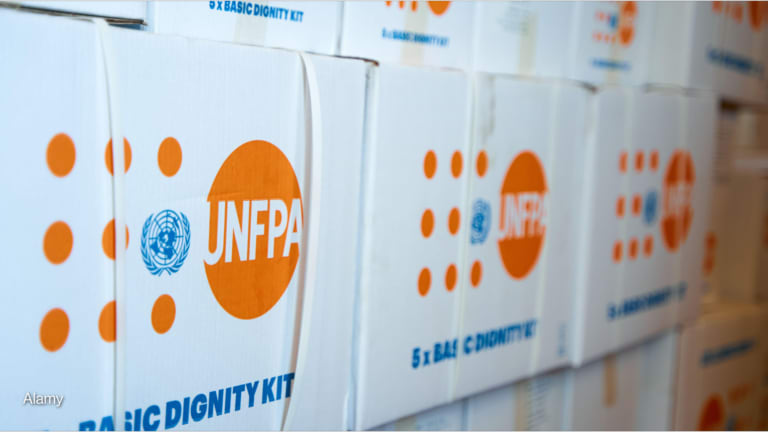
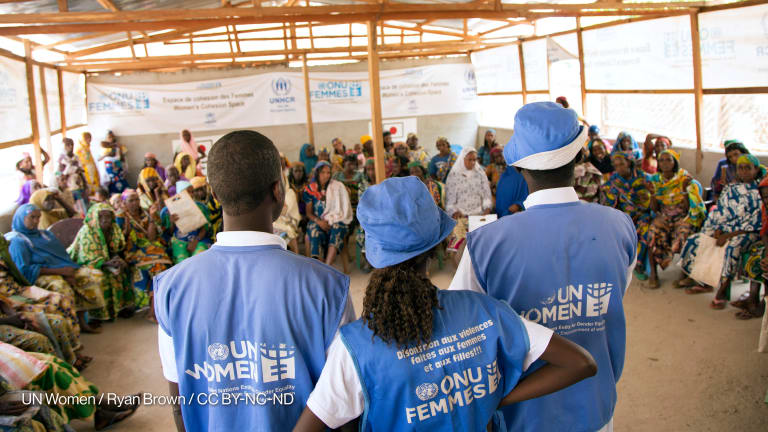
Can two organizations merge without losing what makes them valuable? That’s the question facing UN Women, which revolves around gender equality, and the United Nations Population Fund, or UNFPA, which focuses on sexual and reproductive health.
A new U.N. analysis has come out in favor of merging the two. “There is limited duplication and high complementarity,” the document states. “In 2024, UNFPA and UN Women played distinct but mutually reinforcing roles in advancing gender equality, women’s rights, and reproductive health across development and humanitarian contexts.”
U.N. Secretary-General António Guterres has backed the move, arguing it could create a “much stronger organization” at a time when the U.N. — and women’s groups across the world — are buckling under financial strain, my colleague Elissa Miolene writes. If the merger were to be approved by the U.N. General Assembly, Guterres adds, the distinct mandates of UNFPA and UN Women would be preserved.
“UN Women and UNFPA deal largely with the same issues, and what we want is to have a much stronger organization [to be] able to be the main instrument of the United Nations in relation to gender equality,” he says. “The merger is not a merger of mandates.”
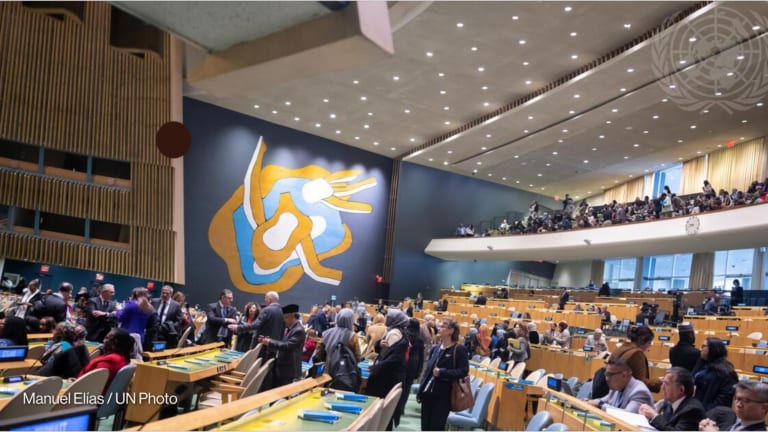
But the possibility has riled up participants at the Commission on the Status of Women who argue against combining the two entities.
“UNFPA and UN Women each have distinct and irreplaceable mandates,” María León González of the Youth Coalition for Sexual and Reproductive Rights said during a town hall between civil society and Guterres. “Why are two of the main players who defend our rights the first targets for streamlining when they are not the most redundant, nor the most resource-intensive U.N. entities?”
People are also questioning the timing, with the Trump administration having just pulled out of both UN Women and UNFPA, stating they were “contrary to the interests of the United States.”
“Merging two mechanisms that are dedicated to these individual issues is like putting a target on the back of this new agency,” says Jessica Stern, who served as the special envoy to advance the human rights of LGBTQ+ persons under the Biden administration. “The U.S. is taking every opportunity possible to undermine the ability of the U.N. just to operate effectively.”
Read: Document lays groundwork for UN Women–UNFPA merger
ICYMI: Drawing the battle lines on women, girls, and gender at the UN
A step backward
Stern, who is now co-president of the Alliance for Diplomacy and Justice, and Shannon Kowalski of the International Women’s Health Coalition argue in a Devex opinion piece that a UN Women-UNFPA merger is full of risk in a climate of regression.
“We are already facing unprecedented backlash against gender equality worldwide: More than a quarter of countries are facing significant danger of regression in core areas of women’s rights, from physical safety to equality under the law,” they write.
They also point out that while it may appear the two agencies have overlapping mandates, their remits are actually quite different — from UN Women’s focus on tackling underresourced, fragmented approaches to gender equality throughout the U.N. system, to UNFPA’s work strengthening access to sexual and reproductive health services, often in humanitarian settings.
“Significantly, it is unlikely that a merged entity would attract more resources,” they add. “If one argument for it is efficiency, donors who fund both organizations will likely find it difficult to maintain their existing support, let alone increase it.”
The merger still requires a vote by member states in the U.N. General Assembly, a fraught process that the Trump administration, in its opposition to gender ideology, could capitalize on to dismantle the agenda on women’s rights, they argue.
“Instead of exploring every option, the leaders of the UN80 initiative are only offering the option of a merger that women’s rights and gender equality organizations did not ask for and do not want.”
Opinion: Merging UNFPA and UN Women would undermine gender equality globally
+ Speaking of funding for women’s rights and gender equality, on March 26, we’ll host a Pro Funding Briefing with Equality Fund CEO Jess Tomlin to dig into what makes the fund’s model distinctive and how it has evolved since 2019 when it received a landmark CA$300 million commitment to provide support to feminist movements and women’s rights organizations globally. Save your spot now.
Capital I, capital D, capital B
Despite U.S. President Donald Trump’s general skepticism toward multilateral institutions such as the U.N., he makes exceptions.
He has largely left the World Bank unscathed, for example, and the Inter-American Development Bank has seemingly clinched a major coup: securing Washington’s support for a capital increase pledged two years ago.
My colleague Jesse Chase-Lubitz, who is attending IDB’s annual meetings in Paraguay this week, scoops that the bank received a “letter of subscription” from the U.S. on Monday — a legally binding document confirming Washington will participate in the capital increase.
It’s part of the bank’s successful effort to unlock a long-awaited capital increase for its private sector arm, IDB Invest, a move that could significantly expand lending to businesses across Latin America and the Caribbean.
Scoop: IDB to unlock $3.5B increase with US signing on
See also: LatAm development takes center stage at IDB talks
Bank for your buck
124%
—That’s the increase in levels of finance from MDBs to low- and middle-income countries since 2010, according to a new report by ONE Data. It signals that while traditional foreign aid has nosedived, multilateral development banks have stepped up more than they perhaps get credit for.
A “bedrock of development finance, now accounting for 56% of net flows, up from 28% a decade ago” is how the report describes MDBs’ critical role.
The findings also indicate that as bilateral assistance likely enters a period of decline, or at least stasis, MDBs are increasingly central to keeping the development finance system afloat, writes Andrew Wainer for Devex.
“A lot of the critique that we’ve heard about … development is its fragmentation, the mismatch of accountability,” says David McNair, ONE Campaign’s executive director of global policy. “A shift toward more multilateral coordination could be a very positive thing. … Their ability to leverage capital markets … is really valuable.”
But the picture isn’t all sunny. China has become a “net extractor” of finance from LMICs thanks to debt repayments, private investment has cratered, and aid donors are pulling back.
It’s why Nancy Lee of the Center for Global Development argues that MDBs “are playing a bigger role, but it is not a sufficiently bigger role.”
Read: Multilateral development banks stepped up as bilateral aid dropped (Pro)
+ Stay ahead of the curve in this crucial time for global development by signing up for a Devex Pro membership with a 15-day free trial today and gain unlimited access to all our expert analyses and events, insider briefings, funding data and opportunities from top donors, and more. Explore some of the content exclusive to Pro members.
AI at the UN
The recent India AI Impact Summit drew thousands from around the world, including the global south, to reflect on the promise and pitfalls of artificial intelligence.
But Claire Melamed, vice president for AI and digital cooperation at the United Nations Foundation, points out a critical gap in the overall discussion: Over 100 countries are currently excluded from forums where AI is discussed, such as the Group of Seven and Group of 20 summits.
She points to the convening power of the United Nations as one solution.
“We’re building this huge and powerful technology, and everybody here is extremely excited about all of the opportunities and possibilities that brings,” she tells Devex contributor Catherine Davison
“But there’s also a sense that to really make sure that those opportunities are equally shared, that they reach the people and the places and the problems where they're needed most, there needs to be a global conversation among governments to make sure that we're thinking about how to put people at the heart of this technology,” she adds. “And of course, when it comes to global conversations among governments, the only place that brings all governments together on an equal footing is the U.N.”
Watch: Mind the AI gap — the urgent need for inclusive global governance
+ Catch up with our coverage on how AI is being integrated across the global development sector.
In other news
The United Nations warns that the war in the Middle East is compounding the global aid crisis — with the Strait of Hormuz blockage, Gulf airspace closures, and spiking fuel costs straining already reduced aid budgets — and calls for exceptions to keep humanitarian corridors open in the region. [Reuters and France 24]
A UNICEF aid worker was killed alongside two others during a drone strike on a residential building housing aid workers in Goma, the Democratic Republic of Congo. [BBC]
As drug-resistant infections continue to rise, the World Health Organization calls on drugmakers to prioritize research for antibiotics combating the most dangerous drug-resistant hospital infections [Telegraph]
Sign up to Newswire for an inside look at the biggest stories in global development.
About the author

Anna Gawel
Anna Gawel is the Managing Editor of Devex. She previously worked as the managing editor of The Washington Diplomat, the flagship publication of D.C.’s diplomatic community. She’s had hundreds of articles published on world affairs, U.S. foreign policy, politics, security, trade, travel and the arts on topics ranging from the impact of State Department budget cuts to Caribbean efforts to fight climate change. She was also a broadcast producer and digital editor at WTOP News and host of the Global 360 podcast. She holds a journalism degree from the University of Maryland in College Park.
Search for articles
Most Read
- 1
- 2
- 3
- 4
- 5