
Recovering from Ebola is not enough; it’s time to plan for the next global health emergency. Another Ebola-like crisis is inevitable, a report released today by Save the Children suggests, and if measures aren’t taken to strengthen health systems not just in West Africa’s embattled nations but also in countries with even weaker defenses against epidemics, then victory against Ebola might be nothing more than the calm before the next health disaster. Instead, health experts agree the time is ripe to reassess the approach to combating disease preparedness and vulnerability at three key levels: funding, sector and government coordination. Health education plays a vital role. So do ministers of finance, it turns out. Money talks: Funding patterns and the epidemic gap “If we continue to focus on single diseases in our funding approach, we’re going to leave space for opportunistic diseases like Ebola to hit populations that are neglected by disease-specific programming,” Phillip Carroll, a spokesman for Save the Children, told Devex. Those against “siloed development” — which tends to fund individual diseases like malaria, pneumonia or HIV and AIDS — offer an alternative model that focuses instead on diseases affecting certain demographic groups, like maternal and child health. “When [the U.S. President’s Emergency Plan for AIDS Relief] was introduced, it was very disease-specific,” he added. “While PEPFAR funding is still hugely important, I think we’re seeing a necessary transition away from that model.” Carroll also points to the Global Fund to Fight AIDS, Tuberculosis and Malaria, an early initiative championed by Kofi Annan to establish a “war chest” to fight three of the deadliest infectious diseases the world has ever known. While the three diseases share lethality, a new model seeks to connect diseases based on their common victims or the regions they affect. “If we’re going to end preventable child deaths, it can’t be this silo approach that we’ve been seeing over the years,” Carroll said. “It has to be more integrated.” Carroll pointed out that the three of the deadliest diseases on earth at the moment — pneumonia, diarrhea and malaria — are diseases that mostly affect mothers and young children. The maternal and child health designation only emerged as a programmatic funding area within the past 10 years, a time frame that has also seen the greatest strides in addressing those three deadliest diseases. Organizations and donors like ONE Campaign, U.S. Agency for International Development and Save the Children now program around maternal and child health, and the shift in funding strategy, from diseases to demographics, is becoming more mainstream. From the patient’s point of view, the diseases seem connected simply by existing in his or her community, and so an integrated approach is more conducive to raising awareness and understanding symptoms. “Looking at it from the mother’s or the child’s perspective, you’re not looking at malaria, you’re looking at a fever,” said Todd Summers, senior adviser to the Center for Strategic and International Studies. “I think people get so wrapped up in having better and more exquisite information around malaria or a specific disease, they forget that these diseases can be approached together,” Summers noted. Education: The human health pipeline Save the Children’s new report — or health access index — ranks countries according to seven criteria, including number of active health care workers, child mortality, immunization rates and government expenditure on health. Of 72 countries, 28 are ranked lower than the three Ebola-stricken nations in West Africa. The report also points to poor enrollment rates, poor graduation rates in the medical field and the paltry number of health care workers in many of these countries. Global health experts agree that the education sector holds great potential in increasing disease preparedness. “It’s part and parcel to an overall response, you can’t just fix the health care system,” Carroll said. Experts from Global Communities, a nonprofit working in Liberia since 2005, also credit basic education as a key deterrent to future crises. Regions of Liberia where Global Communities had been conducting water and sanitation education remained unaffected throughout the Ebola epidemic, despite being “surrounded by Ebola hot spots,” Brett Sedgewick, technical adviser for food security and livelihoods at Global Communities, told Devex. Sedgewick added that it’s important to “ensure communities are empowered” with information that allows people “to avoid infection in the first place.” Education will be a focal point in Liberian President Ellen Johnson Sirleaf’s post-Ebola recovery plan, Assistant Minister of Health Tolbert Nyenswah told Devex. In part due to the stigma associated with Ebola victims returning to school, he said the Ebola outbreak has already reshaped Liberia’s education sector. “Strong reintegration will create a better and stronger community, one that is more prepared for any future crisis,” the health official stressed. Harnessing the power of governments Health ministries are an integral resource in any health programming, but as this report emphasizes, the health ministries of many developing countries lack the resources and decision-making power to change health policy in country. Appealing not only to the ministries of health but to the ministries of finance is crucial, Carroll pointed out, adding that Save the Children has made a practice of targeting both ministries in its programming. The strategy reflects a new trend in global health: to achieve lasting, country-based results, finance ministries are as important as health ministries at every stage of programming. Summers points out that the Global Fund also approached finance ministers — through the World Bank — to support tuberculosis programming in Ukraine. While the practice is still fairly new, Carroll suggests the results could create space in country for lasting health programs. “The ministry of finance runs the ministry of health more or less,” Carroll said. “If that finance minister’s not on board, the minister of health — regardless of his or her best intentions — won’t be able to implement the needed strategy.” Now is the time to build up health systems and change the way health development happens, according to Save the Children and other members of the global health community. A radical rethink comes at a good time, Carroll pointed out, adding that he expects the findings to be absorbed into the 15-year strategy for the next set of development goals, which will be finalized this year. Read more international development news online, and subscribe to The Development Newswire to receive the latest from the world’s leading donors and decision-makers — emailed to you FREE every business day.


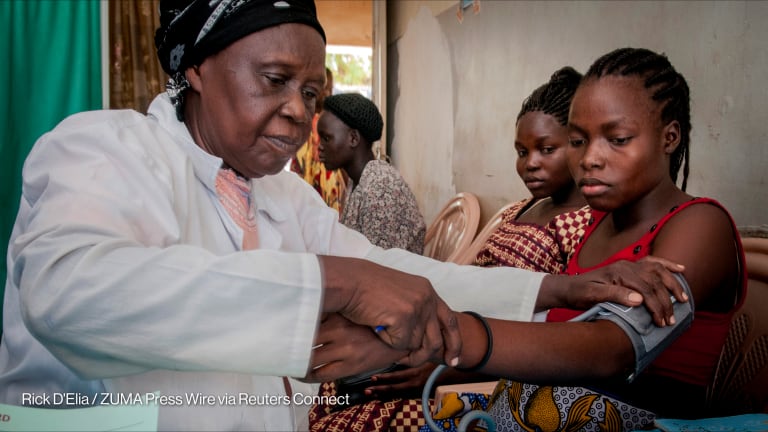
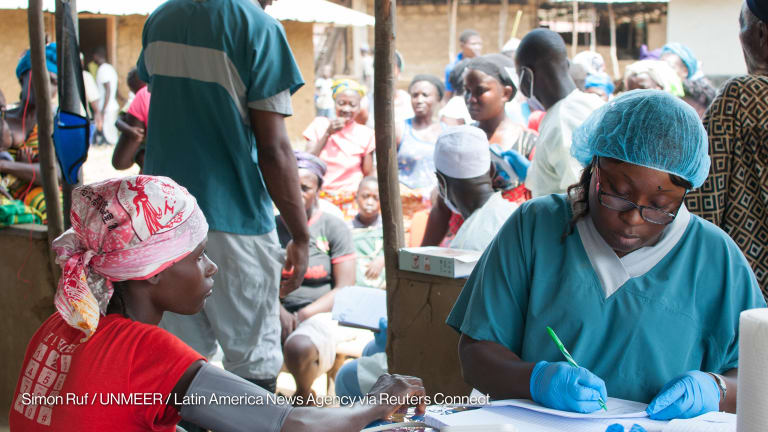
Recovering from Ebola is not enough; it’s time to plan for the next global health emergency.
Another Ebola-like crisis is inevitable, a report released today by Save the Children suggests, and if measures aren’t taken to strengthen health systems not just in West Africa’s embattled nations but also in countries with even weaker defenses against epidemics, then victory against Ebola might be nothing more than the calm before the next health disaster.
Instead, health experts agree the time is ripe to reassess the approach to combating disease preparedness and vulnerability at three key levels: funding, sector and government coordination.
Printing articles to share with others is a breach of our terms and conditions and copyright policy. Please use the sharing options on the left side of the article. Devex Pro members may share up to 10 articles per month using the Pro share tool ( ).
About the author

Molly Andersmollyanders_dev
Molly Anders is a former U.K. correspondent for Devex. Based in London, she reports on development finance trends with a focus on British and European institutions. She is especially interested in evidence-based development and women’s economic empowerment, as well as innovative financing for the protection of migrants and refugees. Molly is a former Fulbright Scholar and studied Arabic in Syria, Jordan, Egypt and Morocco.
Search for articles


Most Read
- 1
- 2
- 3
- 4
- 5