• News
    • Latest news
    • News search
    • Health
    • Finance
    • Food
    • Career news
    • Content series
    • Focus areas
    • Try Devex Pro
  • Jobs
    • Job search
    • Post a job
    • Employer search
    • CV Writing
    • Upcoming career events
    • Try Career Account
  • Funding
    • Funding search
    • Funding news
  • Talent
    • Candidate search
    • Devex Talent Solutions
  • Events
    • Upcoming and past events
    • Partner on an event
  • Post a job
  • About
      • About us
      • Membership
      • Newsletters
      • Advertising partnerships
      • Devex Talent Solutions
      • Contact us
Join DevexSign in
Join DevexSign in

News

  • Latest news
  • News search
  • Health
  • Finance
  • Food
  • Career news
  • Content series
  • Focus areas
  • Try Devex Pro

Jobs

  • Job search
  • Post a job
  • Employer search
  • CV Writing
  • Upcoming career events
  • Try Career Account

Funding

  • Funding search
  • Funding news

Talent

  • Candidate search
  • Devex Talent Solutions

Events

  • Upcoming and past events
  • Partner on an event
Post a job

About

  • About us
  • Membership
  • Newsletters
  • Advertising partnerships
  • Devex Talent Solutions
  • Contact us
  • My Devex
  • Update my profile % complete
  • Account & privacy settings
  • My saved jobs
  • Manage newsletters
  • Support
  • Sign out
Latest newsNews searchHealthFinanceFoodCareer newsContent seriesFocus areasTry Devex Pro
    • News
    • Chinese aid to Africa

    A closer look at the risks and opportunities of China's aid to Africa

    Critics of Chinese aid to Africa often focus on the donor's motives and not the reasons recipient governments are eager to receive such untied assistance. How important is it to see the other side of the story?

    By Lean Alfred Santos // 05 December 2014

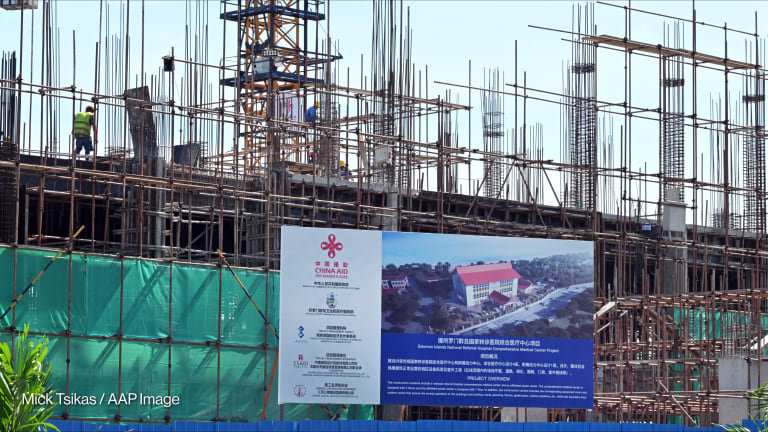
    The debate over China’s oft-misunderstood approach to aid and development has almost always focused on the motives of the East Asian country, as the donor, and never those of the governments and leaders that receive the assistance. How important is it to see the other side of the story — why governments accept the assistance — and how will it affect the effectiveness of the development programs that the Asian behemoth is funding seemingly at will? In a paper released alongside the launch of its first interactive geospatial dashboard, which drills Chinese-financed projects in Africa down to the community level, AidData tried to address these issues. Answering these questions requires an understanding of China’s aid approach to Africa. According to a white paper on foreign aid released by the Chinese government in July, the country’s aid is given on the principle of noninterference in domestic affairs while giving recipient nations the flexibility to “independently choose their own paths and models of development” — a no-strings-attached approach that is markedly different from that of traditional donors like the World Bank. This approach has drawn significant criticism from different parts of the development community — and for good reason. “When scarce public resources are not allocated to the areas of greatest need or opportunity, there is a significant risk that these resources will not be put to their most effective use,” Brad Parks, co-executive director of Washington, D.C-based development information organization AidData, told Devex. “If African leaders steer aid projects to areas that advance their personal or parochial interests rather than the public good, this will arguably diminish the ultimate impact of such assistance.” To a certain extent, the problem boils down to the issue of giving too much power to local leaders and government officials in handling aid money without ensuring that they have the capacity to handle it properly — something that China’s flexible and nonintervening aid approach allows. But there are other risks that could dilute aid effectiveness. Many leaders in Africa, Parks said, stay in power through patronage politics. Whether coincidental or not, the geospatial dashboard indicates a higher concentration of Chinese-funded development programs in areas that are either constituencies or have a direct link to incumbent local officials. This includes a Chinese-funded education program in the Bombali district, the hometown of Sierra Leone’s President Ernest Bai Koroma. Parks hopes the paper’s findings as well as geospatial dashboard data would help open up a new strand of literature and discussion on new approaches to aid delivery and empower stakeholders — government, private sector and civil society — to play a more significant role in bridging the data gap. “When the development community has granular information about who is doing what and where they are doing it, governments can more effectively plan for their country’s development [and] donors can more easily coordinate programs,” he said. Civil society, meanwhile, would be able to monitor “incomplete or defunct” projects and identify new areas that could benefit from Chinese aid. Check out more practical business and development advice online, and subscribe to Money Matters to receive the latest contract award and shortlist announcements, and procurement and fundraising news.

    Related Stories

    Is China headed toward becoming the next aid superpower?
    Is China headed toward becoming the next aid superpower?
    Money Matters: Is China becoming an aid superpower?
    Money Matters: Is China becoming an aid superpower?
    From China to the Gulf: The donors reshaping global development
    From China to the Gulf: The donors reshaping global development
    How aid cuts drove one foundation to step up its funding to Africa
    How aid cuts drove one foundation to step up its funding to Africa

    The debate over China’s oft-misunderstood approach to aid and development has almost always focused on the motives of the East Asian country, as the donor, and never those of the governments and leaders that receive the assistance.

    How important is it to see the other side of the story — why governments accept the assistance — and how will it affect the effectiveness of the development programs that the Asian behemoth is funding seemingly at will?

    In a paper released alongside the launch of its first interactive geospatial dashboard, which drills Chinese-financed projects in Africa down to the community level, AidData tried to address these issues.

    This article is free to read - just register or sign in

    Access news, newsletters, events and more.

    Join usSign in
    • Funding
    • Humanitarian Aid
    • China
    • Southern Africa
    • West Africa
    Printing articles to share with others is a breach of our terms and conditions and copyright policy. Please use the sharing options on the left side of the article. Devex Pro members may share up to 10 articles per month using the Pro share tool ( ).

    About the author

    • Lean Alfred Santos

      Lean Alfred Santos@DevexLeanAS

      Lean Alfred Santos is a former Devex development reporter focusing on the development community in Asia-Pacific, including major players such as the Asian Development Bank and the Asian Infrastructure Investment Bank. He previously covered Philippine and international business and economic news, sports and politics.

    Search for articles
    Related Stories

    Funding insightsRelated Stories - Is China headed toward becoming the next aid superpower?

    Is China headed toward becoming the next aid superpower?

    Devex Money MattersRelated Stories - Money Matters: Is China becoming an aid superpower?

    Money Matters: Is China becoming an aid superpower?

    Development financeRelated Stories - From China to the Gulf: The donors reshaping global development

    From China to the Gulf: The donors reshaping global development

    Devex Pro LiveRelated Stories - How aid cuts drove one foundation to step up its funding to Africa

    How aid cuts drove one foundation to step up its funding to Africa

    Most Read

    • 1
      Why NTDs are a prime investment for philanthropy
    • 2
      The silent, growing CKD epidemic signals action is needed today
    • 3
      Trump withdraws, defunds dozens of international orgs and treaties
    • 4
      Why capital without knowledge-sharing won't solve the NCD crisis
    • 5
      Why are 3.4 billion people still offline?
    • News
    • Jobs
    • Funding
    • Talent
    • Events

    Devex is the media platform for the global development community.

    A social enterprise, we connect and inform over 1.3 million development, health, humanitarian, and sustainability professionals through news, business intelligence, and funding & career opportunities so you can do more good for more people. We invite you to join us.

    • About us
    • Membership
    • Newsletters
    • Advertising partnerships
    • Devex Talent Solutions
    • Post a job
    • Careers at Devex
    • Contact us
    © Copyright 2000 - 2026 Devex|User Agreement|Privacy Statement