

• News
    • Latest news
    • News search
    • Health
    • Finance
    • Food
    • Career news
    • Content series
    • Focus areas
    • Try Devex Pro
  • Jobs
    • Job search
    • Post a job
    • Employer search
    • CV Writing
    • Upcoming career events
    • Try Career Account
  • Funding
    • Funding search
    • Funding news
  • Talent
    • Candidate search
    • Devex Talent Solutions
  • Events
    • Upcoming and past events
    • Partner on an event
  • Post a job
  • About
      • About us
      • Membership
      • Newsletters
      • Advertising partnerships
      • Devex Talent Solutions
      • Contact us
Join DevexSign in
Join DevexSign in

News

  • Latest news
  • News search
  • Health
  • Finance
  • Food
  • Career news
  • Content series
  • Focus areas
  • Try Devex Pro

Jobs

  • Job search
  • Post a job
  • Employer search
  • CV Writing
  • Upcoming career events
  • Try Career Account

Funding

  • Funding search
  • Funding news

Talent

  • Candidate search
  • Devex Talent Solutions

Events

  • Upcoming and past events
  • Partner on an event
Post a job

About

  • About us
  • Membership
  • Newsletters
  • Advertising partnerships
  • Devex Talent Solutions
  • Contact us
  • My Devex
  • Update my profile % complete
  • Account & privacy settings
  • My saved jobs
  • Manage newsletters
  • Support
  • Sign out
Latest newsNews searchHealthFinanceFoodCareer newsContent seriesFocus areasTry Devex Pro
    • News
    • Davos 2025

    An inside look at the World Food Programme's innovation accelerator

    How should organizations think through innovation, AI and digital tech, and how can those that don’t have an innovation accelerator keep up?

    By Elissa Miolene // 24 January 2025
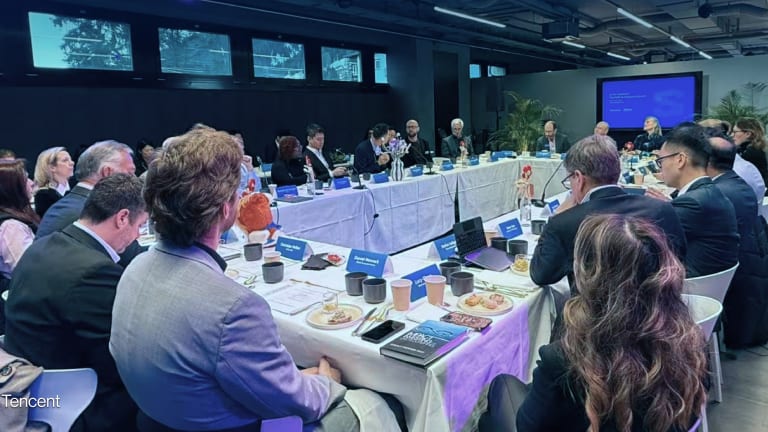
    Let’s talk about what’s been all the rage at this year’s Davos: artificial intelligence. All week, I’ve heard about countless AI-infused development projects — the Catalyst Group, for example, is mapping hospitals across the Central African Republic, and forecasting which are most at risk of flood damage. Tiko, for another, is tracking contraceptive stockouts, and calculating how demand will change based on the organization’s reach. And the World Food Programme is using a statistical modeling tool to streamline its supply chain operations, reducing the cost of essential food delivery. It’s just one of many programs operated by WFP’s innovation accelerator, a Munich-based initiative focused on sourcing and scaling new solutions. “We know that accelerators and innovation work in the private sector — you see it all around with artificial intelligence,” said Bernhard Kowatsch, who heads WFP’s accelerator. “Why can’t we use it not just in pilots, but at scale for humanitarian response?” The accelerator looks for innovations across the private, public, and social enterprise sectors, trains those selected teams in a one-week program, and then holds a pitch event for representatives from the government, private sector, and investment firms. The team then supports those innovations to be refined and scaled — and in 2023, WFP had reached nearly 61 million people. So, how should organizations think through innovation, AI, and digital tech, and how can those that don’t have an innovation accelerator keep up?

    Related Stories

    Opinion: Innovation challenges yield bold ideas in data and AI
    Opinion: Innovation challenges yield bold ideas in data and AI
    Devex Dish: Could COP30 be a watershed moment for food systems?
    Devex Dish: Could COP30 be a watershed moment for food systems?
    Agents of change: Reskilling for AI futures
    Agents of change: Reskilling for AI futures
    Reporters’ notebook: 2025 World Bank-IMF annual meetings
    Reporters’ notebook: 2025 World Bank-IMF annual meetings

    Let’s talk about what’s been all the rage at this year’s Davos: artificial intelligence.

    All week, I’ve heard about countless AI-infused development projects — the Catalyst Group, for example, is mapping hospitals across the Central African Republic, and forecasting which are most at risk of flood damage.

    Tiko, for another, is tracking contraceptive stockouts, and calculating how demand will change based on the organization’s reach. And the World Food Programme is using a statistical modeling tool to streamline its supply chain operations, reducing the cost of essential food delivery. It’s just one of many programs operated by WFP’s innovation accelerator, a Munich-based initiative focused on sourcing and scaling new solutions.

    This story is forDevex Promembers

    Unlock this story now with a 15-day free trial of Devex Pro.

    With a Devex Pro subscription you'll get access to deeper analysis and exclusive insights from our reporters and analysts.

    Start my free trialRequest a group subscription
    Already a user? Sign in
    • Innovation & ICT
    • Trade & Policy
    • Economic Development
    • Private Sector
    • Humanitarian Aid
    • World Food Programme (WFP)
    • World Economic Forum
    • Davos 2025
    Printing articles to share with others is a breach of our terms and conditions and copyright policy. Please use the sharing options on the left side of the article. Devex Pro members may share up to 10 articles per month using the Pro share tool ( ).
    Should your team be reading this?
    Contact us about a group subscription to Pro.

    About the author

    • Elissa Miolene

      Elissa Miolene

      Elissa Miolene reports on USAID and the U.S. government at Devex. She previously covered education at The San Jose Mercury News, and has written for outlets like The Wall Street Journal, San Francisco Chronicle, Washingtonian magazine, among others. Before shifting to journalism, Elissa led communications for humanitarian agencies in the United States, East Africa, and South Asia.

    Search for articles

    Related Stories

    Sponsored by data.orgRelated Stories - Opinion: Innovation challenges yield bold ideas in data and AI

    Opinion: Innovation challenges yield bold ideas in data and AI

    Devex DishRelated Stories - Devex Dish: Could COP30 be a watershed moment for food systems?

    Devex Dish: Could COP30 be a watershed moment for food systems?

    Sponsored by SalesforceRelated Stories - Agents of change: Reskilling for AI futures

    Agents of change: Reskilling for AI futures

    World Bank annual meetings 2025Related Stories - Reporters’ notebook: 2025 World Bank-IMF annual meetings

    Reporters’ notebook: 2025 World Bank-IMF annual meetings

    Most Read

    • 1
      Exclusive: Former Iraqi president picked to lead UN Refugee Agency
    • 2
      Invest in diagnostics to win the health fight
    • 3
      Financing Asia’s transformation: How to plug the trillion-dollar gap
    • 4
      Future forward: Closing infrastructure gaps for climate innovation
    • 5
      Opinion: A blueprint for country ownership and transition
    • News
    • Jobs
    • Funding
    • Talent
    • Events

    Devex is the media platform for the global development community.

    A social enterprise, we connect and inform over 1.3 million development, health, humanitarian, and sustainability professionals through news, business intelligence, and funding & career opportunities so you can do more good for more people. We invite you to join us.

    • About us
    • Membership
    • Newsletters
    • Advertising partnerships
    • Devex Talent Solutions
    • Post a job
    • Careers at Devex
    • Contact us
    © Copyright 2000 - 2025 Devex|User Agreement|Privacy Statement