• News
    • Latest news
    • News search
    • Health
    • Finance
    • Food
    • Career news
    • Content series
    • Focus areas
    • Try Devex Pro
  • Jobs
    • Job search
    • Post a job
    • Employer search
    • CV Writing
    • Upcoming career events
    • Try Career Account
  • Funding
    • Funding search
    • Funding news
  • Talent
    • Candidate search
    • Devex Talent Solutions
  • Events
    • Upcoming and past events
    • Partner on an event
  • Post a job
  • About
      • About us
      • Membership
      • Newsletters
      • Advertising partnerships
      • Devex Talent Solutions
      • Contact us
Join DevexSign in
Join DevexSign in

News

  • Latest news
  • News search
  • Health
  • Finance
  • Food
  • Career news
  • Content series
  • Focus areas
  • Try Devex Pro

Jobs

  • Job search
  • Post a job
  • Employer search
  • CV Writing
  • Upcoming career events
  • Try Career Account

Funding

  • Funding search
  • Funding news

Talent

  • Candidate search
  • Devex Talent Solutions

Events

  • Upcoming and past events
  • Partner on an event
Post a job

About

  • About us
  • Membership
  • Newsletters
  • Advertising partnerships
  • Devex Talent Solutions
  • Contact us
  • My Devex
  • Update my profile % complete
  • Account & privacy settings
  • My saved jobs
  • Manage newsletters
  • Support
  • Sign out
Latest newsNews searchHealthFinanceFoodCareer newsContent seriesFocus areasTry Devex Pro
    • News
    • NGO

    Avril Benoît on her six years at the helm of Médecins Sans Frontières USA

    Benoît steered the organization through the COVID-19 pandemic, hiring shifts, and increasingly complex humanitarian crises. Her tenure also saw unprecedented levels of fundraising for the organization.

    By Sara Jerving // 09 October 2025
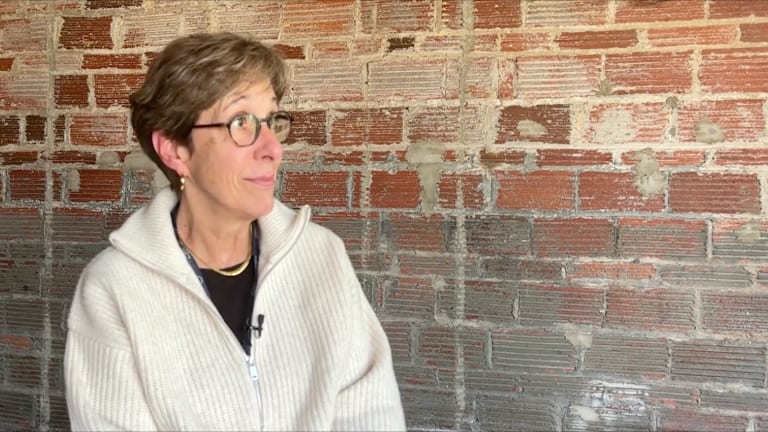
    At the end of September, Avril Benoît stepped down after six years at the helm of Médecins Sans Frontières in the United States. It was the natural course of things — the organization says it’s customary for its leaders to leave to make space for new leadership. Taking over the role is Tirana Hassan, the former executive director of Human Rights Watch. Benoît had been with the organization since 2006, after leaving a career in Canadian journalism. She’s worked in various MSF leadership roles and assignments, including as a country director and director of communications and development at its Geneva operational center. As chief executive officer of Doctors Without Borders USA, Benoît steered the organization through the COVID-19 pandemic, hiring shifts, and increasingly complex humanitarian crises. Her tenure also saw unprecedented levels of fundraising. Devex sat down with Benoît during her last week as CEO to reflect on the organization’s evolution during her tenure — and concerns she has about the humanitarian sector and society more broadly. ‘Unprecedented’ fundraising MSF’s international movement has 28 associations globally, with each operating as an independent legal entity. The U.S., which is one of the most efficient fundraising markets for MSF, accounts for one-third of global fundraising, all from private sources. During Benoît’s tenure, donor support to MSF USA increased from less than $400 million to over $750 million. This was “unprecedented levels of private funding support and growth,” she said. This has allowed the organization to expand quality of care and increase operations in highly insecure contexts. “Even within the last year, we’re now — inadvertently — a bigger proportion of the humanitarian aid pie,” she said. A leading factor driving this is that the organization made a compelling case at a time when many people were looking to give to organizations with impact and rapid response, she said. For example, during the pandemic, MSF was known as an organization skilled in protecting medical workers and managing cases. “We had a lot of credibility in that space because we had worked in so many outbreaks before, but particularly hemorrhagic fevers like Ebola — where protecting your staff from an unknown pathogen is job number one,” she said. And since then, MSF has also seen an outpouring of support for emergencies such as in Ukraine and Gaza. She said bearing witness is part of MSF’s DNA, and their donors appreciate MSF’s frankness. For example, MSF is vocal about its work on ensuring access to safe abortions and its work in conflict zones. “We’re very straightforward, and try to relay what we see on the ground when it comes to war crimes in places like Gaza or the lack of humanitarian intervention in neglected regions of the world, such as in northwest Nigeria.” “We’re not perfect, and at the same time, we’re tenacious, we’re dogged, we’re willing to take risks and do things and be in places that other organizations are maybe less risk tolerant,” she said. In terms of what she’s learned over the years about advocacy: Individuals are more responsive than decision-makers. “When we look at all the advocacy that every organization does about humanitarian crises around the world, all the efforts we do — and then what did we end up with? We end up with the gutting of USAID and the significant reductions of humanitarian aid funding from classic traditional European donors who’ve shifted their priorities as well,” she said. But she said it’s heartening to see individuals and private donors step up — reflecting a disconnect between what people and governments value. Relaying MSF’s work to donors has been “one of the great pleasures of the job,” she added. Hiring shifts, unintended consequences During her tenure, the organization also worked to shift decision-making to the countries they operate in. MSF has faced allegations of racism, and Benoît said the organization took calls for a decolonization of the organization “to heart.” Instead of opening many positions in high-income countries, they’ve created hubs of decision-making and coordination in cities such as Nairobi, Abidjan, and Amman. “It was important for us to not grow our own footprint in the U.S. above and beyond things that actually needed to be here,” she said. “We tried to walk the talk.” This also included reconsideration of employment packages not only for locally hired staff in countries of operation, but also internationally mobile staff — experts who move between countries — many of whom have been recruited from sub-Saharan Africa. “This has been a fantastic shift — even the makeup of the leadership of the organization is evolving in a positive direction,” she said. But this also came with unintended consequences — as recruitment increased in certain countries, particularly for international mobile roles, fewer women were entering the organization. “The proportion of women has declined to alarming levels, and now we’re trying to rectify that with specific initiatives to have a better gender balance in those recruitment offices that have been extremely biased toward men,” she said. Societal factors affecting this include access to higher levels of education and women disproportionately carrying the burdens of family obligations. “They’re just unable to go on international assignments, for months or years at a time, away from families, in a way that maybe for men recruited from those areas is less of an issue,” she said. MSF is working to make recruitment more intentional, ensuring more women have access to career development opportunities, and trying to support flexibility in work-life balance. ‘An accordion’ MSF has a higher risk tolerance than many international organizations — willing to work in places with attacks, ambushes, and volatile checkpoints. Benoît said the organization evacuates or reduces its profile when needed, managing risk “like an accordion — where we expand and withdraw.” “We’re often on the ground — whereas others aren’t,” she said. For example, in Sudan, MSF has vocalized for years the need for other international organizations, including the United Nations, to expand their presence beyond hubs such as the Port Sudan — although she said they recognize the U.N. faces funding shortages. “But at the same time, we would have wanted them to follow us as we demonstrated that you can deliver aid [to Sudan] with cross-border operations [from] Chad, etc.,” she said. “They have political constraints, but we needed there to be some exceptions.” Her tenure has also seen attacks on health infrastructure become increasingly more common. “In particular with Gaza, we have seen a relentless targeting of hospitals and even aid distribution sites, a restriction on the delivery of aid that comes across as administrative violence,” she said. “It worries us deeply that there seems to be impunity.” Headquartered in the U.S., the organization has engaged both the Biden and Trump administrations on the crisis in Gaza, but the U.S. government “continues to be complicit in supporting Israel's choking off of humanitarian aid,” she said. “We have a representation in D.C. that found that the only discernible difference that you would have between the Biden administration and the Trump administration is that the Biden administration pretended to be concerned, whereas the Trump administration does not even pretend to be concerned. But the impact has been largely the same — where you have unconditional sale of weapons,” she said. MSF has a campaign: “Doctors cannot stop genocide. World leaders can.” “We have raging internal debates about how we can remain neutral in the face of a genocide, and that’s in addition to Israel’s refusal to allow independent international journalists and investigators to be on the ground to report out what’s happening,” she said. This puts an additional burden on an organization such as MSF to bear witness to maintain a historical record, she said. Onward It’s the end of nearly two decades at MSF for Benoît. “It’s time for me to move forward,” she said. “It has been extremely intense, and to have one’s focus on wars, displacement, rape, need, outbreaks is something that, obviously, I’ve been fully engaged in.” But she’s drawn to different sets of problems now. This includes the role of truth and trust in society, the weaponization of information, the climate crisis, creating lasting peace, and how artificial intelligence is expected to shift the ability to alleviate global suffering — either for the better or worse, she said. She’s always found comfort and been protective of MSF’s level of authenticity, but said she sees virtues like this under attack, more broadly, across society. “The pause that I’m about to take will give me an opportunity to reflect on other ways that I can serve an organization,” she said. “I’m going to take a little break to recharge the batteries, but beyond that, my dance card is looking to be filled.”

    Related Stories

    Devex Newswire: Is the EU putting profits over poverty reduction?
    Devex Newswire: Is the EU putting profits over poverty reduction?
    Devex CheckUp: A chaotic week at the US CDC
    Devex CheckUp: A chaotic week at the US CDC
    Devex Dish: AGRA enters a new era with Alice Ruhweza at the helm
    Devex Dish: AGRA enters a new era with Alice Ruhweza at the helm
    How will the next generation get into the global development industry?
    How will the next generation get into the global development industry?

    At the end of September, Avril Benoît stepped down after six years at the helm of Médecins Sans Frontières in the United States. It was the natural course of things — the organization says it’s customary for its leaders to leave to make space for new leadership. Taking over the role is Tirana Hassan, the former executive director of Human Rights Watch.

    Benoît had been with the organization since 2006, after leaving a career in Canadian journalism. She’s worked in various MSF leadership roles and assignments, including as a country director and director of communications and development at its Geneva operational center.

    As chief executive officer of Doctors Without Borders USA, Benoît steered the organization through the COVID-19 pandemic, hiring shifts, and increasingly complex humanitarian crises. Her tenure also saw unprecedented levels of fundraising.

    This article is free to read - just register or sign in

    Access news, newsletters, events and more.

    Join usSign in

    Read more:

    ► MSF demands Gaza Humanitarian Foundation close for ‘orchestrated killing’

    ► Hundreds decry closure of MSF unit that advocates for medical access

    ► Food crisis: MSF reports cycle of weakened immunity among children

    • Humanitarian Aid
    • Democracy, Human Rights & Governance
    • Global Health
    • Doctors Without Borders (Médecins Sans Frontières) (USA)
    Printing articles to share with others is a breach of our terms and conditions and copyright policy. Please use the sharing options on the left side of the article. Devex Pro members may share up to 10 articles per month using the Pro share tool ( ).

    About the author

    • Sara Jerving

      Sara Jervingsarajerving

      Sara Jerving is a Senior Reporter at Devex, where she covers global health. Her work has appeared in The New York Times, the Los Angeles Times, The Wall Street Journal, VICE News, and Bloomberg News among others. Sara holds a master's degree from Columbia University Graduate School of Journalism where she was a Lorana Sullivan fellow. She was a finalist for One World Media's Digital Media Award in 2021; a finalist for the Livingston Award for Young Journalists in 2018; and she was part of a VICE News Tonight on HBO team that received an Emmy nomination in 2018. She received the Philip Greer Memorial Award from Columbia University Graduate School of Journalism in 2014.

    Search for articles
    Related Stories

    Devex NewswireRelated Stories - Devex Newswire: Is the EU putting profits over poverty reduction?

    Devex Newswire: Is the EU putting profits over poverty reduction?

    Devex CheckUpRelated Stories - Devex CheckUp: A chaotic week at the US CDC

    Devex CheckUp: A chaotic week at the US CDC

    Devex DishRelated Stories - Devex Dish: AGRA enters a new era with Alice Ruhweza at the helm

    Devex Dish: AGRA enters a new era with Alice Ruhweza at the helm

    CareerRelated Stories - How will the next generation get into the global development industry?

    How will the next generation get into the global development industry?

    Most Read

    • 1
      The silent, growing CKD epidemic signals action is needed today
    • 2
      Why NTDs are a prime investment for philanthropy
    • 3
      Why capital without knowledge-sharing won't solve the NCD crisis
    • 4
      Trump withdraws, defunds dozens of international orgs and treaties
    • 5
      Innovation meets impact: Fighting malaria in a warming world
    • News
    • Jobs
    • Funding
    • Talent
    • Events

    Devex is the media platform for the global development community.

    A social enterprise, we connect and inform over 1.3 million development, health, humanitarian, and sustainability professionals through news, business intelligence, and funding & career opportunities so you can do more good for more people. We invite you to join us.

    • About us
    • Membership
    • Newsletters
    • Advertising partnerships
    • Devex Talent Solutions
    • Post a job
    • Careers at Devex
    • Contact us
    © Copyright 2000 - 2026 Devex|User Agreement|Privacy Statement