
What happens when the world’s most powerful philanthropist becomes a liability — and the sector he bankrolls can no longer afford to look away? The renewed scrutiny around Bill Gates’ relationship with Jeffrey Epstein — amplified by newly released documents — has landed at a tricky time for global development. Gates denies wrongdoing and says he laments meeting Epstein. The Gates Foundation says it “regrets having any employees interact with Epstein in any way.” But this debate is no longer just about personal judgment. It’s about power and how we all view modern philanthropy. As my colleague Michael Igoe reported, some experts hope the controversy broadens into a reality check. “Hypocrisy is at the core of philanthropy, and we all have to come to terms with that,” historian Maribel Morey told him. Great fortunes are rarely built in morally pristine ways, she said, yet philanthropy often transforms that wealth into moral authority. As Devex Managing Editor Anna Gawel asked on the latest episode of our podcast, This Week in Global Development: “Are we idolizing billionaires who give away their billions without really holding them to account?” That question feels especially acute now. With foreign assistance shrinking globally — and the Trump administration dismantling USAID — foundations have become financial lifelines. The Gates Foundation alone awarded $4.5 billion in grants in 2025. As Devex Business Editor David Ainsworth noted, “If Bill Gates was a country, he would be among the top 10 OECD donors in the world.” He is, in other words, a giant force. When public aid dwindles, philanthropic capital can fill the gap. But that creates a super dilemma: What happens when the funding source becomes ethically radioactive? “What are you going to do as a government or as an organization — say, ‘I have a better way, and I’m not going to take the money?’” Anna quipped. Being able to fund projects the size of small nations obviously means shaping an agenda. Of course, the critique isn’t limited to sex scandals. Gates’ influence on COVID-19 vaccines has also drawn debate. When the pandemic hit, and governments faltered, a small group of health organizations — led by the Gates Foundation — stepped in to shape vaccine development and global distribution. Their work undoubtedly saved lives, but it also raised serious questions about accountability when privately funded players wield state-level influence over global health decisions. And yet we went, and continue to go, with the flow. Inside the Gates Foundation, the strain is reportedly visible. According to the Financial Times, staff told CEO Mark Suzman they were “struggling to reconcile their commitment” to the foundation’s mission with the headlines about its founder. And that discomfort echoes far beyond the head office. At a recent conference, one of our reporters felt that officials from the foundation were ducking and diving to avoid her and others. This moment isn’t only about Gates. It’s about an entire sector. Philanthropy often positions itself as the solution in times of crisis. But what happens when philanthropy becomes the crisis? Your opinion matters Global development is shaped by negotiations, incentives, institutional politics, and financial flows — but too little of that story gets told by the sector itself. To help bring these insights to our readers, we’ve updated Devex’s opinion guidelines. We are inviting development movers and shapers to submit sharp, analytical, behind-the-scenes perspectives on how power and money move in the sector — and what that means for real-world outcomes. If you’ve seen how decisions are made inside agencies, donor capitals, multilateral development banks, or funding mechanisms, this is your invitation to unpack what’s really going on. Catch up on the new guidelines and how to submit. Bits and pieces Reckoning reaches Davos. Børge Brende resigned Thursday as World Economic Forum leader just weeks after hosting hundreds of power players in Davos, Switzerland. The move follows reports that the trove of Epstein files showed he had dined with the convicted sex offender, prompting the organization to open an independent inquiry. In a statement that did not reference Epstein, Brende said, "Now is the right moment for the Forum to continue its important work without distractions." WEF cochairs André Hoffmann and Larry Fink said the review wrapped up with "no additional concerns beyond what has been previously disclosed." From aid to investment. Africa is making a fresh play for private capital. The new Global Africa Investment Summit, or GAIS — cofounded by Akinwumi Adesina, former president of the African Development Bank, and Margery Kraus, founder and executive chair of APCO Worldwide — wants to flip the script from aid to assets, packaging sovereign wealth into de-risked, investment-ready portfolios. “In the years ahead, Africa will need to unlock its vast sovereign assets to empower global economic growth,” said Adesina. “The Global Africa Investment Summit platform provides the trusted, structured entity needed to connect Africa’s immense potential with global private capital.” Heavyweight backing is already rolling in — from Angolan President João Lourenço to Italian Prime Minister Giorgia Meloni — and the first summit is slated for Luanda in 2027. But as Adesina put it, this is more than a one-off gathering; it’s “a movement to redefine Africa’s place in the global economy.” Merger under scrutiny. A potential merger between UN Women and the United Nations Population Fund is moving ahead, but with more guardrails. The UN Women executive board is now layering additional demands, pressing the steering committee to spell out not just the consequences of a merger, but the alternatives. Board members also want a clear breakdown of how any consolidation would affect mandates handed down by the U.N. General Assembly, U.N. Economic and Social Council, the Security Council, and the Commission on the Status of Women, or CSW, amid sensitivities around the women, peace, and security agenda, which establishes that women’s equal participation and gender equality are essential for global peace. An informal briefing is being requested before the CSW annual session on March 9, though language calling for civil society consultations did not make it in. The board is again seeking a legal opinion, cost-benefit analysis, risk register, and a timeline of consultations. A new accelerator. Another new player in the aid shake-up: CoAction Global. Launched this month, the independent nonprofit impact accelerator says it wants to rethink how humanitarian and development dollars flow — channeling innovation and investment into communities long left out of the global economy. At the helm is Executive Director Elizabeth Campbell, whose career spans roles both at the U.S. State Department and the United Nations. “With a sense of urgency, intention and collaboration, CoAction Global will work with local and global partners to drive community investment and advance economic growth that increases sustainability, innovation and empowerment,” Campbell said. “It is time for disruptive change in humanitarian and development systems to create opportunity for all, no matter where people live.” Support, but … Why are aid cuts landing with barely a ripple among the general public? Even as public polling shows solid backing for development, donor governments are slashing official development assistance, or ODA — and voters aren’t pushing back. Research commissioned by the Children’s Investment Fund Foundation and conducted by Public First dug into attitudes in France, Italy, Ireland, Japan, and Brazil, with focus groups in France and Italy. It found the real drivers aren’t about aid at all. People are anxious about their own economies, skeptical politicians will deliver, and increasingly disconnected from one another. Tweaking the messaging helps only at the margins. The bigger constraint? Low trust and cost-of-living stress. For development advocates, that wider political mood may matter more than any single campaign. Emergency changes. Africa’s leaders just gave a major boost to the continent’s health sovereignty push. Meeting in Addis Ababa, the African Union adopted a new Africa Health Security and Sovereignty Agenda — shifting from emergency response to long-term self-reliance. The focus: stronger pandemic preparedness, more domestic health financing, digital and data sovereignty, and scaling up local manufacturing — with a target of producing 60% of essential medical countermeasures in Africa by 2040. The message was clear: Africa wants a bigger, more coordinated role in shaping — and financing — its own health future. Abortion funding milestone. Ipas, which works to expand access to abortion and contraception worldwide, is set to be named a 2026 Audacious Project grantee — becoming the first awardee focused solely on abortion access and care. The TED-backed funding platform will award a total of $1 billion to 12 nonprofits, including Ipas. The organization plans to use the funding to expand access to safe abortion and contraception in 10 high-need countries across Africa, Asia, and Latin America. It says the investment could help prevent 16.3 million unsafe abortions, 22.6 million unintended pregnancies, and avert 39,000 maternal deaths by 2032. At a time when USAID funds have been eliminated, and anti-abortion movements are strengthening, the selection marks a rare large-scale philanthropic commitment to abortion-focused advocacy and sexual and reproductive health care. Bohigian to lead. The Meridian International Center in Washington, D.C., is entering a new chapter. It will publicly announce the appointment of David Bohigian as its next CEO, building on 65 years of advancing American diplomacy and global engagement. Bohigian brings experience across government, global markets, and entrepreneurship — from leading the Overseas Private Investment Corporation, where he helped launch the U.S. International Development Finance Corporation, to engaging with Meridian’s programs in the private sector. He steps in later this month with “a bold vision for Meridian as an institution” and a strong belief in its open diplomacy framework. Moving on After seven years at Save the Children US, Leslie Archambeault is moving on. Next up: Global Refuge. “At Save the Children, I found a community of deeply committed, values-driven people who believe — fiercely — that children’s rights are non-negotiable. Whether in #Gaza, #Sudan, or anywhere else in the world.” After a year in Yemen, Tariq Azeez is stepping into a new role as policy, advocacy, and communications coordinator for the International Rescue Committee in Syria. A few weeks into Damascus, he says he can feel “the optimism of the present moment” — even as the challenges on the ground remain immense. Nardos Bekele-Thomas has been reappointed chief executive officer of the African Union Development Agency-NEPAD for another four-year term, extending a tenure that has kept the agency closely aligned with regional health and development priorities. Her focus will be on deepening collaboration on water, sanitation, and hygiene programs, south–south cooperation, social protection and inclusion, eliminating neglected tropical diseases, and ramping up investment in youth sexual and reproductive health, and the Creating Opportunities for Youth and Women in Africa, or COYWA, program, among other priorities. Mike Davis is stepping down as CEO of Global Witness at the end of April, closing a 23-year run with the organization. He says the time has been “deeply fulfilling and a tremendous privilege,” pointing in particular to the group’s strategic shift toward tackling the climate crisis and “shifting the balance of power from big polluters to the people on the frontlines of the climate emergency.” During his tenure as CEO, funding grew from £9 million in 2019 to nearly £13 million last year, alongside governance changes and a new multiyear strategy. After 15 years, MADRE Executive Director Yifat Susskind will step down from the role in June. Chief Operating Officer DeLisha Tapscott and Chief Strategy Officer Lauren Dasse will take over as incoming coexecutive directors following a board-led succession process. During her tenure, MADRE — a global women’s rights organization — increased its budget fivefold, expanded to more than 40 countries, and deepened its focus on community-driven responses to conflict, displacement, and the climate crisis. The board opted for a coleadership model to match the growing complexity of the work. New structure, same mission — backing grassroots feminist movements as civic space shrinks and crises multiply. Ridwan Gustiana has joined UNICEF’s Global Program Division — Centre of Excellence in Nairobi as a health specialist in immunization. He’ll focus on pandemic and outbreak preparedness, polio integration, and strengthening vaccine-related response efforts. CEPI is bringing in fresh finance firepower. Nafisa Jiwani has been appointed to establish and lead a new innovative financing capability under CEPI 3.0, aimed at strengthening the capital side of epidemic and pandemic preparedness. Jiwani joins from the U.S. DFC, where she built and led a multibillion-dollar health investment portfolio and structured debt, equity, guarantees, and political risk insurance to mobilize private capital. After more than four decades in global health — including as director of primary health care at the Gates Foundation — Tracey McNeill has launched her own independent advisory practice. Over her career, she has worked with governments and global partners to strengthen primary health care, lead large-scale sexual and reproductive health programs, and advance system reform rooted in equity. She also led the development of a digital and AI-enabled health system in Rwanda. Muhammad Yunus has returned to work at his nonprofit organization after stepping down as chief adviser to Bangladesh's interim government, a role he held for nearly 18 months. The 85-year-old Nobel laureate’s return follows national elections earlier this month. He led the interim administration from 2024, after a mass student-led uprising toppled the Awami League government. Up next London will host a big rethink on aid. The U.K. and South Africa, alongside CIFF and British International Investment, will cohost a major conference on the future of international development from May 19 to 20. Job of the week Your Devex Pro membership includes access to the world’s largest global development job board. Here’s the latest opportunity: director of corporate engagement at the Sustainable Agriculture Network. Search for more opportunities now.
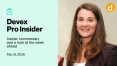


What happens when the world’s most powerful philanthropist becomes a liability — and the sector he bankrolls can no longer afford to look away?
The renewed scrutiny around Bill Gates’ relationship with Jeffrey Epstein — amplified by newly released documents — has landed at a tricky time for global development. Gates denies wrongdoing and says he laments meeting Epstein. The Gates Foundation says it “regrets having any employees interact with Epstein in any way.” But this debate is no longer just about personal judgment. It’s about power and how we all view modern philanthropy.
As my colleague Michael Igoe reported, some experts hope the controversy broadens into a reality check. “Hypocrisy is at the core of philanthropy, and we all have to come to terms with that,” historian Maribel Morey told him. Great fortunes are rarely built in morally pristine ways, she said, yet philanthropy often transforms that wealth into moral authority. As Devex Managing Editor Anna Gawel asked on the latest episode of our podcast, This Week in Global Development: “Are we idolizing billionaires who give away their billions without really holding them to account?”
This story is forDevex Promembers
Unlock this story now with a 15-day free trial of Devex Pro.
With a Devex Pro subscription you'll get access to deeper analysis and exclusive insights from our reporters and analysts.
Start my free trialRequest a group subscriptionAlready a user? Sign in
Printing articles to share with others is a breach of our terms and conditions and copyright policy. Please use the sharing options on the left side of the article. Devex Pro members may share up to 10 articles per month using the Pro share tool ( ).
About the author

Helen Murphy
Helen is an award-winning journalist and Senior Editor at Devex, where she edits coverage on global development in the Americas. Based in Colombia, she previously covered war, politics, financial markets, and general news for Reuters, where she headed the bureau, and for Bloomberg in Colombia and Argentina, where she witnessed the financial meltdown. She started her career in London as a reporter for Euromoney Publications before moving to Hong Kong to work for a daily newspaper.
Search for articles
Related Stories


Most Read
- 1
- 2
- 3
- 4
- 5