• News
    • Latest news
    • News search
    • Health
    • Finance
    • Food
    • Career news
    • Content series
    • Focus areas
    • Try Devex Pro
  • Jobs
    • Job search
    • Post a job
    • Employer search
    • CV Writing
    • Upcoming career events
    • Try Career Account
  • Funding
    • Funding search
    • Funding news
  • Talent
    • Candidate search
    • Devex Talent Solutions
  • Events
    • Upcoming and past events
    • Partner on an event
  • Post a job
  • About
      • About us
      • Membership
      • Newsletters
      • Advertising partnerships
      • Devex Talent Solutions
      • Contact us
Join DevexSign in
Join DevexSign in

News

  • Latest news
  • News search
  • Health
  • Finance
  • Food
  • Career news
  • Content series
  • Focus areas
  • Try Devex Pro

Jobs

  • Job search
  • Post a job
  • Employer search
  • CV Writing
  • Upcoming career events
  • Try Career Account

Funding

  • Funding search
  • Funding news

Talent

  • Candidate search
  • Devex Talent Solutions

Events

  • Upcoming and past events
  • Partner on an event
Post a job

About

  • About us
  • Membership
  • Newsletters
  • Advertising partnerships
  • Devex Talent Solutions
  • Contact us
  • My Devex
  • Update my profile % complete
  • Account & privacy settings
  • My saved jobs
  • Manage newsletters
  • Support
  • Sign out
Latest newsNews searchHealthFinanceFoodCareer newsContent seriesFocus areasTry Devex Pro
    • News
    • Afghanistan

    DRR yet to take off in Afghanistan

    Most international aid for Afghanistan is directed to security and good governance, so little is left to help mitigate the effects of natural disasters like last week's floods. NGO officials share how the country is struggling to get donors interested in disaster risk reduction.

    By Jenny Lei Ravelo // 17 June 2014
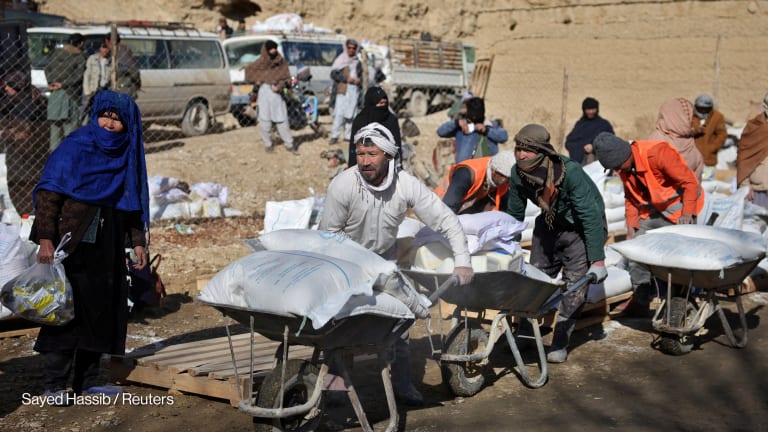
    In a country like Afghanistan, where preventing militant attacks and fighting corruption are the top concerns, other issues, such as disaster risk reduction, are often put on the back burner. Last week, flash floods in northern Baghlan province killed 80 people, destroyed more than 400 homes and damaged several road infrastructure in the worst natural disaster the area experienced in 50 years. In the immediate aftermath of the catastrophe, as the Afghan government and international aid agencies scrambled to respond, these efforts were hampered by the remoteness of the area and lack of infrastructure. This is a recurring problem in Baghlan and many parts of Afghanistan that regularly suffer different forms of natural disasters, where the tendency is to focus on response rather than putting in place mechanisms to mitigate the effects of these calamities. Where does Afghanistan stand on disaster risk reduction and what has been done so far? Sure, there have been some (feeble) attempts by the government and nongovernmental organizations. For instance, local authorities has put up what Vivek C.K., project manager for community-based DRR at Concern Worldwide, dubbed “gabion walls” that help protect some communities against floods. But this is not enough. For example, the government has not yet introduced a standard building code that would make infrastructure around the country sturdy enough and won't be a hazard in the event of a disaster. Kabul has a DRR plan in place, and there is a functioning interagency, multistakeholder DRR platform that tries to implement the Hyogo Framework for Action, a guideline governments and development actors around the world agreed to follow to mitigate the effects of natural disasters worldwide. But the Afghan government and many U.N. agencies and aid groups have not yet fully mainstreamed this in all of their development planning and projects, according to the Concern expert. “Mainstreaming development planning has been widely talked about, but the results have been mixed,” she told Devex. “However, more international NGOs and U.N. agencies are giving increased attention to DRR and working it into their development plans, and the government of Afghanistan has and is taking measures to develop a comprehensive DRR strategy and plan.” Raising DRR awareness among the population also remains a challenge for local government units. This is based on an evaluation survey Church World Service conducted over the past few weeks in several provinces in Afghanistan. The Afghanistan National Disaster Management Authority has been trying to secure funding for DRR-proofed infrastructure and equipment in the country, but "this has not really taken off yet," Nejabat Safi, CWS' associate director of disaster management program in Afghanistan, told Devex. The government has a National Emergency Fund, but this is only for emergency relief. This limited approach is what drives the neverending cycle in which the government and organizations struggle to delivering aid when a disaster strikes, and then spend millions in providing temporary relief. In the areas where Concern works, the organization’s DRR specialist explained that often the best option is relocation, as the locations are highly prone to floods and landslides. But then in order to do this, the government needs to mobilize significant resources. CWS and ANDMA are planning a workshop in July involving various stakeholders to identify gaps in addressing disasters in Afghanistan. Safi hopes these gaps will help inform stakeholders at a planned development conference later this year, and drive more support for DRR work in the country. Read more development aid news online, and subscribe to The Development Newswire to receive top international development headlines from the world’s leading donors, news sources and opinion leaders — emailed to you FREE every business day.

    Related Stories

    Devex Newswire: How to make a humanitarian crisis worse before it hits
    Devex Newswire: How to make a humanitarian crisis worse before it hits
    Global polio coalition braces for 30% budget cut
    Global polio coalition braces for 30% budget cut
    Devex Invested: Why trouble could be on the horizon for AIIB
    Devex Invested: Why trouble could be on the horizon for AIIB
    COP30 reporters' notebook: Day 10
    COP30 reporters' notebook: Day 10

    In a country like Afghanistan, where preventing militant attacks and fighting corruption are the top concerns, other issues, such as disaster risk reduction, are often put on the back burner.

    Last week, flash floods in northern Baghlan province killed 80 people, destroyed more than 400 homes and damaged several road infrastructure in the worst natural disaster the area experienced in 50 years.

    In the immediate aftermath of the catastrophe, as the Afghan government and international aid agencies scrambled to respond, these efforts were hampered by the remoteness of the area and lack of infrastructure.

    This article is free to read - just register or sign in

    Access news, newsletters, events and more.

    Join usSign in
    • Humanitarian Aid
    • Environment & Natural Resources
    Printing articles to share with others is a breach of our terms and conditions and copyright policy. Please use the sharing options on the left side of the article. Devex Pro members may share up to 10 articles per month using the Pro share tool ( ).

    About the author

    • Jenny Lei Ravelo

      Jenny Lei Ravelo@JennyLeiRavelo

      Jenny Lei Ravelo is a Devex Senior Reporter based in Manila. She covers global health, with a particular focus on the World Health Organization, and other development and humanitarian aid trends in Asia Pacific. Prior to Devex, she wrote for ABS-CBN, one of the largest broadcasting networks in the Philippines, and was a copy editor for various international scientific journals. She received her journalism degree from the University of Santo Tomas.

    Search for articles
    Related Stories

    Devex NewswireRelated Stories - Devex Newswire: How to make a humanitarian crisis worse before it hits

    Devex Newswire: How to make a humanitarian crisis worse before it hits

    The future of global healthRelated Stories - Global polio coalition braces for 30% budget cut

    Global polio coalition braces for 30% budget cut

    Devex InvestedRelated Stories - Devex Invested: Why trouble could be on the horizon for AIIB

    Devex Invested: Why trouble could be on the horizon for AIIB

    COP30Related Stories - COP30 reporters' notebook: Day 10

    COP30 reporters' notebook: Day 10

    Most Read

    • 1
      Invest in diagnostics to win the health fight
    • 2
      Exclusive: Former Iraqi president picked to lead UN Refugee Agency
    • 3
      Future forward: Closing infrastructure gaps for climate innovation
    • 4
      Financing Asia’s transformation: How to plug the trillion-dollar gap
    • 5
      Exclusive: US and EU aim to kill UN college education subsidy
    • News
    • Jobs
    • Funding
    • Talent
    • Events

    Devex is the media platform for the global development community.

    A social enterprise, we connect and inform over 1.3 million development, health, humanitarian, and sustainability professionals through news, business intelligence, and funding & career opportunities so you can do more good for more people. We invite you to join us.

    • About us
    • Membership
    • Newsletters
    • Advertising partnerships
    • Devex Talent Solutions
    • Post a job
    • Careers at Devex
    • Contact us
    © Copyright 2000 - 2025 Devex|User Agreement|Privacy Statement