

• News
    • Latest news
    • News search
    • Health
    • Finance
    • Food
    • Career news
    • Content series
    • Focus areas
    • Try Devex Pro
  • Jobs
    • Job search
    • Post a job
    • Employer search
    • CV Writing
    • Upcoming career events
    • Try Career Account
  • Funding
    • Funding search
    • Funding news
  • Talent
    • Candidate search
    • Devex Talent Solutions
  • Events
    • Upcoming and past events
    • Partner on an event
  • Post a job
  • About
      • About us
      • Membership
      • Newsletters
      • Advertising partnerships
      • Devex Talent Solutions
      • Contact us
Join DevexSign in
Join DevexSign in

News

  • Latest news
  • News search
  • Health
  • Finance
  • Food
  • Career news
  • Content series
  • Focus areas
  • Try Devex Pro

Jobs

  • Job search
  • Post a job
  • Employer search
  • CV Writing
  • Upcoming career events
  • Try Career Account

Funding

  • Funding search
  • Funding news

Talent

  • Candidate search
  • Devex Talent Solutions

Events

  • Upcoming and past events
  • Partner on an event
Post a job

About

  • About us
  • Membership
  • Newsletters
  • Advertising partnerships
  • Devex Talent Solutions
  • Contact us
  • My Devex
  • Update my profile % complete
  • Account & privacy settings
  • My saved jobs
  • Manage newsletters
  • Support
  • Sign out
Latest newsNews searchHealthFinanceFoodCareer newsContent seriesFocus areasTry Devex Pro
    • Opinion
    • Tina Sciabica on literacy

    Fighting poverty with literacy in South Asia

    Up to 773 million adults today are still illiterate, and half of them live in South Asia. In a guest opinion on World Literacy Day, READ Global Executive Director Tina Sciabica explains why the future of countries like Bhutan depends on something as simple as whether or not its citizens will learn to read.

    By Tina Sciabica // 08 September 2014
    When most people think of learning to read, children come to mind. But 773.5 million adults — almost the entire population of Eastern and Western Europe combined — are still illiterate. “My parents are farmers. They don’t know how to read and write,” says 10-year-old Thinley Pelzom from rural Bhutan. Thinley's parents couldn’t help her with schoolwork, and that’s why she grew up unable to read at the same level as her peers. For other kids in her same situation, chances are they’ll grow up illiterate like their parents. Up to 17 percent of children in the developing world will not enroll in primary school because they don’t have access to one, can’t afford it or must help out with work on the farm. In the tiny mountain kingdom of Bhutan, 36 percent of public schools are not accessible by road and around half of adults are illiterate. There was only one public lending library in the entire country in 2010, when we established our first READ Center in Thinley’s village of Ura. These libraries offer an integrated approach to communitywide education in South Asia, giving everyone — young and old — the opportunity to learn to read, gain new job skills and access critical information. The conversation about literacy needs to be larger than only focusing on children and school programs. It needs to be about both children and adults — men and women — and entire communities and countries. Cultural barriers like gender norms, as well as ethnic and socio-economic discrimination, also have to be addressed. Women and mothers in particular face huge barriers to literacy and education. About 493 million women worldwide are illiterate, and more than half of them are in South Asia. These women rarely have the opportunity to learn at a young age. As many as 130 million girls in the region will be married as children by 2030, ending their education and resulting in early pregnancies. Many girls will never step foot in a school because their parents don’t see the value in educating their daughters. As adults, these uneducated women have little power and often must seek permission from their husbands to leave their homes for reasons other than raising children or agricultural work. Social class and ethnicity also impact education for kids and adults. In India, the government has launched efforts to tackle illiteracy by making schools more accessible to poorer kids by reimbursing school fees, but reports show it’s not working. Schools sometimes discriminate based on socio-economic class or only allow students to apply through online submission forms — when only 15 percent of Indians use the Internet and just 9.5 percent of households have a computer. In South Asia, community libraries are free, neutral and safe places for women and community members of all ethnic and economic backgrounds to visit. READ Centers are owned and operated by local communities, which are required to include members of all ethnic and socio-economic backgrounds and genders in their management committees. The libraries also offer services beyond literacy programs that benefit all members of a family, like health care clinics and training in livelihood skills such as sewing and agriculture. A country’s future depends on something as simple as whether or not its citizens can read. Our Bhutan country director says: “Reading is about knowledge, it’s about ideas. If we have ideas, we’ll have great leaders. If we have ideas, we’ll have great policy makers.” Meanwhile, 39 percent of the population of South Asia remains illiterate — including children and adults. That means more than 300 million people could be taking better care of their families and becoming leaders in their communities. One of those villagers is young Thinley. Though her parents were illiterate, today she is an avid reader at her local READ Center and helps teach other kids to read. She is part of the “Junior Friends of the Library,” a group of children that help the library organize and conduct activities for children their age in their community. When she grows up, she wants to be a teacher. Watch this video about Thinley and how libraries are creating a culture of literacy in Bhutan: Join the Devex community and access more in-depth analysis, breaking news and business advice — and a host of other services — on international development, humanitarian aid and global health.

    Related Stories

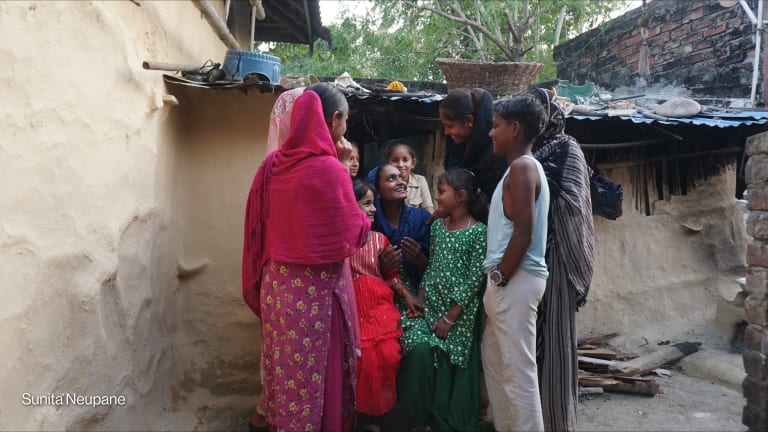
    US aid cuts yank Nepal’s girls out of school and into child marriage
    US aid cuts yank Nepal’s girls out of school and into child marriage
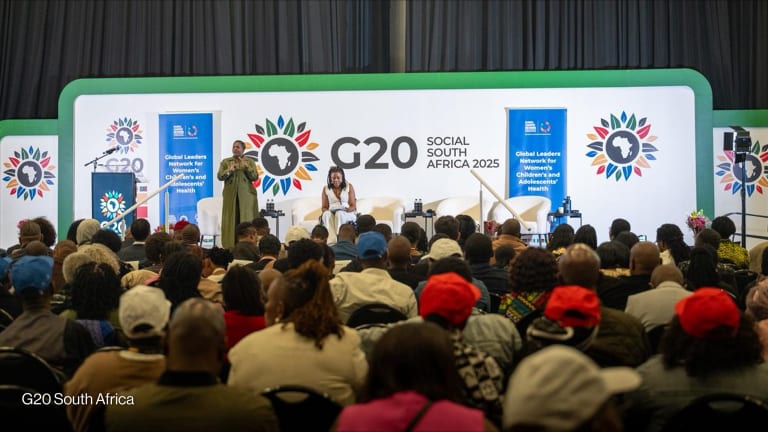
    G20 reporter's notebook: Social Summit Day 2
    G20 reporter's notebook: Social Summit Day 2

    When most people think of learning to read, children come to mind. But 773.5 million adults — almost the entire population of Eastern and Western Europe combined — are still illiterate.

    “My parents are farmers. They don’t know how to read and write,” says 10-year-old Thinley Pelzom from rural Bhutan.

    Thinley's parents couldn’t help her with schoolwork, and that’s why she grew up unable to read at the same level as her peers. For other kids in her same situation, chances are they’ll grow up illiterate like their parents. Up to 17 percent of children in the developing world will not enroll in primary school because they don’t have access to one, can’t afford it or must help out with work on the farm. In the tiny mountain kingdom of Bhutan, 36 percent of public schools are not accessible by road and around half of adults are illiterate.

    This article is free to read - just register or sign in

    Access news, newsletters, events and more.

    Join usSign in
    • Social/Inclusive Development
    • Careers & Education
    Printing articles to share with others is a breach of our terms and conditions and copyright policy. Please use the sharing options on the left side of the article. Devex Pro members may share up to 10 articles per month using the Pro share tool ( ).
    The views in this opinion piece do not necessarily reflect Devex's editorial views.

    About the author

    • Tina Sciabica

      Tina Sciabica

      Tina Sciabica is executive director of READ Global, an international nonprofit working to provide education and economic opportunities to rural villagers in South Asia. She was formerly deputy director of the Social Venture Network, founded and ran a legal recruiting business, and started her career as a corporate litigation attorney.
    Search for articles

    Related Stories

    The Aid ReportRelated Stories - US aid cuts yank Nepal’s girls out of school and into child marriage

    US aid cuts yank Nepal’s girls out of school and into child marriage

    G20 Summit 2025Related Stories - G20 reporter's notebook: Social Summit Day 2

    G20 reporter's notebook: Social Summit Day 2

    Most Read

    • 1
      Modern tools, enduring fight: The push to eliminate river blindness
    • 2
      Devex Power 50
    • 3
      When business moves faster than politics
    • 4
      The direction of the Paris Agreement is right. The pace is not
    • 5
      Why NTDs are a prime investment for philanthropy
    • News
    • Jobs
    • Funding
    • Talent
    • Events

    Devex is the media platform for the global development community.

    A social enterprise, we connect and inform over 1.3 million development, health, humanitarian, and sustainability professionals through news, business intelligence, and funding & career opportunities so you can do more good for more people. We invite you to join us.

    • About us
    • Membership
    • Newsletters
    • Advertising partnerships
    • Devex Talent Solutions
    • Post a job
    • Careers at Devex
    • Contact us
    © Copyright 2000 - 2026 Devex|User Agreement|Privacy Statement