• News
    • Latest news
    • News search
    • Health
    • Finance
    • Food
    • Career news
    • Content series
    • Focus areas
    • Try Devex Pro
  • Jobs
    • Job search
    • Post a job
    • Employer search
    • CV Writing
    • Upcoming career events
    • Try Career Account
  • Funding
    • Funding search
    • Funding news
  • Talent
    • Candidate search
    • Devex Talent Solutions
  • Events
    • Upcoming and past events
    • Partner on an event
  • Post a job
  • About
      • About us
      • Membership
      • Newsletters
      • Advertising partnerships
      • Devex Talent Solutions
      • Contact us
Join DevexSign in
Join DevexSign in

News

  • Latest news
  • News search
  • Health
  • Finance
  • Food
  • Career news
  • Content series
  • Focus areas
  • Try Devex Pro

Jobs

  • Job search
  • Post a job
  • Employer search
  • CV Writing
  • Upcoming career events
  • Try Career Account

Funding

  • Funding search
  • Funding news

Talent

  • Candidate search
  • Devex Talent Solutions

Events

  • Upcoming and past events
  • Partner on an event
Post a job

About

  • About us
  • Membership
  • Newsletters
  • Advertising partnerships
  • Devex Talent Solutions
  • Contact us
  • My Devex
  • Update my profile % complete
  • Account & privacy settings
  • My saved jobs
  • Manage newsletters
  • Support
  • Sign out
Latest newsNews searchHealthFinanceFoodCareer newsContent seriesFocus areasTry Devex Pro
    • News
    • Global health

    Gavi and partners reached HPV vaccine goal, immunizing 86 million girls

    The vaccine alliance reached its target of immunizing an estimated 86 million girls with the vaccine that prevents human papillomavirus, a sexually transmitted infection which can lead to cervical cancer.

    By Sara Jerving // 17 November 2025
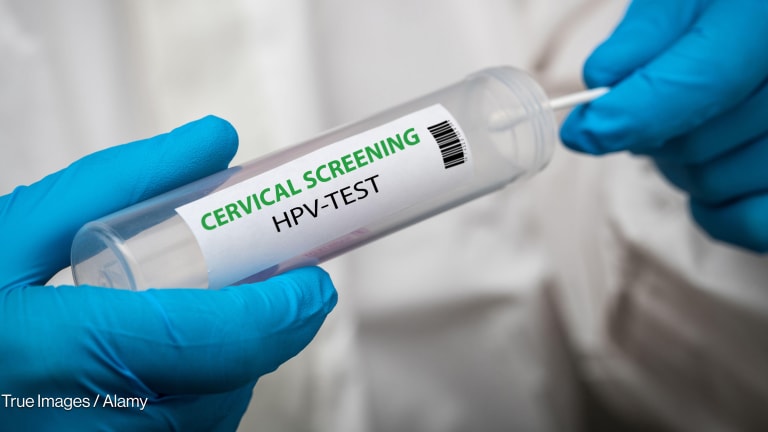
    Gavi, the Vaccine Alliance reached its target of vaccinating an estimated 86 million girls with the vaccine that prevents the human papillomavirus, or HPV — a sexually transmitted infection which can lead to cervical cancer. The organization estimates this will prevent an estimated 1.4 million deaths. The vaccine is recommended for girls aged 9 to 14 years old — making campaigns for this vaccine unique, given that many vaccines target younger children, and so routine vaccination systems are built around that age group. At the end of 2022, Gavi’s board approved this goal to reach 86 million girls by the end of 2025. “That was a very ambitious goal at the time, because in the period between 2012 and 2022 we actually only reached 13 million girls in that whole period,” Emily Kobayashi, head of the HPV vaccines program at Gavi, told Devex. She added that this became a “really special case” that led to rapid scale-up. By the end of this year, the vaccine will be available in countries where 89% of global cervical cancer cases occur. This cancer has the highest burden in lower-income countries, which often lack screening and equitable treatment access. Gavi made the announcement on the world’s first cervical cancer elimination day. “Every two minutes, a woman dies from cervical cancer - a disease that is both devastating and largely preventable,” wrote Dr. Sania Nishtar, chief executive officer at Gavi, in a release. Demand ‘explosion’ and rapid uptake In 2023, 14 million girls were vaccinated for HPV — more than the total vaccinated in the previous decade. The momentum continued last year, with that number more than doubling to 32.6 million. A key element was that in 2022, the World Health Organization changed its recommendations from two doses to one — meaning health systems don’t have to track down the girls that got one dose to ensure they receive a second. Additionally, there was previously a global shortage of the vaccine, which prevented countries from scaling up vaccinations. But supply constraints have now been alleviated. When Gavi initially introduced support for rolling out the vaccine, the work included small pilot and demonstration projects used to discover the best strategies around delivering the vaccine to an older target age group. But the consequence was demand wasn’t high at that time — and in sync, supplies also didn’t expand. But then demand began to increase as countries became ready to introduce the vaccine on a broader scale, WHO recommended countries conduct campaigns for girls across the eligible age range, and there were new recommendations to vaccinate boys in high-income countries. “That led to this really high explosion of demand but this global supply wasn’t really able to keep up,” Kobayashi said. But since then, Gavi’s market-shaping team has worked with suppliers to encourage their entry. This included offering manufacturers guaranteed volumes that Gavi will purchase. There are now four manufacturers that Gavi-supported countries can choose from — the alliance is currently procuring from three of them. “With this new massive demand, we were able, over the course of a few years, to have more supply,” she said. Through UNICEF tenders and contracts, Gavi can access the vaccines at about $2.90 to $5.18 per dose. This is somewhat high relative to other vaccines, but the Gavi price is the best in the world — in other markets, the HPV vaccines range from $13 to over $100, Kobayashi said. Additionally, with WHO reducing the recommendation from two to one dose, supplies can go further to reach twice as many girls. Kobayashi said they anticipate that by next year, the HPV vaccine supply will meet global demand, creating what they view as a healthy and stable market. Beyond this, Gavi also launched a revitalization package at the beginning of 2023 to provide new resources to support country rollouts. This included resources for countries that hadn’t yet introduced the vaccine, supporting countries in conducting multiage vaccination campaigns so they can transition from two doses to one. “I think we saw pretty quickly really good uptake and acceleration of the program,” she said. There was also a lot of political commitment from governments that Gavi supports, she said, adding that one factor is in countries with high cervical cancer rates, many people know someone who has died from it. “Because it’s such a painful and debilitating condition, it really motivates policymakers to know that there's a vaccine that can completely prevent this horrible outcome with one shot,” she said. Community-by-community Many countries have achieved over 90% of their targets, Kobayashi said. For example, Tanzania achieved 97% coverage during its campaign in April 2024. Countries make their own plans for rolling out the vaccines — but at the heart is figuring out how to find eligible adolescent girls. Though school-based vaccinations are common, there are also many girls who are not in school, Kobayashi said. And that requires more creativity. In Nigeria, for example, women working in markets have gathered eligible girls either working or present in the markets. The country had two campaign phases in 2023 and 2024 — reaching over 13 million girls. “Nigeria was a very exciting one for us,” Kobayashi said. “That’s an incredible achievement.” This year, they are working to find girls who were missed and those turning nine years old. Additionally, there was a recent integrated campaign in Nigeria that targeted children aged 9 months to 15 years for the measles and rubella vaccines, which enabled vaccinators to also reach 9-year-old girls with the HPV vaccine. “They’ve been using, in the different states of Nigeria, these different approaches to keep the coverage high even after the campaign is finished,” she said. Other countries have also rolled out campaigns in churches or Islamic religious schools. “It’s really about developing a strategy on a community-by-community basis of finding those out-of-school girls,” Kobayashi said. Moving forward, more broadly, Gavi is working with a lower budget than it hoped — its replenishment event in June fell short of its goals, with the U.S. cutting its funding to the alliance. And while that means the organization must tighten its focus and make trade-offs, Kobayashi said the organization remains committed to rolling out the HPV vaccine. She added that now that many countries have done large introductions of the vaccine, they’re well-positioned to transition to targeting smaller cohorts of girls aged 9 and 10 years old each year. There are 158 countries that have the HPV vaccines in their national immunization programs, and Gavi plans to support another seven to launch in the coming months.

    Related Stories

    India’s fight to reach the children vaccine campaigns still miss
    India’s fight to reach the children vaccine campaigns still miss
    Gavi's board tasked with strategy shift in light of $3B funding gap
    Gavi's board tasked with strategy shift in light of $3B funding gap
    Devex Newswire: Will G20 add up to success or failure for South Africa?
    Devex Newswire: Will G20 add up to success or failure for South Africa?
    Devex CheckUp: US pivots to market-first health approach in Africa
    Devex CheckUp: US pivots to market-first health approach in Africa

    Gavi, the Vaccine Alliance reached its target of vaccinating an estimated 86 million girls with the vaccine that prevents the human papillomavirus, or HPV — a sexually transmitted infection which can lead to cervical cancer. The organization estimates this will prevent an estimated 1.4 million deaths.

    The vaccine is recommended for girls aged 9 to 14 years old — making campaigns for this vaccine unique, given that many vaccines target younger children, and so routine vaccination systems are built around that age group.  

    At the end of 2022, Gavi’s board approved this goal to reach 86 million girls by the end of 2025.

    This article is free to read - just register or sign in

    Access news, newsletters, events and more.

    Join usSign in

    Read more:

    ► Gavi cervical cancer campaign aims to reach African girls through sports

    ► WHO and Gavi's global push for HPV vaccines gathers momentum

    ► Opinion: The HPV vaccine is a cancer moonshot. Why then is uptake so low?

    • Global Health
    • Humanitarian Aid
    • Gavi, the Vaccine Alliance
    Printing articles to share with others is a breach of our terms and conditions and copyright policy. Please use the sharing options on the left side of the article. Devex Pro members may share up to 10 articles per month using the Pro share tool ( ).

    About the author

    • Sara Jerving

      Sara Jervingsarajerving

      Sara Jerving is a Senior Reporter at Devex, where she covers global health. Her work has appeared in The New York Times, the Los Angeles Times, The Wall Street Journal, VICE News, and Bloomberg News among others. Sara holds a master's degree from Columbia University Graduate School of Journalism where she was a Lorana Sullivan fellow. She was a finalist for One World Media's Digital Media Award in 2021; a finalist for the Livingston Award for Young Journalists in 2018; and she was part of a VICE News Tonight on HBO team that received an Emmy nomination in 2018. She received the Philip Greer Memorial Award from Columbia University Graduate School of Journalism in 2014.

    Search for articles
    Related Stories

    Global HealthRelated Stories - India’s fight to reach the children vaccine campaigns still miss

    India’s fight to reach the children vaccine campaigns still miss

    Global HealthRelated Stories - Gavi's board tasked with strategy shift in light of $3B funding gap

    Gavi's board tasked with strategy shift in light of $3B funding gap

    Devex NewswireRelated Stories - Devex Newswire: Will G20 add up to success or failure for South Africa?

    Devex Newswire: Will G20 add up to success or failure for South Africa?

    Devex CheckUpRelated Stories - Devex CheckUp: US pivots to market-first health approach in Africa

    Devex CheckUp: US pivots to market-first health approach in Africa

    Most Read

    • 1
      Why NTDs are a prime investment for philanthropy
    • 2
      The silent, growing CKD epidemic signals action is needed today
    • 3
      Trump withdraws, defunds dozens of international orgs and treaties
    • 4
      Why capital without knowledge-sharing won't solve the NCD crisis
    • 5
      Why are 3.4 billion people still offline?
    • News
    • Jobs
    • Funding
    • Talent
    • Events

    Devex is the media platform for the global development community.

    A social enterprise, we connect and inform over 1.3 million development, health, humanitarian, and sustainability professionals through news, business intelligence, and funding & career opportunities so you can do more good for more people. We invite you to join us.

    • About us
    • Membership
    • Newsletters
    • Advertising partnerships
    • Devex Talent Solutions
    • Post a job
    • Careers at Devex
    • Contact us
    © Copyright 2000 - 2026 Devex|User Agreement|Privacy Statement