• News
    • Latest news
    • News search
    • Health
    • Finance
    • Food
    • Career news
    • Content series
    • Focus areas
    • Try Devex Pro
  • Jobs
    • Job search
    • Post a job
    • Employer search
    • CV Writing
    • Upcoming career events
    • Try Career Account
  • Funding
    • Funding search
    • Funding news
  • Talent
    • Candidate search
    • Devex Talent Solutions
  • Events
    • Upcoming and past events
    • Partner on an event
  • Post a job
  • About
      • About us
      • Membership
      • Newsletters
      • Advertising partnerships
      • Devex Talent Solutions
      • Contact us
Join DevexSign in
Join DevexSign in

News

  • Latest news
  • News search
  • Health
  • Finance
  • Food
  • Career news
  • Content series
  • Focus areas
  • Try Devex Pro

Jobs

  • Job search
  • Post a job
  • Employer search
  • CV Writing
  • Upcoming career events
  • Try Career Account

Funding

  • Funding search
  • Funding news

Talent

  • Candidate search
  • Devex Talent Solutions

Events

  • Upcoming and past events
  • Partner on an event
Post a job

About

  • About us
  • Membership
  • Newsletters
  • Advertising partnerships
  • Devex Talent Solutions
  • Contact us
  • My Devex
  • Update my profile % complete
  • Account & privacy settings
  • My saved jobs
  • Manage newsletters
  • Support
  • Sign out
Latest newsNews searchHealthFinanceFoodCareer newsContent seriesFocus areasTry Devex Pro
    • News
    • Global health

    How AI is bringing accuracy and efficiency to malaria diagnosis in Uganda

    The AI Health Lab at Kampala’s Makerere University is using artificial intelligence to diagnose malaria.

    By Amy Fallon // 12 December 2024
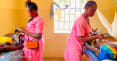
    When 43-year-old teacher, Ronald Mukasa, felt weak and began vomiting in June, he went to the hospital in Uganda where lab technicians ran a malaria rapid diagnostic test, or RDT. The most common way of detecting the country’s biggest killer involves a small blood sample being collected, typically through a finger prick, and detecting specific antigens. His test results were negative. But when Mukasa’s symptoms worsened, he was forced to go back to the hospital for a blood smear test using a microscope — known as the “gold standard” for malaria detection — which returned positive results. He was then given the right medicine. While at the lab, though, he witnessed a pilot study involving malaria being diagnosed using a smartphone — with the help of artificial intelligence. Mukasa had heard of AI. But he hadn’t heard of this new way to diagnose malaria being pioneered by the AI Health Lab at Kampala’s Makerere University, which since being established in 2016 has been piloted in about 40 select health centers across Uganda. It’s now being used for diagnosis of cervical cancer and tuberculosis across the country and there’s a chance that it could also be used to detect sickle cells and anemia. The app is part of a growing number of AI diagnostic tools being used across Africa and other parts of the global south. According to the project’s lead Dr. Rose Nakasi, the system will support the few available lab technicians in Uganda to quickly diagnose diseases at different health centers. This will relieve them of fatigue from operating microscopes while allowing them to diagnose more patients in a given period. Accuracy and speed Uganda has the world’s highest malaria incidence, with 478 cases per 1,000 population per year, making it the top cause of sickness and death in the country. Since January 2022, there has been a new wave of the disease in the country, with more than 300,000 cases reported every week at its peak. With a diagnosis accuracy of up to 99%, an increase in the throughput of diagnosis by up to 60%, and a reduction in the time taken to diagnose a patient by a quarter, the app could be revolutionary, Nakasi told Devex. “Our AI-supported mobile microscopy leverages advanced machine learning algorithms and smartphones to enhance imaging capabilities, enabling researchers and health care professionals to achieve unprecedented accuracy and efficiency in diagnostics,” she said. “By automating image analysis and providing real-time insights, our technology has the potential to significantly reduce diagnostic errors and accelerate diagnosis timelines.” RDTs are quick and easy to perform, Nakasi said. But when a person has a low level of malaria parasites in their blood, the standard tests often fail to detect the infection. The AI Health Lab combines the “gold standard” for diagnosing malaria with AI. Microscopy is considered the “gold standard” as it provides a definitive diagnosis and allows for the identification of specific parasite species. However, it requires skilled technicians and specialized equipment, with each slide needing to be fixed by hand about 100 times before a proper diagnosis can be given. “They have to strain their eyes a lot to be able to view the small parasites under the microscope,” Nakasi said. Under the new system, a smartphone fixed to a microscope eyepiece acquires a digital image of a blood sample. AI algorithms identify and annotate individual malaria parasites. The software employs machine learning techniques to autonomously derive classification and object detection criteria from a given image dataset. It learns to recognize the characteristic patterns associated with infections. An AI-enhanced microscope scans a smear in about 90 seconds compared to a human expert who requires on average 15 minutes to conclude a diagnosis, unless there are high levels of parasites in the blood, Dr. Alfred Andama, the principal lab technician on the project, said. He said the World Health Organization recommends that a microscopist view no more than 30-40 slides in a day to guarantee the quality of results, but due to the large work volume this is often exceeded. This severely compromises the quality of results produced and causes clinicians to lose confidence and trust in lab personnel, he told Devex in an email. A wrong malaria diagnosis could lead to a patient receiving the wrong medication, resulting in drug resistance, and, in the worst case, death. But one of the concerns about the rise of digital health and AI tools is that it could threaten the livelihoods of health care professionals. However, Andama stressed that the app’s aim was not to replace technicians but to make their work easier, and improve patient outcomes. “By automating smear microscopy, the lab technician is freed time to be able to process other specimens, and this results in reduced turn-around-time and minimizes the risk of patients resorting to self-medication and empiric treatment,” he said in an email. Wider uses The team of 22 research scientists, lab technicians, and pathologists in Uganda is also using AI to identify the exact species causing malaria so that the correct medication can be given and to avoid drug resistance. The team is also creating a database where a patient’s records will be updated electronically straight after diagnosis. The current government electronic health system takes between a week and a month, said Nakasi. When approved by Uganda’s Ministry of Health, they plan to integrate their system into the government system. They are also working with the Uganda Cancer Institute to pilot the technology to diagnose cervical cancer and with five regional referral hospitals across the country to trial it for tuberculosis. Cervical cancer is the main cause of cancer-related deaths in women in Uganda and sub-Saharan Africa and Uganda has the seventh highest incidence rate of cancer worldwide and East Africa’s second highest. Tuberculosis is also one of the country’s number one killers, with 32% of the about 91,000 people in Uganda falling sick with the disease each year also HIV-infected, according to WHO. The project has benefited from $1.5 million from Google, among other sources of funding including the United States National Institutes of Health, or NIH, through The Data Science for Health Discovery and Innovation in Africa, Science for Africa, and Lacuna Fund. “We now need more funding to scale the solutions across the entire country and even go beyond Uganda to other disease-endemic countries,” said Nakasi. Andama said that AI-based technologies were expected to revolutionize smear microscopy, especially in lower health facility labs, the majority of which are found in rural areas. Around the country there is a general excitement from lab technicians about the AI-based application, considering the limited number of trained lab technicians and the large volume of work at these microscopy centers. AI-enhanced microscopy that is expected to standardize diagnosis and reporting of smear results would not just build confidence in clinicians but also patients, he said. As technology continues to evolve, adopting AI-driven approaches in microscopy would be key to advancing medical care and improving patient management, said Andama. “We need to embrace this innovation now,” he said. Other solutions The AI Health Lab has collaborated with Ghana on data collection under the Lacuna Fund and is now gathering evidence from there. They’re also working with Zindi, a South Africa-based data scientists network, to run a challenge around the AI-based diagnosis of malaria where different machine learning experts share their experience and insights on data. “We believe this is part of a foundation to grow collaborations with other experts,” Nakasi said. In remote parts of Uganda, digital X-ray systems use AI and computer-aided detection, or CAD, for screening TB, the brainchild of Dutch firm Delft Imaging. Further afield in Nepal, a project by NAAMII is using AI-assisted smartphone microscopy for the automatic detection of diarrhea-causing parasites. And last year, the Global Fund to Fight AIDS, Tuberculosis and Malaria announced a partnership with Siemens Healthineers to accelerate the use of AI in X-ray screening for TB. There is hope that AI could be particularly used to diagnose and provide treatment plans for cancer, a disease that is considered a death sentence for people in Africa. There were about 20 million new cancer cases and 9.7 million deaths from the disease in 2022, WHO said. But the odds of surviving it are significantly worse on the continent than it is in high-income nations. The lab has also developed mCROPS, an app that capitalizes on smartphone camera technology that Ugandan farmers can use to identify viral diseases in cassava crops and monitor their geographical spread. “Farmers can have immediate and constant access to crop disease diagnosis technology which could be the difference between getting a good yield and return on investment or making losses,” Francis Jeremy Tusubira, a data scientist working on the project, told Devex in an email. “With increasing penetration of IT infrastructure and technologies such as smartphones, AI-powered agri-solutions can enable every farmer in Uganda to access critical agronomy solutions.” Limitations The app takes advantage of the fact that 63.8% of Uganda’s population is now reported to have a cell phone. But Aloyzius Bamundaga, the technical team lead and a computer-aided design designer, stressed that it’s also dependent on good internet. “The app requires a reliable connection for online services and power sources which vary across the regions in Uganda,” he told Devex via phone. “Some regions have unreliable internet and power outages.” Another limitation posed by the AI Health Lab is that patients will have to be persuaded to use this instead of the traditional method involving a person. But the new smartphone diagnosis will be given to patients for less than the price of an RDT. In terms of safety, the Lacuna Fund said it was guided by certain principles. Their principle around ethics states that it will fund data collection in a manner consistent with ethical labor standards and require subgrantees to outline steps that they will take to protect privacy and prevent harm in the collection, licensing, and use of datasets created with grant funds, said Jenniffer Pratt, partner at the Meridian Institute and director of the Lacuna fund. Meridian is supporting the AI Safety Fund, which more directly addresses issues around AI and safety concerns. In August, the Africa Union introduced a Continental Artificial Intelligence Strategy, which it said: “Underscores Africa’s commitment to an Africa-centric, development-focused approach to AI, promoting ethical, responsible, and equitable practices.” Uganda’s permanent secretary at the Ministry of Information and Communication Technology, Aminah Zawedde, told Devex via phone that there were concerns about AI in Uganda. “The fear of AI taking jobs exists but awareness is being created of the need for people to reskill and upskill to embrace the jobs that have manifested as a result,” she said. But Zawedde added that the government acknowledged and appreciated the value that emerging technologies such as AI were bringing toward improving service delivery for citizens. “Such projects that are AI-driven and developed by our own innovators will enable Ugandans and the government to make data-driven decisions,” she said. The government had launched a five-year national digital transformation road map with five pillars including cybersecurity, data protection, and privacy a year ago, she said. Mukasa said that the AI tool’s effectiveness “will strengthen our community’s faith in health care services.” “We will no longer wait in a queue for results since it takes a short period to diagnose,” he said.

    Related Stories

    Opinion: How community-led innovation can help drive equitable AI
    Opinion: How community-led innovation can help drive equitable AI
    Could AI ultrasounds be the 'great equalizer' for maternal health?
    Could AI ultrasounds be the 'great equalizer' for maternal health?
    3 ways AI can support drug innovation and global research equity
    3 ways AI can support drug innovation and global research equity
    Devex Dish: How AI is guiding India’s farmers through climate change
    Devex Dish: How AI is guiding India’s farmers through climate change

    When 43-year-old teacher, Ronald Mukasa, felt weak and began vomiting in June, he went to the hospital in Uganda where lab technicians ran a malaria rapid diagnostic test, or RDT. The most common way of detecting the country’s biggest killer involves a small blood sample being collected, typically through a finger prick, and detecting specific antigens.

    His test results were negative. But when Mukasa’s symptoms worsened, he was forced to go back to the hospital for a blood smear test using a microscope — known as the “gold standard” for malaria detection — which returned positive results. He was then given the right medicine.

    While at the lab, though, he witnessed a pilot study involving malaria being diagnosed using a smartphone — with the help of artificial intelligence.

    This article is free to read - just register or sign in

    Access news, newsletters, events and more.

    Join usSign in
    • Innovation & ICT
    • Global Health
    • The Global Fund to Fight AIDS, Tuberculosis and Malaria (GFATM)
    • Uganda
    Printing articles to share with others is a breach of our terms and conditions and copyright policy. Please use the sharing options on the left side of the article. Devex Pro members may share up to 10 articles per month using the Pro share tool ( ).

    About the author

    • Amy Fallon

      Amy Fallon@amyfallon

      Amy Fallon is an Australian freelance journalist currently based in Uganda. She has also reported from Australia, the U.K. and Asia, writing for a wide range of outlets on a variety of issues including breaking news, and international development, and human rights topics. Amy has also worked for News Deeply, NPR, The Guardian, AFP news agency, IPS, Citiscope, and others.

    Search for articles

    Related Stories

    Sponsored by The Pfizer FoundationRelated Stories - Opinion: How community-led innovation can help drive equitable AI

    Opinion: How community-led innovation can help drive equitable AI

    Global healthRelated Stories - Could AI ultrasounds be the 'great equalizer' for maternal health?

    Could AI ultrasounds be the 'great equalizer' for maternal health?

    Sponsored by Medicines for Malaria VentureRelated Stories - 3 ways AI can support drug innovation and global research equity

    3 ways AI can support drug innovation and global research equity

    Devex DishRelated Stories - Devex Dish: How AI is guiding India’s farmers through climate change

    Devex Dish: How AI is guiding India’s farmers through climate change

    Most Read

    • 1
      Why NTDs are a prime investment for philanthropy
    • 2
      The silent, growing CKD epidemic signals action is needed today
    • 3
      Trump withdraws, defunds dozens of international orgs and treaties
    • 4
      Why are 3.4 billion people still offline?
    • 5
      Why capital without knowledge-sharing won't solve the NCD crisis
    • News
    • Jobs
    • Funding
    • Talent
    • Events

    Devex is the media platform for the global development community.

    A social enterprise, we connect and inform over 1.3 million development, health, humanitarian, and sustainability professionals through news, business intelligence, and funding & career opportunities so you can do more good for more people. We invite you to join us.

    • About us
    • Membership
    • Newsletters
    • Advertising partnerships
    • Devex Talent Solutions
    • Post a job
    • Careers at Devex
    • Contact us
    © Copyright 2000 - 2026 Devex|User Agreement|Privacy Statement