• News
    • Latest news
    • News search
    • Health
    • Finance
    • Food
    • Career news
    • Content series
    • Focus areas
    • Try Devex Pro
  • Jobs
    • Job search
    • Post a job
    • Employer search
    • CV Writing
    • Upcoming career events
    • Try Career Account
  • Funding
    • Funding search
    • Funding news
  • Talent
    • Candidate search
    • Devex Talent Solutions
  • Events
    • Upcoming and past events
    • Partner on an event
  • Post a job
  • About
      • About us
      • Membership
      • Newsletters
      • Advertising partnerships
      • Devex Talent Solutions
      • Contact us
Join DevexSign in
Join DevexSign in

News

  • Latest news
  • News search
  • Health
  • Finance
  • Food
  • Career news
  • Content series
  • Focus areas
  • Try Devex Pro

Jobs

  • Job search
  • Post a job
  • Employer search
  • CV Writing
  • Upcoming career events
  • Try Career Account

Funding

  • Funding search
  • Funding news

Talent

  • Candidate search
  • Devex Talent Solutions

Events

  • Upcoming and past events
  • Partner on an event
Post a job

About

  • About us
  • Membership
  • Newsletters
  • Advertising partnerships
  • Devex Talent Solutions
  • Contact us
  • My Devex
  • Update my profile % complete
  • Account & privacy settings
  • My saved jobs
  • Manage newsletters
  • Support
  • Sign out
Latest newsNews searchHealthFinanceFoodCareer newsContent seriesFocus areasTry Devex Pro
    • News
    • Philanthropy

    Inside the plan to give people cash aid before climate disasters hit

    GiveDirectly is among the aid organizations experimenting with a new approach of giving people cash before climate disasters hit.

    By Stephanie Beasley // 24 March 2023
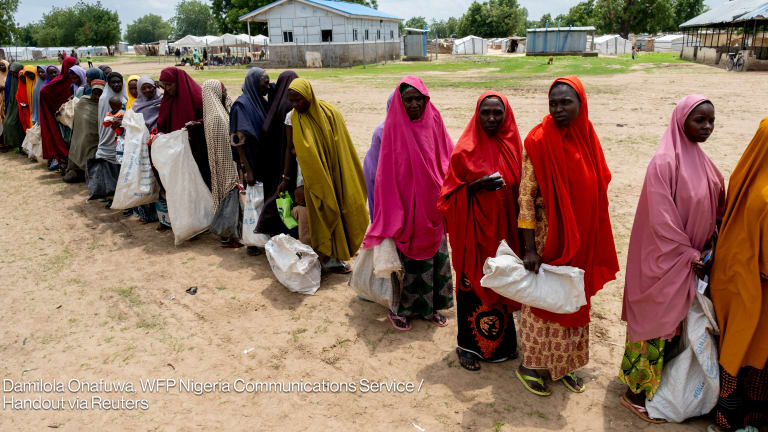
    Humanitarian groups traditionally swoop in to provide aid in the aftermath of crises and natural disasters. That often means it takes weeks or months for affected communities to get what they need to keep from going hungry or sustain themselves. But what if there was a way to provide aid to people before disasters strike? GiveDirectly is among the aid groups experimenting with this model — especially in extreme weather events. The cash transfer giant started by providing small payments to low-income communities in Mozambique days before they were hit by Cyclone Freddy last week. The deadly, record-breaking storm has killed hundreds in Madagascar, Malawi, and Mozambique. The goal of this “anticipatory climate cash” pilot is to help them better adapt to the impacts of climate change. GiveDirectly, which is based in the United States, used satellite data and flood mapping before the cyclone made landfall to identify the villages where flooding was expected to be the worst. Then, it provided mobile payments of $225 each to households in Mozambique’s Sofala province in the days before the storm to help them prepare. Like all GiveDirectly aid, the money was no-strings-attached. Villagers used the money to stockpile food and other supplies, increase the resiliency of their homes, or access transportation so they could evacuate. The group aims to help communities on the front lines of climate change better prepare for natural disasters and quickly recover by potentially averting some of the worst impacts, such as loss of housing, livestock, livelihoods, and food. “Typically, a disaster will happen and we’ll respond to it maybe a few weeks later. We’ll raise money and we’ll go to areas that have been most impacted and we’ll enroll people and then deliver cash to them. So there’s quite a delay,” GiveDirectly’s Senior Innovation Manager Vera Lummis told Devex. The group’s pilot is part of a new approach being considered by international NGOs and multilateral institutions alike. The International Federation of Red Cross and Red Crescent Societies and the United Nations are trying to figure out how to provide anticipatory assistance to low-income countries bearing the brunt of climate change despite emitting far less greenhouse gas emissions than their wealthy counterparts. “We think cash is just a really critical tool for disaster response, particularly because it’s very flexible, it’s efficient, and rapid to deliver.” --— Vera Lummis, senior innovation manager, GiveDirectly Anticipatory cash transfers are an example of climate initiatives focused on adaptation, or helping people adapt by building their resilience to extreme weather events. Adaptation efforts get far less investment than climate change mitigation projects: More than 90% of climate finance goes to mitigation, such as transitioning from fossil fuel use to renewable energy, which would help prevent further global warming. The aid groups trying anticipatory cash transfers want to move the global development sector away from its almost exclusive focus on mitigation. Instead, they want to provide low-income countries with the resources to adapt to climate impacts now. “More money must go to adaptation, as climate disasters are inevitable and worsening,” wrote Esnatt Gondwe-Matekesa, GiveDirectly’s Malawi program manager, in a blog post. GiveDirectly partnered with the Mozambican government on its pilot, which involved pre-enrolling households prior to the start of the spring cyclone season. GiveDirectly began sending out mobile payments earlier this month and has paid a total of 4,183 individuals in 11 villages. Payments will be sent to an additional 3,200 people in 10 villages “in the next few weeks,” GiveDirectly spokesperson Will McDonald told Devex. Researchers will compare the outcomes between those who received payments before and those who received them after to determine which intervention was most impactful. GiveDirectly expects to have results from the pilot as soon as next month. The initiative will “inform our design and implementation of future programs,” the organization said. “We think cash is just a really critical tool for disaster response, particularly because it’s very flexible, it’s efficient, and rapid to deliver,” Lummis said. “Also, this just aligns with our broader goals about combating poverty and climate shocks probably being one of the biggest disruptors to people coming out of poverty over the next few decades.” Last year, GiveDirectly also created an emergency cash relief program in Malawi to help people adapt to climate change. Many people living in these countries lack the resources to evacuate, relocate, or build resilience. Mozambique is one of the poorest countries in the world with a net national income per capita of $331 USD per year. And despite being a low-emitter country — only about 30% of its population has access to electricity — it is also one of the most climate vulnerable countries in the world. Weather scientists have found an increase in deadly tropical storms in Mozambique and other countries in southeast Africa because of climate change. Cash payments and other humanitarian aid is critical for Mozambique, which has been hit by multiple cyclones in recent years and that have “overlaid” an ongoing Islamist insurgency in the country, said Jacob Kurtzer, a humanitarian aid expert at the Center for Strategic and International Studies. Kurtzer was optimistic about the potential of anticipatory cash programs, which he described as the culmination of three trends: providing cash instead of commodities, providing cash in advance of emergencies, and localizing aid responses. Still, it’s too soon to gauge the potential impacts of the programs, he said. “Anticipatory cash seems to be conceptually, a really positive development,” he said. “I think there’s probably a few steps needed to be taken before saying this is a thing for the future for everywhere and everytime.” Research has shown no-strings cash grants to be an effective way of providing flexible funding to people dealing with financial emergencies or sudden expenses. Still, critics have argued that it’s not a reliable tool for addressing systemic issues that require long-term funding, such as the lack of public goods and basic infrastructure. The U.N. is also experimenting with anticipatory action programs. In 2021, the U.N.’s World Food Programme provided cash transfers to more than 14,000 people in Ethiopia after forecasts showed the country’s Somali region would receive below-average rainfall between March and May of that year. The U.N. Office for the Coordination of Humanitarian Affairs worked with United Kingdom.-based Centre for Disaster Protection to publish findings from pilots in other countries such as Bangladesh, Malawi, and Somalia that show the benefits of anticipatory actions. The pilots build on “growing evidence that acting prior to the onset of predictable shocks is significantly faster, more dignified and more (cost) effective than traditional humanitarian response,” according to a report CDP published about the Malawi pilot program. The discussion happening now is less about whether acting in advance of disaster is beneficial and more about what kinds of data that might be useful for predicting which communities will be most affected, CDP Director Daniel Clarke told Devex. Some humanitarian groups like IFRC have used weather forecast models and satellite data to determine if and when anticipatory funding is needed, he said. But there still might be other data tools that could be more useful to funders wanting to accurately identify where help is needed amid climate disasters, he added “We haven’t worked it out,” he said. “I think the humanitarian system really is on the cutting edge of working this out. The sector is really sort of driving forward and trying to learn how to do this well.” The U.N. has advocated for more than 50% of total climate finance to be spent on resilience and adaptation efforts. “Anticipatory action protects lives, livelihoods, homes, and entire communities,” U.N. Secretary-General António Guterres said in a 2021 speech on the need for more humanitarian funding of anticipatory action. “These early investments also prevent higher response costs down the road,” he said.

    Related Stories

    Our food aid systems are at breaking point. Time to build a better system
    Our food aid systems are at breaking point. Time to build a better system
    Opinion: Climate action plans cannot ignore half Sierra Leone's population
    Opinion: Climate action plans cannot ignore half Sierra Leone's population
    Devex Pro Insider: Words matter, so should it be foreign aid or f…..n aid?
    Devex Pro Insider: Words matter, so should it be foreign aid or f…..n aid?
    Devex Pro Insider: US nonprofits hatch escape plans in case foreign funders dump them
    Devex Pro Insider: US nonprofits hatch escape plans in case foreign funders dump them

    Humanitarian groups traditionally swoop in to provide aid in the aftermath of crises and natural disasters. That often means it takes weeks or months for affected communities to get what they need to keep from going hungry or sustain themselves.

    But what if there was a way to provide aid to people before disasters strike?

    GiveDirectly is among the aid groups experimenting with this model — especially in extreme weather events. The cash transfer giant started by providing small payments to low-income communities in Mozambique days before they were hit by Cyclone Freddy last week. The deadly, record-breaking storm has killed hundreds in Madagascar, Malawi, and Mozambique.

    This article is free to read - just register or sign in

    Access news, newsletters, events and more.

    Join usSign in

    More reading:

    ► What GiveDirectly's rise tells us about the future of cash transfers (Pro)

    ► GiveDirectly taps former UK global development minister as new chief

    ► Give me $1B and I'll end poverty in a whole country, says Rory Stewart (Pro)

    • Environment & Natural Resources
    • Funding
    • Private Sector
    • Humanitarian Aid
    • GiveDirectly
    Printing articles to share with others is a breach of our terms and conditions and copyright policy. Please use the sharing options on the left side of the article. Devex Pro members may share up to 10 articles per month using the Pro share tool ( ).

    About the author

    • Stephanie Beasley

      Stephanie Beasley@Steph_Beasley

      Stephanie Beasley is a Senior Reporter at Devex, where she covers global philanthropy with a focus on regulations and policy. She is an alumna of the UC Berkeley Graduate School of Journalism and Oberlin College and has a background in Latin American studies. She previously covered transportation security at POLITICO.
    Search for articles

    Related Stories

    Opinion: Food SystemsRelated Stories - Our food aid systems are at breaking point. Time to build a better system

    Our food aid systems are at breaking point. Time to build a better system

    Climate changeRelated Stories - Opinion: Climate action plans cannot ignore half Sierra Leone's population

    Opinion: Climate action plans cannot ignore half Sierra Leone's population

    Devex Pro InsiderRelated Stories - Devex Pro Insider: Words matter, so should it be foreign aid or f…..n aid?

    Devex Pro Insider: Words matter, so should it be foreign aid or f…..n aid?

    Devex Pro InsiderRelated Stories - Devex Pro Insider: US nonprofits hatch escape plans in case foreign funders dump them

    Devex Pro Insider: US nonprofits hatch escape plans in case foreign funders dump them

    Most Read

    • 1
      Why NTDs are a prime investment for philanthropy
    • 2
      The silent, growing CKD epidemic signals action is needed today
    • 3
      Trump withdraws, defunds dozens of international orgs and treaties
    • 4
      Why are 3.4 billion people still offline?
    • 5
      Why capital without knowledge-sharing won't solve the NCD crisis
    • News
    • Jobs
    • Funding
    • Talent
    • Events

    Devex is the media platform for the global development community.

    A social enterprise, we connect and inform over 1.3 million development, health, humanitarian, and sustainability professionals through news, business intelligence, and funding & career opportunities so you can do more good for more people. We invite you to join us.

    • About us
    • Membership
    • Newsletters
    • Advertising partnerships
    • Devex Talent Solutions
    • Post a job
    • Careers at Devex
    • Contact us
    © Copyright 2000 - 2026 Devex|User Agreement|Privacy Statement