
Sign up for Devex CheckUp
The must-read weekly newsletter for exclusive global health news and insider insights.
Discrimination against the San people in Namibia is preventing them from accessing health care and making them vulnerable to multidrug-resistant tuberculosis, according to Amnesty International.
In a report released Wednesday, the organization said the government “has failed to address the structural factors and social determinants that contribute to the San’s disproportionate vulnerability to TB and has also failed to provide for appropriate treatment and interventions required to control TB.”
High TB burden: The San people, culturally known as hunter-gatherers, are a historically marginalized group in Namibia that accounts for about 2% of the population. It’s the only ethnic group in the country that has seen a decline in health status since the country’s independence in 1990.
Namibia has one of the highest burdens of multidrug-resistant tuberculosis in the world, and some studies suggest that the burden of TB among the San people is nearly 40% higher than the national average. Data also suggests that people in this ethnic group have a higher risk of treatment failure, and an increased burden of drug resistant TB compared to the nation’s average.
100 years of a tuberculosis vaccine with limited benefit
A century ago, a baby was the first person to receive the Bacille Calmette-Guérin vaccine for tuberculosis. Despite being the only one licensed for the disease, the vaccine is not providing the protection needed.
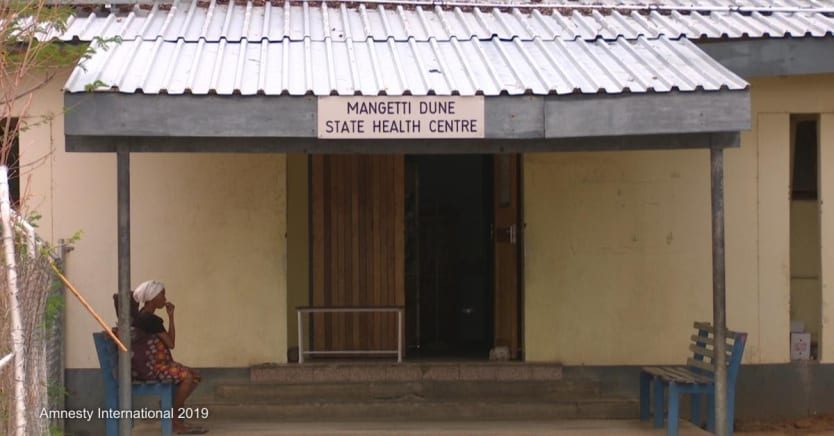
Government failures: According to the report, the San people face widespread discrimination at health care centers and also face challenges in buying medicine and paying for transport to reach health facilities. Many San communities live in extreme poverty in rural and remote parts of Namibia that can be up to 50 miles away from health facilities, and the government does not provide adequate mobile health clinics and services. A key challenge is also the language barrier, with most health care workers not fluent in the San languages.
The report said that despite identifying this group as one of those most at risk of TB, the government has failed to take meaningful steps to ensure the San people’s right to health.

About the author

Sara Jervingsarajerving
Sara Jerving is a Senior Reporter at Devex, where she covers global health. Her work has appeared in The New York Times, the Los Angeles Times, The Wall Street Journal, VICE News, and Bloomberg News among others. Sara holds a master's degree from Columbia University Graduate School of Journalism where she was a Lorana Sullivan fellow. She was a finalist for One World Media's Digital Media Award in 2021; a finalist for the Livingston Award for Young Journalists in 2018; and she was part of a VICE News Tonight on HBO team that received an Emmy nomination in 2018. She received the Philip Greer Memorial Award from Columbia University Graduate School of Journalism in 2014.