Opinion: Agroecology must feature boldly in African climate negotiations
The Nairobi Declaration on Climate Change was a missed opportunity to strengthen Africa’s food systems’ resilience. Featuring a push for regenerative agriculture such as agroecology in COP 28 negotiations is a must.
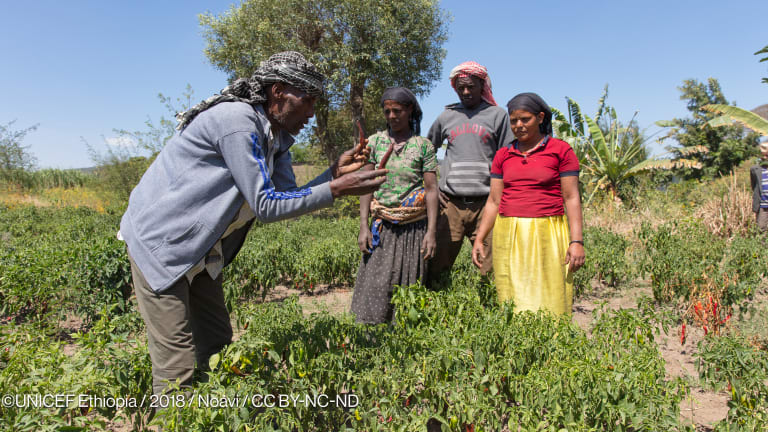
The first Africa Climate Summit, held in Kenya from Sept. 4 to 6, concluded with African leaders adopting the Nairobi Declaration on Climate Change. This declaration is expected to form the basis of Africa's negotiating position at the upcoming 28th United Nations Climate Change Conference, or COP 28. Yet the lack of emphasis on sustainable food systems for Africa, and particularly regenerative agriculture such as agroecology, is a cause for worry and a missed opportunity. The Nairobi Declaration's call for major polluters and global financial institutions to do more to assist lower-income countries should be applauded, as well as its strong call for international financial institution reforms and a variety of new global financing to fund climate action. However, African governments must go beyond recognizing the need and asking for financial mobilization to take strong climate action. It is past time for African governments to acknowledge that the situation is so dire and critical that wasting time, money, and political will on futile, reductionist, and speculative fixes is no longer an option. African leaders have faced criticism in several spaces for failing to propose a bold and just solution to address the root causes of the climate crisis. Many felt let down by the summit's focus on market-based approaches to climate change mitigation and adaptation, such as boosting Africa's carbon credit production and promoting climate-smart agriculture driven by industrial agriculture. Africa is experiencing escalating climate change-induced natural disasters, including extreme weather events, with devastating consequences for millions of people, economies, food security, and resilience. The latest State of Food Security and Nutrition in the World report highlights the dire reality of the rise of hunger and the triple burden of malnutrition. Africa remains the worst-affected region, with 1 in 5 people facing hunger, more than twice the global average. It is, therefore, inevitable that Africa rethinks its approach toward the climate crisis. Reports paint a similarly grim picture of the impact of the climate crisis on Africa and on key sectors. According to the sixth IPCC Assessment Report, climate change has caused widespread adverse impacts and related losses and damages to nature and people that are unequally distributed across systems, regions, and sectors. Economic damages from climate change have been detected in climate-exposed sectors such as agriculture, forestry, fishery, energy, and tourism. Agroecology, an approach that works A fundamental paradigm shift toward a structural, holistic, and systemic approach is needed to effectively address the climate crisis and strengthen the resilience of Africa’s food system. The Nairobi Declaration missed the opportunity to deliver a resolute call to move toward already tested and proven climate-resilient approaches such as agroecology and other regenerative methods. Agroecology, as the bold future of farming in Africa, “recognizes that correcting practices on farms is not enough; it is crucial to change the underlying political structure to bring about a better and more equitable food system for all.” There is ample evidence that agroecology works and offers a promising path forward for Africa’s food systems. Agroecology demonstrates immense potential to address the interconnected crises of climate, food, health, and social inequality more effectively and efficiently than the prevailing, reductionist, and profit-driven false solutions imposed on Africa by corporate interests. Communities across the continent already employ agroecological methods to safeguard their food security, environment, culture, and livelihoods while promoting health and social equity for women and marginalized communities. The Alliance for Food Sovereignty in Africa recently organized a trailblazing convening in Kinshasa, Democratic Republic of Congo, focusing on reconciling food production with biodiversity conservation and the climate emergency. Participants across Africa issued the Kinshasa Declaration at the convening's close, urging governments and donor communities to increase investment in agroecological methods and recognition of and protection for Indigenous and local peoples’ land rights. AFSA also conveyed a similar message during African Climate Week, which took place alongside the Africa Climate Summit, urging leaders to prioritize agroecology and food sovereignty for resilient, healthy, and sustainable food systems. As we head to COP 28 in Dubai, African leaders and negotiators must advance and take uncompromising, strategic measures in their negotiating positions. AFSA reiterates its position on adaptation, resilience, and mitigation through agroecology, which defines a clear path forward for strengthening climate adaptation and resilience through agroecology and identifies the following five key calls to action: 1. Agriculture — prioritize agroecology by including it in COP 28 climate decisions and institutionalizing it within the UNFCCC. 2. Climate adaptation — center and meaningfully engage small-scale food producers in climate adaptation, including the utilization of Indigenous knowledge. 3. Climate action on land — focus on the protection of land from degradation due to large-scale agriculture and establish/restore community-based management of natural resources. 4. Finance — direct new and accessible climate financing to small-scale farmers, in the form of grants rather than loans. 5. Gender — operationalize the UNFCCC’s Gender Action Plan to enable women and girls to make the best economic decisions to sustainably steward their lands. Africa stands at a crossroads, facing interconnected and multifaceted crises that demand a strong vision and a systemic approach. Agroecology provides a proven, effective, and equitable path forward, capable of addressing the continent's climate, biodiversity, food security, health, and social inequality challenges. African governments and leaders must act urgently, embracing transformative and socially just solutions such as agroecology to build Africa's more resilient, equitable, and sustainable food systems.
The first Africa Climate Summit, held in Kenya from Sept. 4 to 6, concluded with African leaders adopting the Nairobi Declaration on Climate Change. This declaration is expected to form the basis of Africa's negotiating position at the upcoming 28th United Nations Climate Change Conference, or COP 28. Yet the lack of emphasis on sustainable food systems for Africa, and particularly regenerative agriculture such as agroecology, is a cause for worry and a missed opportunity.
The Nairobi Declaration's call for major polluters and global financial institutions to do more to assist lower-income countries should be applauded, as well as its strong call for international financial institution reforms and a variety of new global financing to fund climate action.
However, African governments must go beyond recognizing the need and asking for financial mobilization to take strong climate action. It is past time for African governments to acknowledge that the situation is so dire and critical that wasting time, money, and political will on futile, reductionist, and speculative fixes is no longer an option.
This article is free to read - just register or sign in
Access news, newsletters, events and more.
Join usSign inPrinting articles to share with others is a breach of our terms and conditions and copyright policy. Please use the sharing options on the left side of the article. Devex Pro members may share up to 10 articles per month using the Pro share tool ( ).
The views in this opinion piece do not necessarily reflect Devex's editorial views.
Bridget Mugambe, program coordinator at the Alliance for Food Sovereignty in Africa, is a social scientist who leads the agroecology and climate working group at AFSA, which represents more than 200 million farmers, pastoralists, fisherfolk, Indigenous peoples, faith groups, women’s movements, youth, and consumer associations across 50 countries.