• News
    • Latest news
    • News search
    • Health
    • Finance
    • Food
    • Career news
    • Content series
    • Focus areas
    • Try Devex Pro
  • Jobs
    • Job search
    • Post a job
    • Employer search
    • CV Writing
    • Upcoming career events
    • Try Career Account
  • Funding
    • Funding search
    • Funding news
  • Talent
    • Candidate search
    • Devex Talent Solutions
  • Events
    • Upcoming and past events
    • Partner on an event
  • Post a job
  • About
      • About us
      • Membership
      • Newsletters
      • Advertising partnerships
      • Devex Talent Solutions
      • Contact us
Join DevexSign in
Join DevexSign in

News

  • Latest news
  • News search
  • Health
  • Finance
  • Food
  • Career news
  • Content series
  • Focus areas
  • Try Devex Pro

Jobs

  • Job search
  • Post a job
  • Employer search
  • CV Writing
  • Upcoming career events
  • Try Career Account

Funding

  • Funding search
  • Funding news

Talent

  • Candidate search
  • Devex Talent Solutions

Events

  • Upcoming and past events
  • Partner on an event
Post a job

About

  • About us
  • Membership
  • Newsletters
  • Advertising partnerships
  • Devex Talent Solutions
  • Contact us
  • My Devex
  • Update my profile % complete
  • Account & privacy settings
  • My saved jobs
  • Manage newsletters
  • Support
  • Sign out
Latest newsNews searchHealthFinanceFoodCareer newsContent seriesFocus areasTry Devex Pro
    • Opinion
    • Global Health

    Opinion: The world has a new HIV prevention drug. Let’s use it

    There is hope for a new 5 by 3 global target of getting 5 million people on long-acting PrEP to prevent HIV by 2030.

    By Jirair Ratevosian, Mitchell Warren // 19 December 2024
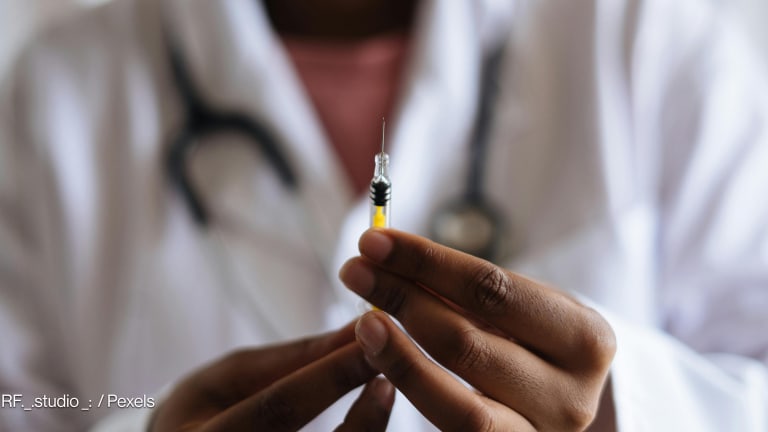
    The big news this year — actually named the “breakthrough of the year” by Science Magazine — is lenacapavir. This six-month injectable has been found by two international studies to provide nearly complete protection against HIV infection; an unprecedented result. Lenacapavir, an injectable option for pre-exposure prophylaxis, or PrEP — a medication taken to prevent HIV before exposure — represents a transformative opportunity to accelerate the fight against HIV/AIDS. If stakeholders unite across sectors, it’s entirely feasible to plan for 5 million people to benefit from a long-acting PrEP option by 2030 — driving the number of new infections dramatically down and setting a powerful precedent for global disease prevention. Around the world, PrEP uptake has been climbing steadily but remains far from the levels required to curb the HIV epidemic. By the end of 2024, over 8 million people worldwide will have initiated oral PrEP, a significant milestone compared to just a few thousand a decade earlier. However, the annual rate of new PrEP initiations — approximately 1 million per year — lags far behind the ambitious targets needed to reduce new HIV infections by 90% by 2030. And we know that many people who initiate oral PrEP may not adhere to daily pill-taking, and are thereby unable to derive its full protection. Several countries in East and Southern Africa have seen rapid growth in oral PrEP initiations since 2020, accounting to 80% of uptake globally, but in other high-burden regions such as Eastern Europe, the Middle East, and North Africa, prevention options are critically underutilized and uptake remains low. For example, in Latin America and the Caribbean, only 46,000 people were on PrEP as of 2023, compared to the millions who could benefit. More recently, the introduction of other HIV prevention options, including a monthly vaginal ring and bimonthly injectable, has expanded the range of options that could be available to people who want and need them. However, the available supplies of these new products have been severely limited and expensive. Lenacapavir isn’t just another medication; it could actually be a catalyst for transformation. Gilead Sciences, the developer, committed to producing up to 10 million doses, enough for 2.5 million people annually by 2026 — a major step toward ensuring access for twice that many people by 2030. For the first time, supply may not be the limiting factor. This readiness to scale aligns with the need for swift action to make PrEP accessible, particularly in underserved regions. By drawing on lessons from previous prevention rollouts, the global community can act decisively to ensure this innovation reaches those who need it most. Achieving this vision requires more than scientific discovery; it demands coordination at every level. A new framework released by leaders in HIV prevention, the “Gears of Lenacapavir” underscores that each stakeholder — whether governments, donors, civil society, or manufacturers — must function like the gears in a finely-tuned clock. Everyone has a role to play — each component is essential, and only by working together in synchronization can we keep to time and ensure a seamless and impactful rollout. The recently announced agreement by the U.S. President’s Emergency Plan for AIDS Relief, or PEPFAR, and the Global Fund for 2 million people to access lenacapavir marks a critical step. Still, it must be matched by ambitious procurement targets, affordable pricing agreements, and robust technical support for implementation. National governments must lead the way by prioritizing lenacapavir in ambitious HIV prevention strategies, streamlining regulatory approvals, and committing new resources to its adoption. Civil society has a critical role to play, as it has for every innovation in the history of the HIV/AIDS response — building awareness, generating demand, and advocating for equitable access to lenacapavir, especially in regions where stigma and systemic inequities continue to create barriers, and holding all stakeholders to account. Gilead’s manufacturing capacity, coupled with early licensing agreements for generics, sets the stage for an affordable and sustainable rollout. Despite its early actions, Gilead must do more to ensure the potential of lenacapavir is fully realized. Setting an affordable price point for low- and middle-income countries is critical, and the company must continue to work collaboratively with donors and governments to achieve a timeline to reach price parity with oral PrEP as quickly as possible. Additionally, Gilead should expand its voluntary licensing agreements to ensure rapid generic production and provide technical assistance to sub-Saharan and Latin American-based manufacturers to accelerate timelines and access. Transparency in pricing and production capacity will be key to fostering trust and mobilizing stakeholders. Beyond production, Gilead can invest in demand-generation campaigns, support community-based advocacy, and work closely with civil society to tackle stigma and misinformation about injectable PrEP. Timing is everything. Between now and mid-2025 when the first national regulatory agencies approve lenacapavir and the World Health Organization may likely recommend it, stakeholders must prepare the groundwork by developing guidelines, training health care providers, and aligning on financing strategies. By 2026, the focus must shift to scaling up branded lenacapavir from Gilead, ensuring it reaches key populations through coordinated supply chains and robust demand generation. And in 2027 and beyond, the transition to generics will need to be seamless, embedding long-acting PrEP into national health systems as a cornerstone of HIV prevention. Reaching the ambitious target of helping 5 million people use injectable PrEP by 2030 demands not only increased financial investment but also the development of innovative financing strategies by stakeholders. Development banks such as the World Bank and private sector partners can complement donor and national efforts through concessional loans, de-risking investments, and supply chain support. While PEPFAR and the Global Fund to Fight AIDS, Tuberculosis and Malaria will cover much of the cost, foundations and donor agencies can reduce financial risks with guarantees and matching funds. National governments must also put skin in the game by creating an enabling environment and investing in capacity-building to sustain programmatic platforms for current and future PrEP options. Similar to the PEPFAR DREAMS Initiative, which successfully pooled financial and technical resources and expertise of the private sector to reduce HIV infections among adolescent girls and young women, these partnerships can bring new capital, ingenuity, and market efficiencies to make lenacapavir and PrEP generally widely accessible. Achieving this goal will require innovative and differentiated service delivery models tailored to diverse populations and settings. This includes fully leveraging the power of artificial intelligence and digital technologies to optimize delivery methods, working with the private sector to streamline logistics and improve adherence tracking. Outside-clinic approaches, such as pharmacy-based distribution, community health programs, and mobile health units, must be integrated to ensure lenacapavir reaches even the most remote and underserved communities. These strategies will be key to maximizing impact and ensuring that no one is left behind in the rollout of this groundbreaking prevention tool. Based on current figures, we estimate that the cost of purchasing lenacapavir for 5 million people will be approximately $420 million over five years, aligning with current spending levels on HIV prevention commodities. This calculation assumes an initial purchase of 1 million doses at $120 per person per year, followed by 2 million doses at $90 per person per year, and the final 2 million doses from generic manufacturers at no more than $60 per person per year. Achieving these progressive price reductions will require strong early demand signals and strategic investments by stakeholders to support the shift from branded to generic products. This isn’t about a new drug; it’s about building a more effective and equitable response to one of the world’s most persistent public health challenges. It’s also about fostering economic growth — by reducing HIV infections and improving health outcomes, we can help individuals remain active participants in their communities and economies, alleviate the financial burden on health systems, and create a ripple effect of stability and prosperity. The incoming administration has an opportunity to build on historic investments in PEPFAR and the Global Fund by prioritizing access to groundbreaking tools like long-acting PrEP in the U.S. and around the world. Achieving this goal will require investments in health programs, innovative public-private partnerships, and integrating digital technologies to strengthen delivery and uptake. By uniting around and meeting this moment, we can not only deliver on the promise of this new HIV prevention option, but also lay the foundation for a future where innovation, access, and equity are inseparable in global health.

    Related Stories

    New partnerships bring price parity between lenacapavir and oral PrEP
    New partnerships bring price parity between lenacapavir and oral PrEP
    In Malawi, the fight to get HIV services back on track post-USAID cuts
    In Malawi, the fight to get HIV services back on track post-USAID cuts
    HIV prevention services hit hardest by funding cuts, UNAIDS warns
    HIV prevention services hit hardest by funding cuts, UNAIDS warns
    US announces support for HIV prevention game-changer with mixed reactions
    US announces support for HIV prevention game-changer with mixed reactions

    The big news this year — actually named the “breakthrough of the year” by Science Magazine — is lenacapavir. This six-month injectable has been found by two international studies to provide nearly complete protection against HIV infection; an unprecedented result.

    Lenacapavir, an injectable option for pre-exposure prophylaxis, or PrEP — a medication taken to prevent HIV before exposure — represents a transformative opportunity to accelerate the fight against HIV/AIDS. If stakeholders unite across sectors, it’s entirely feasible to plan for 5 million people to benefit from a long-acting PrEP option by 2030 — driving the number of new infections dramatically down and setting a powerful precedent for global disease prevention.

    Around the world, PrEP uptake has been climbing steadily but remains far from the levels required to curb the HIV epidemic. By the end of 2024, over 8 million people worldwide will have initiated oral PrEP, a significant milestone compared to just a few thousand a decade earlier.

    This article is free to read - just register or sign in

    Access news, newsletters, events and more.

    Join usSign in
    • Global Health
    • Democracy, Human Rights & Governance
    • Gilead Sciences
    Printing articles to share with others is a breach of our terms and conditions and copyright policy. Please use the sharing options on the left side of the article. Devex Pro members may share up to 10 articles per month using the Pro share tool ( ).
    The views in this opinion piece do not necessarily reflect Devex's editorial views.

    About the authors

    • Jirair Ratevosian

      Jirair Ratevosian

      Dr. Jirair Ratevosian is Hock fellow at Duke University, an associate research scientist at Yale University, and a former acting chief of staff for PEPFAR. He is also a senior associate (nonresident expert) at CSIS Global Health Policy Center.
    • Mitchell Warren

      Mitchell Warren

      Mitchell Warren has been AVAC’s executive director since 2004. He previously led Vaccine Preparedness at IAVI; directed international programs at Female Health Company; and directed PSI in South Africa and Europe. Member of PEPFAR Scientific Advisory Board and International AIDS Society Governing Council and president of the TB Alliance Stakeholder Association.

    Search for articles

    Related Stories

    Global healthRelated Stories - New partnerships bring price parity between lenacapavir and oral PrEP

    New partnerships bring price parity between lenacapavir and oral PrEP

    Global healthRelated Stories - In Malawi, the fight to get HIV services back on track post-USAID cuts

    In Malawi, the fight to get HIV services back on track post-USAID cuts

    Global healthRelated Stories - HIV prevention services hit hardest by funding cuts, UNAIDS warns

    HIV prevention services hit hardest by funding cuts, UNAIDS warns

    Global healthRelated Stories - US announces support for HIV prevention game-changer with mixed reactions

    US announces support for HIV prevention game-changer with mixed reactions

    Most Read

    • 1
      Why NTDs are a prime investment for philanthropy
    • 2
      The silent, growing CKD epidemic signals action is needed today
    • 3
      Trump withdraws, defunds dozens of international orgs and treaties
    • 4
      Why are 3.4 billion people still offline?
    • 5
      US lawmakers strike $50B foreign assistance deal, surpassing Trump's plan
    • News
    • Jobs
    • Funding
    • Talent
    • Events

    Devex is the media platform for the global development community.

    A social enterprise, we connect and inform over 1.3 million development, health, humanitarian, and sustainability professionals through news, business intelligence, and funding & career opportunities so you can do more good for more people. We invite you to join us.

    • About us
    • Membership
    • Newsletters
    • Advertising partnerships
    • Devex Talent Solutions
    • Post a job
    • Careers at Devex
    • Contact us
    © Copyright 2000 - 2026 Devex|User Agreement|Privacy Statement