
• News
    • Latest news
    • News search
    • Health
    • Finance
    • Food
    • Career news
    • Content series
    • Focus areas
    • Try Devex Pro
  • Jobs
    • Job search
    • Post a job
    • Employer search
    • CV Writing
    • Upcoming career events
    • Try Career Account
  • Funding
    • Funding search
    • Funding news
  • Talent
    • Candidate search
    • Devex Talent Solutions
  • Events
    • Upcoming and past events
    • Partner on an event
  • Post a job
  • About
      • About us
      • Membership
      • Newsletters
      • Advertising partnerships
      • Devex Talent Solutions
      • Contact us
Join DevexSign in
Join DevexSign in

News

  • Latest news
  • News search
  • Health
  • Finance
  • Food
  • Career news
  • Content series
  • Focus areas
  • Try Devex Pro

Jobs

  • Job search
  • Post a job
  • Employer search
  • CV Writing
  • Upcoming career events
  • Try Career Account

Funding

  • Funding search
  • Funding news

Talent

  • Candidate search
  • Devex Talent Solutions

Events

  • Upcoming and past events
  • Partner on an event
Post a job

About

  • About us
  • Membership
  • Newsletters
  • Advertising partnerships
  • Devex Talent Solutions
  • Contact us
  • My Devex
  • Update my profile % complete
  • Account & privacy settings
  • My saved jobs
  • Manage newsletters
  • Support
  • Sign out
Latest newsNews searchHealthFinanceFoodCareer newsContent seriesFocus areasTry Devex Pro
    • Opinion
    • Global Health

    Opinion: Why Africa CDC needs gender-transformative leadership

    The African region has no shortage of talented women capable of taking on the important role of director-general at Africa CDC.

    By Toyin Ojora Saraki, Flavia Senkubuge, Dr. Choolwe Nkwemu Jacobs // 15 February 2023
    As women leaders in global health from Nigeria, South Africa, and Zambia, we believe that the Africa Centres for Disease Control and Prevention is facing a crucial milestone in selecting its next director-general. The appointment of the first female head of Africa CDC and the integration of gender-transformative leadership would bring the much needed diversity in perspective and professional expertise of women leaders into the global health discourse. In July 2002, the African Union made history by adopting an “absolute gender equality” rule at the inaugural session of the heads of state and government — which extends to Africa CDC as a technical institution of the African Union. This gender parity rule of 50% women applies to key decision-making structures, from the commission level through to senior appointments. Having a woman at the helm of Africa CDC would be an important signal to the continent and the world that gender equality in health leadership is possible. --— In recent years, women's representation in global health governance has been characterized by a downward trend. According to Women in Global Health’s annual count at the 2022 World Health Assembly, less than a quarter of the 194 governments of the world sent delegations headed by women, continuing a trend of a women-dominated sector almost completely controlled by men. Women lost ground in health leadership during the COVID-19 pandemic. A Women in Global Health 2020 report found that 85% of national COVID-19 task forces had majority male membership. It outlined how the health ecosystem needs to address the needs of women. Underrepresentation of women in health results in the exclusion of talented and highly skilled professionals who possess strong leadership qualities and are suitable for decision-making positions. The gender imbalances observed in the health workforce are not just unjust, but also unethical. Furthermore, the most marginalized women in global health leadership are those from the global south. The Global Action Plan, or GAP, for Healthy Lives and Well-being for All unites 13 multilateral and development agencies that collectively control billions in funds for supporting low-and middle-income countries to achieve the health-related SDGs. Among these 13 influential players in global health, which include the World Health Organization, the Global Fund to Fight AIDS, Tuberculosis and Malaria, Gavi, the Vaccine Alliance, International Labour Organization, UNAIDS, Global Financing Facility for Women, Children and Adolescents, United Nations Development Programme, United Nations Population Fund, UNICEF, Unitaid, UN Women, World Bank, and World Food Programme, only one is led by a woman from a LMIC — Winnie Byanyima at UNAIDS. Despite the majority of these agencies primarily targeting women and girls, most of them are headed by men from high-income countries and not women from LMICs who have direct experience of the context in which they work in health. Having a woman at the helm of Africa CDC would be an important signal to the continent and the world that gender equality in health leadership is possible. It is also important that leaders of any gender embrace gender-transformative policies to achieve better health outcomes. Tackling gender inequality in the health and care sector is the responsibility of leaders of any gender, and a gender-transformative approach to leadership at Africa CDC and its member states is necessary to address the gender disparities that continue to undermine our health systems and global health efforts. As supporters of the Women in Global Health movement with 46 chapters worldwide, and the largest presence in Africa, we believe that women have a critical role as experts in the health systems they largely deliver. Right through the pandemic, their extraordinary contribution to the health and care sector in Africa has been exceptional and deserves recognition and support. With this in mind, we are calling on the African Union, Africa CDC, and its member states to consider the following in their selection of the next director-general of Africa CDC: 1. Africa CDC and its member states must set targets to include women equally in senior decision-making at all levels in Africa CDC and in the health sector generally. It is time for Africa CDC to tap into the pool of highly qualified and competent women in the health sector, and appoint a woman as its next leader. The African region has no shortage of talented women capable of taking on this important role. 2. Africa CDC and its member states should integrate a gender-responsive approach into negotiations for a pandemic health emergency accord or treaty, as central to design and resourcing Going forward, it is crucial that policies implemented during a public health emergency are gender responsive and address the unique needs and priorities of all genders. This includes protecting women, girls, and other vulnerable populations from gender-based violence during lockdowns and addressing the increased care burden faced by women. 3. Africa CDC and its member states should adopt a gender-responsive, intersectional approach to health security data collection/analysis and response management. Evidence shows that less than 10% of COVID-19 health policies made reference to gender and less than 60 countries were reporting sex-disaggregated data to WHO on COVID-19 infections and mortality. Such inadequacies challenge evidence-based policymaking to close gender-related gaps. 4. Member states must recognize that gender equality is smart for global health everywhere, and particularly in Africa given the needs and cultural norms of many countries in the region. Universal health coverage will not be universal until it addresses sex-based harmful traditional practices, such as female genital mutilation, that blight the lives and health of millions of girls. Health systems must also address sexual and reproductive health and rights as central to the health and bodily autonomy of women and adolescent girls. Safe maternity services cannot be considered optional in health emergencies. 5. Potential candidates for the position of Africa CDC director-general must commit to ensuring gender equality and commit to leading the gender transformative change critical to achieving gender equality within Africa. Ensuring this will drive better health, positive social change, and economic growth as a ‘triple gender dividend.’ We view gender-transformative leadership as a critical selection criterion in the recruitment process for the next head of Africa CDC. Our focus is not just on the absence of women’s representation, but on the selection of a candidate that has the most to offer in terms of leadership.

    Related Stories

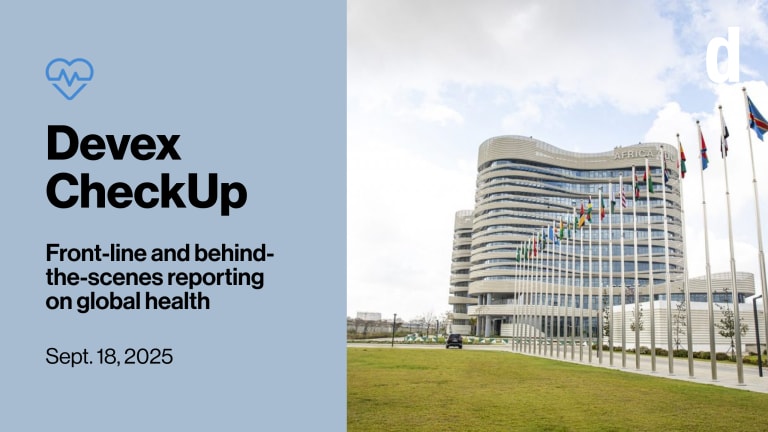
    Devex CheckUp: Africa CDC’s growing pains
    Devex CheckUp: Africa CDC’s growing pains
    Africa CDC chief on health agency’s past problems and promising future
    Africa CDC chief on health agency’s past problems and promising future
    Africa CDC's rocky road to stability
    Africa CDC's rocky road to stability
    What role will Africa CDC play in an ‘America First’ global health vision?
    What role will Africa CDC play in an ‘America First’ global health vision?

    As women leaders in global health from Nigeria, South Africa, and Zambia, we believe that the Africa Centres for Disease Control and Prevention is facing a crucial milestone in selecting its next director-general. The appointment of the first female head of Africa CDC and the integration of gender-transformative leadership would bring the much needed diversity in perspective and professional expertise of women leaders into the global health discourse.

    In July 2002, the African Union made history by adopting an “absolute gender equality” rule at the inaugural session of the heads of state and government — which extends to Africa CDC as a technical institution of the African Union. This gender parity rule of 50% women applies to key decision-making structures, from the commission level through to senior appointments.

    In recent years, women's representation in global health governance has been characterized by a downward trend. According to Women in Global Health’s annual count at the 2022 World Health Assembly, less than a quarter of the 194 governments of the world sent delegations headed by women, continuing a trend of a women-dominated sector almost completely controlled by men.

    This article is free to read - just register or sign in

    Access news, newsletters, events and more.

    Join usSign in

    More reading:

    ► Opinion: Here are some of the top priorities for a new Africa CDC chief

    ► Director says African Development Bank lagging on gender equality

    ► Dr. Ahmed Ogwell Ouma's path to Africa CDC

    • Global Health
    • Social/Inclusive Development
    • Institutional Development
    • Africa CDC
    • African Union
    Printing articles to share with others is a breach of our terms and conditions and copyright policy. Please use the sharing options on the left side of the article. Devex Pro members may share up to 10 articles per month using the Pro share tool ( ).
    The views in this opinion piece do not necessarily reflect Devex's editorial views.

    About the authors

    • Toyin Ojora Saraki

      Toyin Ojora Saraki

      Toyin Ojora Saraki is a WHO Foundation ambassador for global health. As founder-president of The Wellbeing Foundation Africa, Saraki is a global advocate for women’s and children’s health and empowerment, with two decades of advocacy covering reproductive, maternal, newborn, child, and adolescent health; ending gender-based discrimination and violence; and improving education, socioeconomic empowerment, and community livelihoods in sub-Saharan Africa. Saraki is part of the Women in Global Health movement.

    • Flavia Senkubuge

      Flavia Senkubuge

      Professor Flavia Senkubuge is a specialist in public health medicine and is the president of Women in Global Health South Africa. She is the deputy dean for health stakeholder relations at the Faculty of Health Sciences of the University of Pretoria, South Africa. She is also the 20th president of the Colleges of Medicine South Africa. She is the first black woman and only the third woman in the CMSA’s 67 years to hold the position. She is the current chair of the WHO/African region African Advisory Council on Research and Development.
    • Dr. Choolwe Nkwemu Jacobs

      Dr. Choolwe Nkwemu Jacobs

      Choolwe Jacobs, Ph.D., is co-founder and country lead for Women in Global Health, Zambia chapter. She is a public health specialist and social epidemiologist with over 15 years of extensive engagement in global health.

    Search for articles
    Related Stories

    Devex CheckUpRelated Stories - Devex CheckUp: Africa CDC’s growing pains

    Devex CheckUp: Africa CDC’s growing pains

    Devex Pro LiveRelated Stories - Africa CDC chief on health agency’s past problems and promising future

    Africa CDC chief on health agency’s past problems and promising future

    Global HealthRelated Stories - Africa CDC's rocky road to stability

    Africa CDC's rocky road to stability

    The future of global healthRelated Stories - What role will Africa CDC play in an ‘America First’ global health vision?

    What role will Africa CDC play in an ‘America First’ global health vision?

    Most Read

    • 1
      Why NTDs are a prime investment for philanthropy
    • 2
      The silent, growing CKD epidemic signals action is needed today
    • 3
      Trump withdraws, defunds dozens of international orgs and treaties
    • 4
      Why capital without knowledge-sharing won't solve the NCD crisis
    • 5
      Why are 3.4 billion people still offline?
    • News
    • Jobs
    • Funding
    • Talent
    • Events

    Devex is the media platform for the global development community.

    A social enterprise, we connect and inform over 1.3 million development, health, humanitarian, and sustainability professionals through news, business intelligence, and funding & career opportunities so you can do more good for more people. We invite you to join us.

    • About us
    • Membership
    • Newsletters
    • Advertising partnerships
    • Devex Talent Solutions
    • Post a job
    • Careers at Devex
    • Contact us
    © Copyright 2000 - 2026 Devex|User Agreement|Privacy Statement