• News
    • Latest news
    • News search
    • Health
    • Finance
    • Food
    • Career news
    • Content series
    • Focus areas
    • Try Devex Pro
  • Jobs
    • Job search
    • Post a job
    • Employer search
    • CV Writing
    • Upcoming career events
    • Try Career Account
  • Funding
    • Funding search
    • Funding news
  • Talent
    • Candidate search
    • Devex Talent Solutions
  • Events
    • Upcoming and past events
    • Partner on an event
  • Post a job
  • About
      • About us
      • Membership
      • Newsletters
      • Advertising partnerships
      • Devex Talent Solutions
      • Contact us
Join DevexSign in
Join DevexSign in

News

  • Latest news
  • News search
  • Health
  • Finance
  • Food
  • Career news
  • Content series
  • Focus areas
  • Try Devex Pro

Jobs

  • Job search
  • Post a job
  • Employer search
  • CV Writing
  • Upcoming career events
  • Try Career Account

Funding

  • Funding search
  • Funding news

Talent

  • Candidate search
  • Devex Talent Solutions

Events

  • Upcoming and past events
  • Partner on an event
Post a job

About

  • About us
  • Membership
  • Newsletters
  • Advertising partnerships
  • Devex Talent Solutions
  • Contact us
  • My Devex
  • Update my profile % complete
  • Account & privacy settings
  • My saved jobs
  • Manage newsletters
  • Support
  • Sign out
Latest newsNews searchHealthFinanceFoodCareer newsContent seriesFocus areasTry Devex Pro
    • News
    • International NGOs

    Oxfam looks south for next generation of affiliates

    Oxfam isn't just relocating its secretariat to the global south, it is also planning to develop a truly global network of affiliates. What does this mean for fundraising, campaigning and implementation? A Devex analysis.

    By Anna Patton // 27 May 2014

    Related Stories

    Next steps for the Accra Reset announced at Davos
    Next steps for the Accra Reset announced at Davos
    ‘Civil war’ within Oxfam GB as CEO exit triggers board review
    ‘Civil war’ within Oxfam GB as CEO exit triggers board review
    Avril Benoît on her six years at the helm of Médecins Sans Frontières USA
    Avril Benoît on her six years at the helm of Médecins Sans Frontières USA
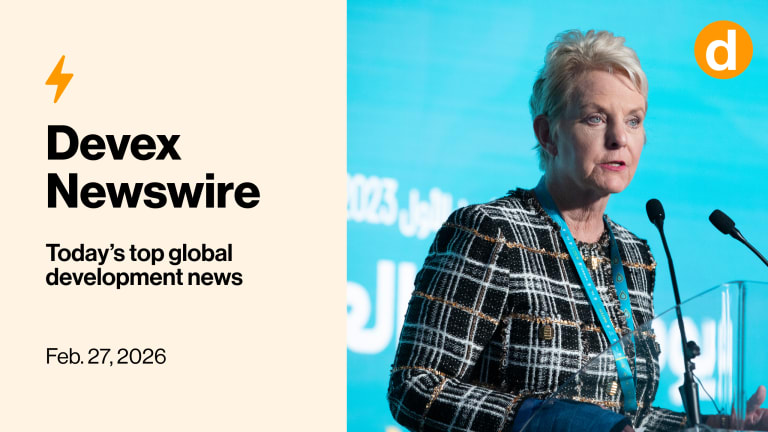
    Devex Newswire: Cindy McCain to leave World Food Programme early
    Devex Newswire: Cindy McCain to leave World Food Programme early
    An Oxfam staff helps distribute humanitarian supplies for displaced people in Juba, South Sudan. The international nongovernment organization not only plans to move its secretariat south, but to establish new affiliates in other regions as well. Photo by: Oxfam East Africa / CC BY

    In a move that could challenge the typical division of labor among large development organizations — with fundraising and campaigning led from the north and implementation undertaken in the south — Oxfam International has revealed further details of its plan for a truly global network of affiliates.

    Alongside the future relocation of Oxfam International’s secretariat — still at an early stage, with little confirmed beyond the decision to move, in principle, from its base in the United Kingdom to either Bangkok or Nairobi — the international nongovernmental organization plans to add eight new affiliates by 2020 in Africa, Asia and Latin America.

    Oxfam is a confederation of autonomous organizations, seven of which previously existed as independent NGOs in their own right, and each is responsible for raising its own funds and leading its own campaigns.

    The same principle would be extended to the next generation of affiliates, explained Matt Grainger, spokesperson for Oxfam International — which coordinates work across the confederation.

    “Rather than, for example, Oxfam GB working in South Africa with funds raised elsewhere, we would have an Oxfam South Africa, responsible for its own fundraising,” he said.

    Oxfam International’s Executive Director Winnie Byanyima hinted at this approach last year when she spoke to Devex, saying the “old model of mobilizing resources in the north to solve problems in the south” was becoming “irrelevant,” and that the “centers of power” were no longer located solely “at the doors of the U.N.”

    Currently just two of the 17 “Oxfams” are in development countries: Mexico joined the confederation in 2008 and India in 2011.

    Jodie Thorpe, formerly private sector adviser at Oxfam GB, said a greater shift to the south may not be easy, but should be welcomed.

    “A lot of the decision-making is driven by the north where the main affiliates are based,” she said. “Fundraising in the north influences priorities and strategies.”

    Having people on the ground in the south “doing the thinking,” she said, helps to “shift the issues more equitably across north and south.”

    With the emphasis on working with “home-grown” organizations — inviting existing self-sufficient NGOs to join the confederation — the admission criteria for a future Oxfam in a developing country may need to be more flexible.

    “In the past, we have been quite prescriptive,” said Grainger, explaining that potential affiliates had to have the capacity for both campaigning and generating funding in their home market, as well as for delivering programs and carrying out research.

    “These are very big and onerous [demands] … It may well be that the next Oxfam from a southern country only has three of these things,” he suggested.

    This is where more established affiliates in the north would step in, functioning as “knowledge hubs” depending to their specific expertise. Oxfam Canada is particularly strong on gender, for instance, according to Grainger.

    Meanwhile, Oxfam’s team is starting to work on the business case for the move of the international secretariat away from its premises in Oxford. A range of possible scenarios are on the table, Grainger confirmed. One possibility could be that some of its approximately 50 staff members transfer to different affiliates, resulting in “a much smaller physical, but much larger virtual, international office.”

    How will new Oxfam affiliates in southern countries change the way development is done? Will other international NGOs follow suit? Tell us what you think by commenting below — and stay tuned for more coverage of Oxfam’s shift to the south.

    Read more development aid news online, and subscribe to The Development Newswire to receive top international development headlines from the world’s leading donors, news sources and opinion leaders — emailed to you FREE every business day.

    See more:

    Attracting talent from the 'global south': Are you doing enough?

    • Institutional Development
    • Humanitarian Aid
    Printing articles to share with others is a breach of our terms and conditions and copyright policy. Please use the sharing options on the left side of the article. Devex Pro members may share up to 10 articles per month using the Pro share tool ( ).

    About the author

    • Anna Patton

      Anna Patton

      Anna Patton is a freelance journalist and media facilitator specializing in global development and social enterprise. Currently based in London, she previously worked with development NGOs and EU/government institutions in Berlin, Brussels and Dar es Salaam as well as in the U.K., and has led media projects with grass-roots communities in Uganda and Kenya. Anna has an master’s degree in European studies — specializing in EU development policy — and is a fellow of the On Purpose social enterprise program.

    Search for articles

    Related Stories

    Davos 2026Related Stories - Next steps for the Accra Reset announced at Davos

    Next steps for the Accra Reset announced at Davos

    UK AidRelated Stories - ‘Civil war’ within Oxfam GB as CEO exit triggers board review

    ‘Civil war’ within Oxfam GB as CEO exit triggers board review

    NGORelated Stories - Avril Benoît on her six years at the helm of Médecins Sans Frontières USA

    Avril Benoît on her six years at the helm of Médecins Sans Frontières USA

    Devex NewswireRelated Stories - Devex Newswire: Cindy McCain to leave World Food Programme early

    Devex Newswire: Cindy McCain to leave World Food Programme early

    Most Read

    • 1
      How green bonds can close the infrastructure finance gap
    • 2
      From India to the world: Advancing quality maternal care at scale
    • 3
      Africa can pay for its own health if we choose efficiency over dependency
    • 4
      Ending HIV globally requires action in Eastern Europe and Central Asia
    • 5
      Climate change mandates more innovation in yellow fever vaccines
    • News
    • Jobs
    • Funding
    • Talent
    • Events

    Devex is the media platform for the global development community.

    A social enterprise, we connect and inform over 1.3 million development, health, humanitarian, and sustainability professionals through news, business intelligence, and funding & career opportunities so you can do more good for more people.

    • About us
    • Membership
    • Newsletters
    • Advertising partnerships
    • Devex Talent Solutions
    • Post a job
    • Careers at Devex
    • Contact us
    © Copyright 2000 - 2026 Devex|User Agreement|Privacy Statement