
• News
    • Latest news
    • News search
    • Health
    • Finance
    • Food
    • Career news
    • Content series
    • Focus areas
    • Try Devex Pro
  • Jobs
    • Job search
    • Post a job
    • Employer search
    • CV Writing
    • Upcoming career events
    • Try Career Account
  • Funding
    • Funding search
    • Funding news
  • Talent
    • Candidate search
    • Devex Talent Solutions
  • Events
    • Upcoming and past events
    • Partner on an event
  • Post a job
  • About
      • About us
      • Membership
      • Newsletters
      • Advertising partnerships
      • Devex Talent Solutions
      • Contact us
Join DevexSign in
Join DevexSign in

News

  • Latest news
  • News search
  • Health
  • Finance
  • Food
  • Career news
  • Content series
  • Focus areas
  • Try Devex Pro

Jobs

  • Job search
  • Post a job
  • Employer search
  • CV Writing
  • Upcoming career events
  • Try Career Account

Funding

  • Funding search
  • Funding news

Talent

  • Candidate search
  • Devex Talent Solutions

Events

  • Upcoming and past events
  • Partner on an event
Post a job

About

  • About us
  • Membership
  • Newsletters
  • Advertising partnerships
  • Devex Talent Solutions
  • Contact us
  • My Devex
  • Update my profile % complete
  • Account & privacy settings
  • My saved jobs
  • Manage newsletters
  • Support
  • Sign out
Latest newsNews searchHealthFinanceFoodCareer newsContent seriesFocus areasTry Devex Pro
    • News
    • Global health

    Pan-African platform aims to hasten clinical trials

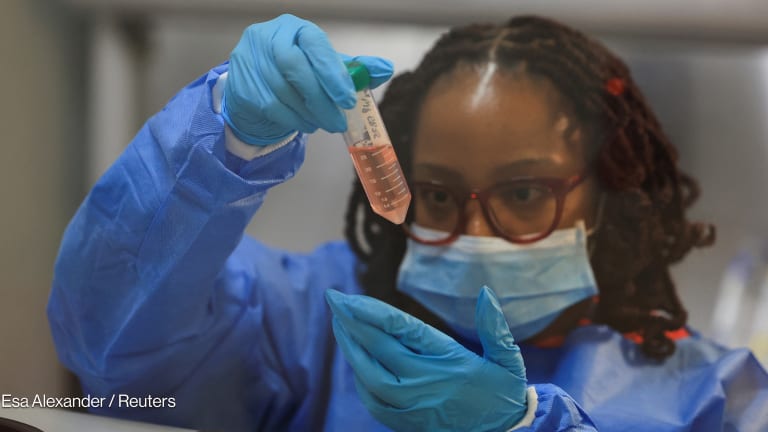
    PANTHER, a pan-African platform for emergency research and preparedness, is working to lay the groundwork for clinical trials so that they can be rolled out quickly when an outbreak hits.

    By Sara Jerving // 07 March 2023
    The glacial pace in which clinical trials are often rolled out on the African continent is a perennial problem — with protocols and regulatory approvals barricading the race to a vaccine or drug. By the time trials commence, an outbreak might have already started winding down, which hinders the opportunity for data-gathering during an active outbreak. The African continent carries a quarter of the global disease burden but accounts for less than 3% of clinical trials. Some public health experts are galvanizing to turn this around. This includes a new initiative launched in December, called PANTHER, which is a pan-African platform for emergency research and preparedness. Their researchers hope to prepare about 80% of the groundwork for trialsbefore an outbreak — with the remaining work to include adapting trials to local contexts and the characteristics of the disease. This preparation could be for advancing research on existing diseases, such as Lassa fever or mpox, or for “disease X” — a pathogen unknown to cause disease in humans, with the potential to spark a pandemic. They plan to target at-risk hot spots, particularly in remote and rural areas, working to create a network of researchers, epidemic research centers, and health care sites, as well as encourage funders to engage in proactive investments. Named after the predatory animal, the researchers want to “pounce” on outbreaks. “The panther has a hunting habit where the success rate is fairly high: Be quick, with stealth and position,” said Dr. Bernhards Ogutu, who is a chief research officer at the Kenya Medical Research Institute, and board member of PANTHER. Not in the nick of time In mid-February, an outbreak of Marburg — a deadly disease similar to Ebola — was announced in Equatorial Guinea. The day after, the Marburg Virus Vaccine Consortium — a World Health Organization-led group working to increase collaboration around developing a vaccine — held an emergency meeting where researchers highlighted the need to roll out clinical trials quickly. At the meeting, they took stock of where various vaccine candidates stood within clinical trials, as well as whether vaccine developers had vaccines available in vials. Marburg outbreaks are rare and often squashed quickly with a minimal number of cases — so if not launched quickly, a trial could commence as an outbreak was tapering down. Their concerns piggyback off an outbreak of the Sudan strain of the Ebola virus, which was announced in Uganda in September 2022, but declared over on Jan. 11. This strain does not have an approved vaccine. It was 79 days into the outbreak when Uganda received doses to commence clinical trials. This was record speed — during the Ebola outbreak in Guinea in 2015 it took 7 months before vaccines arrived. But the vaccines to be tested with the Sudan strain arrived in Uganda just as the outbreak was coming to a close when the 42-day countdown already started after the last patient was released from treatment. During the Marburg meeting, researchers also spoke about the need for innovation around trial design — planning clinical trials that could span multiple outbreaks, with the understanding that results may take a while. PANTHER builds off lessons learned during the ANTICOV clinical trials, which aimed at identifying treatments for COVID-19, coordinated by Drugs for Neglected Diseases initiative, which took place in 13 African countries and Brazil. In some countries, getting approvals took six to eight months, Ogutu said. But speed was not an issue everywhere, Ogutu added. The COVID-19 vaccine clinical trial protocol in the United Kingdom was approved in less than a week. "The first patient was enrolled on March 19, 2020, just 9 days after the protocol was written and 2 days after the protocol was approved, and the first 1000 patients were enrolled in just 16 days," according to an article in The Lancet. Hot spots, priority pathogens, and community involvement Clinical trials in Africa can help develop health tools for diseases specifically affecting African populations. And when clinical trials happen on the continent, the tools developed are better suited for these populations — the continent has the greatest human genetic diversity compared to other regions, so trials test how certain populations interact with an intervention. And the trials can lead to greater access to health care innovations. Countries might also require data to be collected in their populations before approving it within their own borders. One of the factors slowing clinical trial rollout is the creation of protocols, which are the backbone technical documents that outline the research and how it will be conducted. Others include having available research sites, financial and legal agreements, import licenses, data sharing arrangements, deciding which product is best suited, and moving patients long distances to reach laboratories. PANTHER’s team currently consists of 13 board members — whose president is Mali epidemiologist Samba Sow. Its institutional partners are Africa Centres for Disease Control and Prevention, WHO, and AUDA-NEPAD-AMRH. PANTHER is setting up its secretariat and plans to open its African headquarters office in the second half of the year — with the country yet to be determined. They will establish hubs in endemic countries across the continent and have outbreak-ready mobile teams to deploy capable of testing, genotyping, and treating. The hubs largely won’t be disease-specific, with exceptions, such as a Lassa fever hub in Nigeria. Prepping every corner of the continent isn’t possible, but certain geographies are more vulnerable to outbreaks — such as areas where people live close to rainforests, creating a high likelihood of virus spillover from wildlife to humans. And they can’t prepare for every pathogen either. Diseases prioritized by Africa CDC and WHO will help guide PANTHER’s priorities. For existing diseases, PANTHER aims to prepare countries that have small numbers of cases of a disease to pivot to research quickly if a larger outbreak occurs. Preparing for disease X is more difficult — but there are options to test broad-spectrum antiviral therapeutics that could be effective against several diseases and tested in multiple outbreaks. Researchers can still establish protocols in anticipation of unknown outbreaks, in concert with regulators, ethics committees, research centers, communities, funders, and other partners. Getting communities on board is also key, Ogutu said, they must also understand the value of research when their priority during an outbreak is reducing deaths. At the onset of the COVID-19 pandemic, two French doctors made controversial comments about running trials in Africa that led to heated criticism online that African populations are not “laboratory rats.” Ogutu said that’s why the PANTHER teams must work together with communities in sensitively explaining their intentions and “move with speed, in a stealth way, with precision.” “We don't want to make a lot of noise. We realize what making a lot of noise during COVID-19 did with social media,” Ogutu said, adding that teams developing the malaria vaccine managed to get communities on board successfully. “By the time they had the vaccine, the mothers were asking: ‘When are we getting the vaccine?’” Ogutu said. Germany allocated €2.4 million through June, according to Dr. Nathalie Strub Wourgaft, who is a general delegate of PANTHER, which is partially to help PANTHER launch, and for preparation around Lassa fever clinical trials with the INTEGRATE Consortium in Nigeria aimed at testing treatments. While there is expertise around Lassa in Nigeria, PANTHER is working to prepare other countries for Lassa clinical trials — including Liberia, Guinea, and Benin, which are vulnerable to sporadic outbreaks. The European Union also allocated €300,000 to start the Mpox Study in Africa, or MOSA, which is in partnership with the Unity clinical study, which is a phase 3, multicountry, randomized, placebo-controlled, double-blinded clinical trial to assess the efficacy and safety of the antiviral tecovirimat in adults and adolescents with mpox.

    Related Stories

    Our work is redefining cancer care in Africa. Now we need global partners
    Our work is redefining cancer care in Africa. Now we need global partners
    Will African nations lose their leverage in an ‘America First’ health plan?
    Will African nations lose their leverage in an ‘America First’ health plan?
    Can health systems keep pace with HIV prevention’s breakthrough?
    Can health systems keep pace with HIV prevention’s breakthrough?
    Can Africa’s drug regulators be both fast and trusted?
    Can Africa’s drug regulators be both fast and trusted?

    The glacial pace in which clinical trials are often rolled out on the African continent is a  perennial problem — with protocols and regulatory approvals barricading the race to a vaccine or drug. By the time trials commence, an outbreak might have already started winding down, which hinders the opportunity for data-gathering during an active outbreak. 

    The African continent carries a quarter of the global disease burden but accounts for less than 3% of clinical trials.

    Some public health experts are galvanizing to turn this around. This includes a new initiative launched in December, called PANTHER, which is a pan-African platform for emergency research and preparedness. Their researchers hope to prepare about 80% of the groundwork for trialsbefore an outbreak — with the remaining work to include adapting trials to local contexts and the characteristics of the disease.  

    This article is free to read - just register or sign in

    Access news, newsletters, events and more.

    Join usSign in

    Read more:

    ► Africa CDC publishes its first list of priority pathogens

    ► Global south watches as South Africa's Aspen ventures into vaccines (Pro)

    ► Opinion: Africa is better prepared for future pandemics

    • Global Health
    • Research
    • Trade & Policy
    • Innovation & ICT
    Printing articles to share with others is a breach of our terms and conditions and copyright policy. Please use the sharing options on the left side of the article. Devex Pro members may share up to 10 articles per month using the Pro share tool ( ).

    About the author

    • Sara Jerving

      Sara Jervingsarajerving

      Sara Jerving is a Senior Reporter at Devex, where she covers global health. Her work has appeared in The New York Times, the Los Angeles Times, The Wall Street Journal, VICE News, and Bloomberg News among others. Sara holds a master's degree from Columbia University Graduate School of Journalism where she was a Lorana Sullivan fellow. She was a finalist for One World Media's Digital Media Award in 2021; a finalist for the Livingston Award for Young Journalists in 2018; and she was part of a VICE News Tonight on HBO team that received an Emmy nomination in 2018. She received the Philip Greer Memorial Award from Columbia University Graduate School of Journalism in 2014.


    Search for articles

    Related Stories

    Opinion: Global healthRelated Stories - Our work is redefining cancer care in Africa. Now we need global partners

    Our work is redefining cancer care in Africa. Now we need global partners

    The Future of Global HealthRelated Stories - Will African nations lose their leverage in an ‘America First’ health plan?

    Will African nations lose their leverage in an ‘America First’ health plan?

    Global healthRelated Stories - Can health systems keep pace with HIV prevention’s breakthrough?

    Can health systems keep pace with HIV prevention’s breakthrough?

    Global healthRelated Stories - Can Africa’s drug regulators be both fast and trusted?

    Can Africa’s drug regulators be both fast and trusted?

    Most Read

    • 1
      The silent, growing CKD epidemic signals action is needed today
    • 2
      Innovation meets impact: Fighting malaria in a warming world
    • 3
      Why capital without knowledge-sharing won't solve the NCD crisis
    • 4
      Inside Amazon’s human rights journey
    • 5
      Building hope to bridge the surgical access gap
    • News
    • Jobs
    • Funding
    • Talent
    • Events

    Devex is the media platform for the global development community.

    A social enterprise, we connect and inform over 1.3 million development, health, humanitarian, and sustainability professionals through news, business intelligence, and funding & career opportunities so you can do more good for more people. We invite you to join us.

    • About us
    • Membership
    • Newsletters
    • Advertising partnerships
    • Devex Talent Solutions
    • Post a job
    • Careers at Devex
    • Contact us
    © Copyright 2000 - 2026 Devex|User Agreement|Privacy Statement