

• News
    • Latest news
    • News search
    • Health
    • Finance
    • Food
    • Career news
    • Content series
    • Focus areas
    • Try Devex Pro
  • Jobs
    • Job search
    • Post a job
    • Employer search
    • CV Writing
    • Upcoming career events
    • Try Career Account
  • Funding
    • Funding search
    • Funding news
  • Talent
    • Candidate search
    • Devex Talent Solutions
  • Events
    • Upcoming and past events
    • Partner on an event
  • Post a job
  • About
      • About us
      • Membership
      • Newsletters
      • Advertising partnerships
      • Devex Talent Solutions
      • Contact us
Join DevexSign in
Join DevexSign in

News

  • Latest news
  • News search
  • Health
  • Finance
  • Food
  • Career news
  • Content series
  • Focus areas
  • Try Devex Pro

Jobs

  • Job search
  • Post a job
  • Employer search
  • CV Writing
  • Upcoming career events
  • Try Career Account

Funding

  • Funding search
  • Funding news

Talent

  • Candidate search
  • Devex Talent Solutions

Events

  • Upcoming and past events
  • Partner on an event
Post a job

About

  • About us
  • Membership
  • Newsletters
  • Advertising partnerships
  • Devex Talent Solutions
  • Contact us
  • My Devex
  • Update my profile % complete
  • Account & privacy settings
  • My saved jobs
  • Manage newsletters
  • Support
  • Sign out
Latest newsNews searchHealthFinanceFoodCareer newsContent seriesFocus areasTry Devex Pro
    • Opinion
    • Anne Stangl on reducing HIV stigma and discrimination

    Redoubling efforts to fight stigma and discrimination key to ending AIDS

    Stigmatizing and discriminating against people living with HIV hinder any progress made so far on reducing transmission and tackling the epidemic, the ICRW's Anne Stangl writes in a guest opinion during the 20th International AIDS Conference taking place this week in Melbourne, Australia.

    By Anne Stangl // 21 July 2014
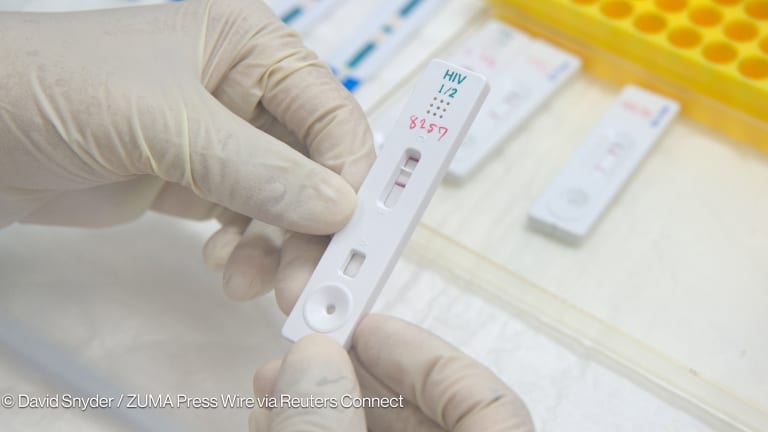
    It’s been 30 years since HIV was identified as the cause of AIDS, and since then we’ve made significant progress in fighting the epidemic. The massive rollout of antiretroviral drugs worldwide has dramatically reduced AIDS-related deaths and prolonged the lives of millions of people. Innovative biomedical interventions — such as microbicides, male circumcision, universal testing and ARV prophylaxis for preventing transmission from mother to child — have greatly expanded our collective prevention toolbox. Great strides have also been made in understanding how to deliver services and motivate uptake and adherence, from home-based HIV testing to education entertainment programs like Soul City. And perhaps most importantly, the tremendous advocacy efforts of people living with HIV in countries like South Africa and the United States have ensured widespread access to affordable, lifesaving treatment. Although we have a lot to celebrate, we must remember that we’re not even close to ending this epidemic. This week, the 20th International AIDS Conference is taking place in Melbourne, Australia, under the theme “Nobody left behind,” which underlines the need to use a human rights-based approach to ensure that everyone — especially those who are most at risk and affected by HIV and AIDS — receives treatment. We cannot accomplish this without overcoming one of the most devastating barriers to prevention and treatment: stigma and discrimination. The problem Stigma and discrimination prevent millions of people, especially vulnerable populations like women and youth, from accessing the prevention and treatment they need. According to the 2014 Gap Report recently published by UNAIDS, more than half of those living with HIV globally do not know they have the virus because they have yet to get tested. Equally troubling, UNAIDS also notes that while more than 28 million individuals around the world need treatment, only 34 percent of these individuals had access to treatment. How does this happen? In many countries, the culprit is pervasive social stigma and discrimination in clinics and at both the local and national levels. For example, a whopping 60 percent of countries around the world have laws, regulations or policies that prevent populations most at risk of HIV infection — like pregnant women, men who have sex with men, and people who inject drugs — from accessing these services. HIV transmission or the failure to disclose one’s HIV status to a sexual partner is criminalized in more than 60 countries. Additionally, 40 countries impose some form of restriction on entry, stay and residence of people living with HIV; 18 deport individuals whose HIV positive status is made public; and five countries have a complete ban on the entry and stay of individuals living with HIV. Efforts to stigmatize and discriminate against populations living with HIV do nothing to reduce the rates of transmission. Instead, they keep people from getting tested for HIV and prevent people living with HIV from disclosing their status to partners, accessing care and adhering to treatment. Small wins make a huge difference Despite these worrying developments, organizations working to reduce stigma and discrimination have made significant progress over the past couple of years. For example, the 2014 Global AIDS Response Progress Report, which details the landscape of the epidemic around the world, now includes a section on measuring how many people hold discriminatory attitudes toward those living with HIV. Additionally, the U.S. State Department just released instructions on how embassies can work to track levels of HIV-related stigma and discrimination in countries as part of the department’s annual Human Rights report. While these may seem like small wins, they’ll make a huge difference in measuring where stigma and discriminatory attitudes exist so that countries can better target their efforts to reduce these harmful social norms. For far too long, gaps in data have prevented countries from truly understanding how stigma and discrimination prevent vulnerable populations from using needed health care services, and these efforts will help fill those gaps. The International Center for Research on Women is helping in this effort, undertaking important research on how HIV stigma and discrimination among health workers and communities in South Africa and Zambia influence the success of biomedical approaches to HIV prevention. This research will help inform how best to scale up new biomedical prevention strategies to ensure that the general population is open to accepting and adhering to them. As the world’s attention turns to HIV and AIDS this week, we must redouble our efforts to ensure that sufficient attention is focused on how to reduce and overcome the stigma and discrimination that are impeding efforts to end AIDS. When we work together to end stigma and discrimination, we will be able to ensure that all people — regardless of their sexual orientation, race, age, gender or class — have access to vital HIV prevention, care and treatment services. For more information on sessions and events at AIDS 2014 focused on stigma and discrimination, check out the Stigma Action Network’s “stigma road map.” Join the Devex community and access more in-depth analysis, breaking news and business advice — and a host of other services — on international development, humanitarian aid and global health.

    Related Stories

    Devex Newswire: On World AIDS Day, the fight against a killer takes a hit
    Devex Newswire: On World AIDS Day, the fight against a killer takes a hit
    HIV is not over in Asia-Pacific: A wake-up call from Fiji
    HIV is not over in Asia-Pacific: A wake-up call from Fiji
    Despite 'chaos,' EGPAF maintains focus on ending pediatric AIDS
    Despite 'chaos,' EGPAF maintains focus on ending pediatric AIDS
    Invest in diagnostics to win the health fight
    Invest in diagnostics to win the health fight

    It’s been 30 years since HIV was identified as the cause of AIDS, and since then we’ve made significant progress in fighting the epidemic.

    The massive rollout of antiretroviral drugs worldwide has dramatically reduced AIDS-related deaths and prolonged the lives of millions of people. Innovative biomedical interventions — such as microbicides, male circumcision, universal testing and ARV prophylaxis for preventing transmission from mother to child — have greatly expanded our collective prevention toolbox. Great strides have also been made in understanding how to deliver services and motivate uptake and adherence, from home-based HIV testing to education entertainment programs like Soul City. And perhaps most importantly, the tremendous advocacy efforts of people living with HIV in countries like South Africa and the United States have ensured widespread access to affordable, lifesaving treatment.

    Although we have a lot to celebrate, we must remember that we’re not even close to ending this epidemic.

    This article is free to read - just register or sign in

    Access news, newsletters, events and more.

    Join usSign in

    Read more on the fight against HIV and AIDS:

       ● Step up the pace on investment, PPPs for an AIDS-free generation
      ● Huge divide over Uganda's HIV prevention bill
      ● After anti-gay law, new bill threatens fight against HIV in Uganda

    • Global Health
    Printing articles to share with others is a breach of our terms and conditions and copyright policy. Please use the sharing options on the left side of the article. Devex Pro members may share up to 10 articles per month using the Pro share tool ( ).
    The views in this opinion piece do not necessarily reflect Devex's editorial views.

    About the author

    • Anne Stangl

      Anne Stangl@AnneStangl

      Anne Stangl is a senior behavioral scientist at the International Center for Research on Women (ICRW). In this role, she develops strategies and coordinate efforts to improve health outcomes for women, girls and marginalized populations by reducing stigma and promoting human rights. Stangl is also director of the Stigma Action Network secretariat.

    Search for articles

    Related Stories

    Devex NewswireRelated Stories - Devex Newswire: On World AIDS Day, the fight against a killer takes a hit

    Devex Newswire: On World AIDS Day, the fight against a killer takes a hit

    Opinion: Global healthRelated Stories - HIV is not over in Asia-Pacific: A wake-up call from Fiji

    HIV is not over in Asia-Pacific: A wake-up call from Fiji

    Global healthRelated Stories - Despite 'chaos,' EGPAF maintains focus on ending pediatric AIDS

    Despite 'chaos,' EGPAF maintains focus on ending pediatric AIDS

    Sponsored by Philips and RocheRelated Stories - Invest in diagnostics to win the health fight

    Invest in diagnostics to win the health fight

    Most Read

    • 1
      Exclusive: Former Iraqi president picked to lead UN Refugee Agency
    • 2
      Invest in diagnostics to win the health fight
    • 3
      Financing Asia’s transformation: How to plug the trillion-dollar gap
    • 4
      Future forward: Closing infrastructure gaps for climate innovation
    • 5
      State Department scrambles to rebuild foreign aid workforce
    • News
    • Jobs
    • Funding
    • Talent
    • Events

    Devex is the media platform for the global development community.

    A social enterprise, we connect and inform over 1.3 million development, health, humanitarian, and sustainability professionals through news, business intelligence, and funding & career opportunities so you can do more good for more people. We invite you to join us.

    • About us
    • Membership
    • Newsletters
    • Advertising partnerships
    • Devex Talent Solutions
    • Post a job
    • Careers at Devex
    • Contact us
    © Copyright 2000 - 2025 Devex|User Agreement|Privacy Statement