• News
    • Latest news
    • News search
    • Health
    • Finance
    • Food
    • Career news
    • Content series
    • Focus areas
    • Try Devex Pro
  • Jobs
    • Job search
    • Post a job
    • Employer search
    • CV Writing
    • Upcoming career events
    • Try Career Account
  • Funding
    • Funding search
    • Funding news
  • Talent
    • Candidate search
    • Devex Talent Solutions
  • Events
    • Upcoming and past events
    • Partner on an event
  • Post a job
  • About
      • About us
      • Membership
      • Newsletters
      • Advertising partnerships
      • Devex Talent Solutions
      • Contact us
Join DevexSign in
Join DevexSign in

News

  • Latest news
  • News search
  • Health
  • Finance
  • Food
  • Career news
  • Content series
  • Focus areas
  • Try Devex Pro

Jobs

  • Job search
  • Post a job
  • Employer search
  • CV Writing
  • Upcoming career events
  • Try Career Account

Funding

  • Funding search
  • Funding news

Talent

  • Candidate search
  • Devex Talent Solutions

Events

  • Upcoming and past events
  • Partner on an event
Post a job

About

  • About us
  • Membership
  • Newsletters
  • Advertising partnerships
  • Devex Talent Solutions
  • Contact us
  • My Devex
  • Update my profile % complete
  • Account & privacy settings
  • My saved jobs
  • Manage newsletters
  • Support
  • Sign out
Latest newsNews searchHealthFinanceFoodCareer newsContent seriesFocus areasTry Devex Pro
    • News
    • Global health

    Regulations the top hurdle to make medicines in Africa, officials say

    Different local regulations are the main obstacle to the EU's promises to shift health manufacturing to African countries, according to a panel discussion at the EU’s Global Gateway forum.

    By Rob Merrick // 27 October 2023
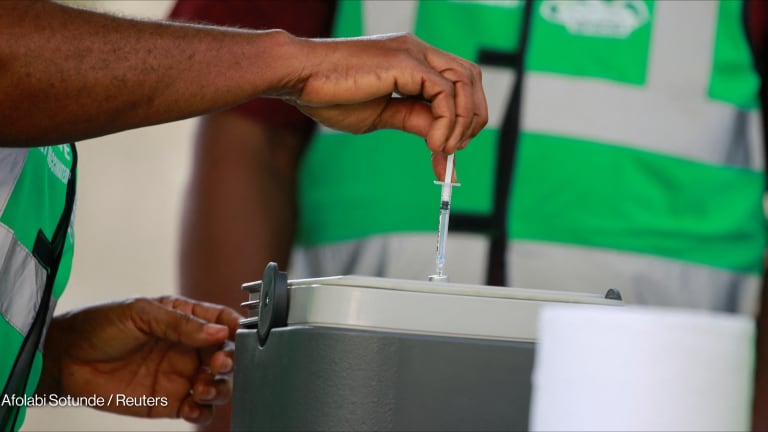
    Africa imports 94% of the medicines its people use, but according to some public health officials, the most daunting obstacle to producing locally is not poor facilities, a lack of finance, staff shortages, intellectual property rights, or any other of the likely candidates. Instead, it is the country-level regulatory hurdles that companies will face as the European Union promises to shift manufacturing to African countries, officials said Thursday during the EU’s “Global Gateway” forum in Brussels. “I worry that is going to be the thing that slows us down the most,” Peter Sands, the executive director of The Global Fund to Fight AIDS, Tuberculosis and Malaria, told the audience, calling regulations “the most complicated and difficult part of this whole equation.” Pointing to the critical need for demand to match the supply if manufacturing is moved to Africa, Sands added: “Otherwise we will end up with factories with no one to sell to, with economics that won’t work.” Countries in the continent can have fragmented, often weak regulatory systems and porous borders, both of which pose challenges in ensuring medicines are not fake or substandard. The African Union is in the process of creating the African Medicines Agency, a central regulatory agency tasked with harmonizing regulation across the continent, but its establishment has been slow. Dr. Ngashi Ngongo, chief of staff at the Africa Centres for Disease Control and Prevention, stressed the need for common regulation across the continent and told the gathering: “We have 55 countries. Are we going to be repeating the same process in every single country? It is cumbersome.” The problem was raised in a panel discussion at the Global Gateway forum, a two-day event that took place on Oct. 26 and 27 and featured discussions on EU development projects in low- and middle-income countries. One of the partnership’s 87 schemes is to boost “manufacturing and access to vaccines, medicines and health technology products in Senegal, Rwanda, Ghana and South Africa.” The EU says that more than €1 billion has already been invested in the project through the European Centre for Disease Prevention and Control to strengthen “the capacities of Africa CDC” to deliver the change. The Partnerships for African Vaccine Manufacturing also works in that space, focusing on boosting African vaccine production from 1% of all its vaccines to 60% by 2040. Born out of the COVID-19 pandemic, the initiative is overseen by Africa CDC. Meanwhile, the African Continental Free Trade Area, which came into operation in 54 countries in 2021, seeks to eliminate tariffs on goods and services but has a long way to go to harmonize the continent’s many different regulatory systems. Ngongo explained that Africa CDC is developing a “legal instrument for joint procurement,” to commit African states to buying products covered and to “buy together in order to create the economies of scale that we need to lower the prices.” “Once the product is registered it can be used in all of the 55 countries, taking advantage also of the free continental trade agreement,” he said. Sands said The Global Fund and PEPFAR, the U.S. global AIDS initiative, are the “dominant players in the market” ensuring the purchasing of locally produced HIV diagnostic tests, antiviral drugs, and bed nets to protect against malaria, as well as vaccines. “The issue is going to be the speed at which we can navigate these things through the various regulatory hurdles — be it through the PQ [performance qualification] process or local regulatory approvals,” he warned. Caroline Gennez, Belgium’s minister for development cooperation, who was also part of the panel discussion, said: “I couldn’t agree more. If Africa produces vaccines, South Africa for instance, and they buy their own vaccines in India, then it’s a problem. It’s all about market-shaping.” The Global Gateway describes the purpose of its health project as “diversifying partner countries’ pharmaceutical supply chains and strengthening vaccine manufacturing capacities.” “The aim is to prioritise the security of supply chains and the development of local manufacturing,” it states, noting “a sustainable regulatory environment” is a key part of that jigsaw.

    Related Stories

    Africa inches toward local production of vaccines and more
    Africa inches toward local production of vaccines and more
    Can Africa’s drug regulators be both fast and trusted?
    Can Africa’s drug regulators be both fast and trusted?
    Europe is missing its moment in Africa
    Europe is missing its moment in Africa
    How Asia-Pacific can boost vaccine access in the next pandemic
    How Asia-Pacific can boost vaccine access in the next pandemic

    Africa imports 94% of the medicines its people use, but according to some public health officials, the most daunting obstacle to producing locally is not poor facilities, a lack of finance, staff shortages, intellectual property rights, or any other of the likely candidates.

    Instead, it is the country-level regulatory hurdles that companies will face as the European Union promises to shift manufacturing to African countries, officials said Thursday during the EU’s “Global Gateway” forum in Brussels.

    “I worry that is going to be the thing that slows us down the most,” Peter Sands, the executive director of The Global Fund to Fight AIDS, Tuberculosis and Malaria, told the audience, calling regulations “the most complicated and difficult part of this whole equation.”

    This article is free to read - just register or sign in

    Access news, newsletters, events and more.

    Join usSign in

    More reading:

    ► Senegal nears completion of 'bespoke' vaccine manufacturing facility (Pro archives)

    ► How PEPFAR aims to spur medical manufacturing in Africa

    ► Opinion: How to make Africa’s vaccine manufacturing sustainable

    • Global Health
    • Trade & Policy
    • Institutional Development
    Printing articles to share with others is a breach of our terms and conditions and copyright policy. Please use the sharing options on the left side of the article. Devex Pro members may share up to 10 articles per month using the Pro share tool ( ).

    About the author

    • Rob Merrick

      Rob Merrick

      Rob Merrick is the U.K. Correspondent for Devex, covering FCDO and British aid. He reported on all the key events in British politics of the past 25 years from Westminster, including the financial crash, the Brexit fallout, the "Partygate" scandal, and the departures of Boris Johnson and Liz Truss. Rob has worked for The Independent and the Press Association and is a regular commentator on TV and radio. He can be reached at rob.merrick@devex.com.

    Search for articles

    Related Stories

    Global HealthRelated Stories - Africa inches toward local production of vaccines and more

    Africa inches toward local production of vaccines and more

    Global healthRelated Stories - Can Africa’s drug regulators be both fast and trusted?

    Can Africa’s drug regulators be both fast and trusted?

    Opinion: FinanceRelated Stories - Europe is missing its moment in Africa

    Europe is missing its moment in Africa

    Global healthRelated Stories - How Asia-Pacific can boost vaccine access in the next pandemic

    How Asia-Pacific can boost vaccine access in the next pandemic

    Most Read

    • 1
      Why NTDs are a prime investment for philanthropy
    • 2
      The silent, growing CKD epidemic signals action is needed today
    • 3
      Trump withdraws, defunds dozens of international orgs and treaties
    • 4
      Why are 3.4 billion people still offline?
    • 5
      US lawmakers strike $50B foreign assistance deal, surpassing Trump's plan
    • News
    • Jobs
    • Funding
    • Talent
    • Events

    Devex is the media platform for the global development community.

    A social enterprise, we connect and inform over 1.3 million development, health, humanitarian, and sustainability professionals through news, business intelligence, and funding & career opportunities so you can do more good for more people. We invite you to join us.

    • About us
    • Membership
    • Newsletters
    • Advertising partnerships
    • Devex Talent Solutions
    • Post a job
    • Careers at Devex
    • Contact us
    © Copyright 2000 - 2026 Devex|User Agreement|Privacy Statement