
Opinion: Healthy starts for lifelong health
More than 2.1 billion young people are at the heart of the NCD crisis. Interventions during early childhood and adolescence can have significantly beneficial, long-lasting health outcomes, and economic advantages for individuals and countries.
By Dr. Fouzia Shafique , Cynthia Cardona // 13 February 2025Somati found out she had sickle cell disease when she was 29 years old, after years of suffering from lower stomach pain, fatigue, and multiple other symptoms. She is one of many adults diagnosed with a noncommunicable disease, or NCD, later in life, suffering from an undetected illness that was preventing her from living a healthy life and providing for her family. After her diagnosis, Somati — who is a single mother of three daughters — was worried that she may have passed on the disease to her daughters and whether treatment would be available for them. The family was able to seek screening, learn about prevention, and receive treatment thanks to efforts to strengthen the local health system in Nepal. Since seeking treatment, Somati has been able to live a full and healthy life and is relieved that through early health intervention and prevention, her daughters will not have to endure the same harrowing experiences. However, for many others with NCDs, access to screening, preventive measures, and treatment remain elusive and the outcomes are much worse. A new report released by UNICEF, developed in collaboration with Boston Consulting Group, titled Building blocks for lifelong health: Why we must prioritize children, estimates that deaths from NCDs are expected to increase by over 25% by 2030, as economies grow and lifestyles change. NCDs already account for 74% of all global deaths. Despite this growing global health epidemic, NCDs receive only about 1%-2% of global financing investment for health. There is clear evidence that interventions during early childhood and adolescence can have significantly beneficial, long-lasting health outcomes, as well as economic advantages for countries and individuals. Healthy starts More than 2.1 billion children and adolescents are at the heart of the NCD crisis — either having developed NCDs or having been exposed to risk factors for developing NCDs. These children often live with undetected NCDs and their challenging symptoms. Even when NCDs are detected, they are unable to access adequate long-term care, resulting in both early deaths and lives lived with unfulfilled potential. Children living with NCDs in resource-limited settings often grow up in environments overwhelmed by unhealthy foods and high levels of pollution, with limited opportunities for active lifestyles. They also face trauma, chronic stress, and adverse social conditions such as poverty and violence. Even in settings where resources do not pose significant constraints, lack of physical activity, malnutrition/overnutrition, exposure to substance abuse, and air pollution aggravate the health challenges of children living with NCDs. These factors are increasing the impact of NCDs in all age groups, with annual deaths from NCDs projected to reach 52 million by 2030, with approximately 70% of premature deaths in adults linked to health-related behaviors that originate in childhood. NCDs, together with mental health conditions disrupt school attendance, limit future potential, and amplify stigma and discrimination. These factors not only harm children’s current health and well-being but also lay the foundation for lifelong struggles with NCDs. Investing in and supporting a “whole-of-society” approach, emphasizing awareness, prevention, management, and support for NCDs across the life course — starting in the early years, through primary health care and community-based services — will be critical to accelerating action on NCDs. Strengthening health systems The chronic nature of NCDs, including mental health conditions, requires sustained, resource-intensive care — placing immense strain on already overstretched health systems. This challenge is especially severe in resource-limited settings in low- and middle-income countries, or LMICs, where limited infrastructure, workforce shortages, and inadequate funding exacerbate the problem. Due to capacity restraints, health systems often remain primarily focused on combatting infectious diseases and are not adequately equipped to address NCDs and mental health conditions. This imbalance threatens to undermine health outcomes. To strengthen health systems, there is an urgent need for adaptable and localized support in integrated strategies, as well as accessible prevention and care through person-centered care models. Healthy outcomes NCDs are not only a health issue — they represent a critical equity concern. Beyond the health impact on societies, they present a massive financial burden to families, communities, and the global economy. The high cost of treatment, often out-of-pocket for NCD care, and limited access to quality medications, diagnostics, and travel for care further deepen global health inequities. It can also hinder the ability of families to afford essentials such as food, housing, clothing, and education, subsequently driving families into poverty and threatening the future of businesses, societies, and economies. Across 18 countries analyzed, households affected by NCDs allocate an additional 2%-8% of their income to health care compared to non-NCD households, limiting their ability to cover other essential expenses. Health care and social care costs account for a significant portion of the economic burden. NCDs and mental health conditions, however, not only burden health systems and families but also affect the private sector. NCDs will cost the global economy at least $47 trillion over the next two decades. In the United States alone, the cost of NCDs and mental health conditions is estimated at $2 trillion annually through reduced productivity, shrinking talent pools, and lower consumer spending. These challenges underscore the urgent need for private sector action as they pose a direct threat to business growth, profitability, and operational longevity, which will affect all industries. Collaborations for catalytic change Evidence shows that supporting early prevention and strengthening health systems pay off to ensure healthier lives and economies. UNICEF works with partners, supporters, and stakeholders to prevent, detect, and treat childhood and adolescent NCDs to ensure young people receive the care and support they need. Private sector support from supporters such as Lilly and its donation of $20.9 million to UNICEF USA supports UNICEF’s efforts to address NCD risk factors and strengthen health systems in resource-limited settings in LMICs. This support enables UNICEF to help health care workers attend to patients in Bangladesh, India, Malawi, Nepal, the Philippines, and Zimbabwe, to improve health outcomes for millions of young people living with chronic NCDs in resource-limited settings in LMICs by 2030. These efforts focus on building awareness in each country on the importance of treating childhood NCDs within national, regional, and global health and multisectoral frameworks, and on the need to address key environmental and behavioral NCD factors that manifest in childhood to avert the potential development of NCDs later in life. This includes strengthening data and health information systems for NCDs; establishing and strengthening prevention, care, and treatment of NCDs within primary health care and referral facilities using the PEN-Plus integrated care delivery strategy; and building the capacity of service providers for the screening and improved management and treatment of NCDs. These initiatives demonstrate what can be achieved through a multisector approach that brings together governments, the private sector, institutions, and communities to develop effective, inclusive, and sustainable health initiatives for children. Healthy starts now Global health systems are not currently equipped to face the growing burden of NCDs. Failure to address this crisis will plunge societies and economies into insurmountable challenges. A significant part of these burdens can be avoided through early prevention efforts targeted at children and young people. This will require an “all of society” approach, fostering collaboration and support across sectors to build resilient, inclusive, and sustainable health systems, ensuring healthier children today and a stronger, more resilient world for tomorrow. In September 2025, heads of state and government will gather for the fourth high-level meeting of the United Nations General Assembly on the prevention and control of NCDs and mental health to set a new vision toward addressing these areas. Prioritizing health starts through supporting prevention and care, and addressing NCDs in childhood will be key to preventing overwhelming health systems and securing a healthier future for all. UNICEF does not endorse any company, brand, product or service. Visit Accelerating Action — a series highlighting pathways for funding NCD prevention and control, spotlighting innovative financing models and cross-sector collaborations. This content is sponsored by UNICEF USA as part of our Accelerating Action series. To learn more about this series, click here.
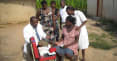
Somati found out she had sickle cell disease when she was 29 years old, after years of suffering from lower stomach pain, fatigue, and multiple other symptoms. She is one of many adults diagnosed with a noncommunicable disease, or NCD, later in life, suffering from an undetected illness that was preventing her from living a healthy life and providing for her family.
After her diagnosis, Somati — who is a single mother of three daughters — was worried that she may have passed on the disease to her daughters and whether treatment would be available for them. The family was able to seek screening, learn about prevention, and receive treatment thanks to efforts to strengthen the local health system in Nepal.
Since seeking treatment, Somati has been able to live a full and healthy life and is relieved that through early health intervention and prevention, her daughters will not have to endure the same harrowing experiences. However, for many others with NCDs, access to screening, preventive measures, and treatment remain elusive and the outcomes are much worse.
This article is free to read - just register or sign in
Access news, newsletters, events and more.
Join usSign inPrinting articles to share with others is a breach of our terms and conditions and copyright policy. Please use the sharing options on the left side of the article. Devex Pro members may share up to 10 articles per month using the Pro share tool ( ).
The views in this opinion piece do not necessarily reflect Devex's editorial views.
Dr. Fouzia Shafique is the associate director for health at UNICEF headquarters and focuses on maternal, newborn, child, and adolescent health, primary health care/health system strengthening, and digital health and information systems. She is also the global lead for UNICEF’s work on community health.
Cynthia Cardona is vice president of social impact for Eli Lilly and Company, a medicine company turning science into healing to make life better for people around the world. The social impact team at Lilly envisions a world where everyone has an equitable opportunity to live the healthiest life possible. Cynthia holds a B.S., M.S., and MBA from Stanford University.