These 5 questions will define the future of aid in 2026
Opinion: Last year forced the sector to confront hard truths. This year demands hard choices.
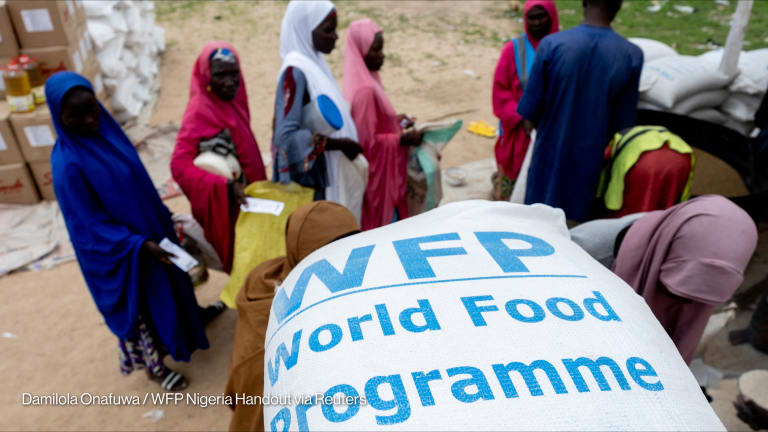
If 2024 was the year of polycrisis, 2025 was the year the aid architecture cracked and forced long-deferred questions into the open. As we enter 2026, those questions now demand answers. The effective dismantling of U.S. humanitarian financing structures over the past 12 months has reshaped global aid flows. According to sectorwide tracking, humanitarian funding fell by an estimated 35% globally. Localization has stagnated in terms of direct funding going to local groups, despite a decade of commitments to reach 25%. The Fund for Responding to Loss and Damage underdelivered. AI adoption has outpaced governance. And humanitarian staff buckled under chronic overstretch. The sector faces a choice: reactive adaptation imposed by crisis, or deliberate transformation guided by principle. Five questions will determine which path we take. 1. Can the humanitarian system function without predictable US funding? For decades, the U.S. provided roughly 30–40% of global humanitarian financing. However, recent policy shifts and budgetary changes have dramatically reduced U.S. contributions, with core humanitarian funding falling from about $14.1 billion (38% of global contributions) in 2024 to roughly $3 billion (15%) in 2025, removing billions of dollars annually from the global humanitarian system. The immediate effects were severe: millions lost access to food assistance, HIV treatment programs were disrupted, and humanitarian pipelines contracted sharply in protracted crises such as Sudan and Ethiopia according to the World Food Programme and UNAIDS. But 2025 was the shock. 2026 is the adjustment phase. Can European donors, Gulf states, and emerging economies compensate at scale? Or will the system permanently contract, forcing a recalibration of what humanitarian action can realistically deliver? For years, U.S. dominance was treated as both a vulnerability and a guarantee. Now the guarantee is gone, and the system must reckon with a new landscape of humanitarian aid delivery. 2. Will localization undergo structural change — or unravel entirely? After 10 years of Grand Bargain commitments, only about 4.5% of humanitarian funding reaches local and national groups directly. In 2025, U.N.–NGO consultations acknowledged what many local organizations had long argued: Localization is no longer in transition but in crisis. 2026 will test whether localization was ever meant to be transformative. Will donors dismantle compliance regimes that entrench control? Will international NGOs genuinely shift power, risk, and resources? Will local groups receive predictable, multi-year funding — or remain subcontractors absorbing risk without authority? The irony is stark. As international agencies faced funding contraction, localization became operationally convenient. But localization driven by necessity, without resources or structural reform, is not partnership — it is abandonment. 3. Can climate finance scale beyond symbolic gestures? As of November 2025, just over $800 million had been pledged to the loss and damage fund — orders of magnitude below the hundreds of billions required annually. Approved allocations for 2025–2026 amounted to roughly $250 million, with individual project ceilings of between $5 million and $20 million. For countries facing existential climate threats, these figures remain deeply inadequate. Meanwhile, climate shocks accelerated debt distress, forcing governments to divert health, education, and social protection budgets toward disaster response, according to the World Bank. Development gains vanished within single storm seasons. In 2026, the question is whether climate finance will move beyond pilots and pledges. Can debt-for-climate swaps scale? Will loss-and-damage funding reflect loss-and-damage realities? Or will the global response continue to offer billions where trillions are required — and then wonder why trust erodes? 4. Can AI governance catch up with deployment? In 2025, artificial intelligence moved rapidly from pilot initiatives to core humanitarian operations: flood prediction, needs assessments, biometric registration, and supply-chain optimization, as per the OCHA Centre for Humanitarian Data. Yet a majority of agencies deploying AI lacked formal ethical frameworks. Documented cases of algorithmic bias led to exclusion errors, inequitable targeting, and misidentification of vulnerable populations. By year’s end, several agencies, including WFP, the UN Refugee Agency, the U.N. Office for the Coordination of Humanitarian Affairs, the International Committee of the Red Cross, and Mercy Corps released first-generation AI ethics guidelines. Implementation, however, lagged behind deployment. 2026 presents a choice: slow adoption until governance catches up, or accept an accountability deficit as the cost of efficiency. The sector chose speed in 2025. Whether it chooses responsibility in 2026 remains uncertain. 5. Will the sector sustain its workforce, or continue consuming it? Humanitarian workers in 2025 carried expanding caseloads amid shrinking resources, rising insecurity, and relentless moral injury. In response, staff and U.N. personnel took collective action — including a large protest in Geneva against layoffs linked to funding freezes — over duty-of-care failures. Many in the field reported high levels of psychological distress and burnout as a consequence of sustained exposure to trauma and stress, and some agencies and U.N. partnerships announced commitments to strengthen mental health and psychosocial support. Yet structural change remained elusive, because “doing more with less” fundamentally contradicts workforce sustainability. For international staff, this is a question of career viability. For national staff, who constitute the majority of the workforce, it is a question of survival. 2026 will reveal whether the sector is serious about sustainable practice, or whether burnout remains an accepted operating condition. The choice ahead 2025 demonstrated how quickly long-standing aid architecture can fracture. It exposed dependencies the sector preferred not to confront and highlighted the gap between localization rhetoric and resource flows. It also revealed resilience: local groups sustaining operations under extreme constraint, agencies innovating under pressure, practitioners demanding accountability rather than retreating into denial. The question for 2026 is not whether the aid system will adapt — it has no alternative. The question is whether adaptation will be chaotic or deliberate, guided by the hard lessons of 2025. These five questions on financing, localization, climate, technology, and workforce sustainability are not abstract policy debates. They speak directly to whether the international aid system can meet 21st-century challenges with 21st-century solutions. 2026 is decision time. The sector’s legitimacy depends on choosing wisely.
If 2024 was the year of polycrisis, 2025 was the year the aid architecture cracked and forced long-deferred questions into the open. As we enter 2026, those questions now demand answers.
The effective dismantling of U.S. humanitarian financing structures over the past 12 months has reshaped global aid flows. According to sectorwide tracking, humanitarian funding fell by an estimated 35% globally.
Localization has stagnated in terms of direct funding going to local groups, despite a decade of commitments to reach 25%. The Fund for Responding to Loss and Damage underdelivered. AI adoption has outpaced governance. And humanitarian staff buckled under chronic overstretch.
This article is free to read - just register or sign in
Access news, newsletters, events and more.
Join usSign inPrinting articles to share with others is a breach of our terms and conditions and copyright policy. Please use the sharing options on the left side of the article. Devex Pro members may share up to 10 articles per month using the Pro share tool ( ).
The views in this opinion piece do not necessarily reflect Devex's editorial views.
Alemneh Tadele is a development and humanitarian evaluation specialist with over 20 years of experience across Africa. His work spans humanitarian protection, aid effectiveness, localization, and accountability, supporting international NGOs, U.N. agencies, and donors through evidence-based evaluations, policy analysis, and learning-oriented research in conflict- and crisis-affected contexts.