Our food aid systems are at breaking point. Time to build a better system
Opinion: 16 million people will be affected by food aid cuts this year alone. This is a critical moment to reimagine our approach, focusing on local resilience, data-driven solutions, and coordinated efforts.
This is a critical moment for our global food systems. Despite decades of international commitments, over 300 million people are experiencing acute hunger. Projections show that we’ve stopped making progress on the problem — that we’ll have the same proportion of food-insecure people in 2030 as we did in 2015. It’s not because we don’t have enough food; it’s because the most vulnerable food systems face increased risk of extreme weather, degrading environments, conflict, and economic volatility – and don’t yet have the capacity to adapt to those events. The old solution — to have massive organizations deliver food aid during an emergency — is itself at a breaking point. The world’s wealthiest countries have slashed billions in humanitarian and development funding. Official development assistance from the 17 largest Development Assistance Committee donors is projected to drop from $198.7 billion in 2024 to $146.2 billion in 2026 — a 26.4% decrease. The World Food Programme estimates that this year’s funding cuts will take food away from 16 million people across the world who desperately need it. It’s tempting to respond to this catastrophe in a defensive crouch. But we must resist that urge to salvage the old system. I’ve spent much of my career at the intersection of agricultural policy and economic development, and I’ve seen firsthand that our global food systems need a radical shift. The current crisis in international development offers a rare chance to move away from the outdated and inefficient approach to emergency food aid, and toward more anticipatory, collaborative, and resilient local food systems. We need to give farmers the long-term help they need to produce more nutritious food consistently; absorb crises more effectively alongside their governments, business collaborators, and financing partners; and feed their communities more easily. That’s how we change that 2030 projection for the better. Here’s how we do it. 1. Get rid of silos and plan at the systemic level First, we have to get rid of the categorical silos that make this work less efficient and effective. Different government agencies — agriculture, public health, disaster response — aren’t coordinating effectively. Multinational organizations have similar coordination gaps between “humanitarian” and “development” work. The problem is that food touches all of these categories and more — which means that the people in need are often seesawed between different grants, initiatives, and organizational mandates. These problems persist even in the multinational NGOs that coordinate emergency food response. Imagine you’re a farmer in Malawi. One year, you get funding from a climate organization to plant a new, more resilient crop variety. The next year, that grant runs out, and so does the guidance on harvesting the new crop — instead, you get included in a development initiative focused on new financing structures in the food system. The year after, a drought hits, so the development program gets scrapped — and an aid organization starts distributing food to your community. But they come in without any of the necessary context about need and supply on the ground. Instead of throwing money at different elements of this problem every year, we need to coordinate a long-term, systemic approach that centers on anticipatory action. Right now, less than 1% of all humanitarian assistance is allocated to anticipatory preparedness. This is the case even as crises have become more predictable, with warning signs such as market volatility, abnormal rainfall, and increased regional displacement becoming easier to track. We need to stop putting a Band-Aid over emergencies after they have occurred, and instead heed the warning signs to prevent crises from unfolding in the first place. That’s how we give the farmer in Malawi the tools she needs to feed her community year in and year out. 2. Make the data available — and teach people to use it Second, we need to improve and integrate the data systems used in our food aid network. Satellite technology — in tandem with data on the ground from terrestrial sensors and social media — has made food supply data more advanced than ever before. These technological advances have helped build early-warning systems — such as the Famine Early Warning Systems Network and the World Food Programme’s Vulnerability Analysis and Mapping system — that have the potential to forecast droughts, floods, shortages, and other food insecurity events down to the individual farm and field. A major challenge is that this data isn’t guiding action at the local level. Farmers, businesses, and NGO partners aren’t using these advanced systems to inform decisions on what to plant, when to plant, and when to harvest. And governments and international agencies aren’t able to utilize this data to distribute humanitarian support most effectively. Governments, NGOs, and researchers need to radically improve the transparency and public availability of this information. That doesn’t just mean posting it on the internet. It means investing in training resources and technological infrastructure, ensuring that vulnerable communities and those supporting them can implement it effectively. It means recentering the entire system around access on the ground. That’s how we’ll anticipate crises; help farmers build sustainable practices and utilize shock absorbers; and make international food intervention what it should have always been: A stopgap in a robust, data-driven system led by local communities. 3. Make the case for the importance of resilient food systems Third, we must change the narrative around international aid itself. According to recent polling, there is overwhelming agreement that international cooperation is important for addressing key issues, with more than 90% of respondents across 34 countries saying that international cooperation is important to food and water security. And yet, policymakers and donors are cutting back across the board. We need to write a new story — one that centers resilient food systems as a pillar of geopolitical stability and economic security, and that can build real political potency. When farmers can reliably and profitably sell their food, local economies will grow. When people can eat nutritious, locally produced food, vulnerable communities will thrive. That gives everyone a chance to live in a safer, more prosperous world. But we also have to make a renewed case that this is the right thing to do — and that this fact alone makes it worth it. We should fight back against the callousness and cruelty of those who want to sit by and let people suffer. We should never apologize for doing everything we can to help hungry people feed and nourish themselves. To be clear, none of these solutions is a silver bullet. They won’t make up for the devastating funding cuts alone, and even the best systems will become destabilized in conflict zones where bad groups wield famine as a weapon of war. But still, this work is urgent and essential. We have to use this moment of crisis as an opportunity to build a more streamlined and resilient system — one that prioritizes anticipatory action, modernizes our data, and coordinates between international organizations and local communities. And in order to do it, we need a paradigm shift in how we think and talk about international aid. Now is the time to make that happen.
This is a critical moment for our global food systems. Despite decades of international commitments, over 300 million people are experiencing acute hunger. Projections show that we’ve stopped making progress on the problem — that we’ll have the same proportion of food-insecure people in 2030 as we did in 2015. It’s not because we don’t have enough food; it’s because the most vulnerable food systems face increased risk of extreme weather, degrading environments, conflict, and economic volatility – and don’t yet have the capacity to adapt to those events.
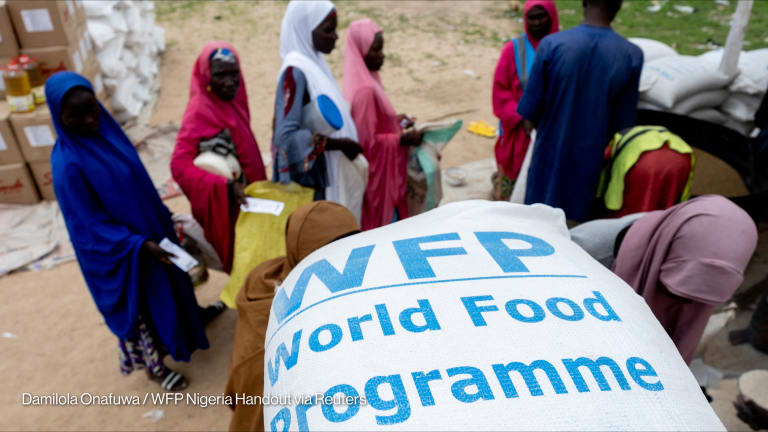
The old solution — to have massive organizations deliver food aid during an emergency — is itself at a breaking point. The world’s wealthiest countries have slashed billions in humanitarian and development funding. Official development assistance from the 17 largest Development Assistance Committee donors is projected to drop from $198.7 billion in 2024 to $146.2 billion in 2026 — a 26.4% decrease. The World Food Programme estimates that this year’s funding cuts will take food away from 16 million people across the world who desperately need it.
It’s tempting to respond to this catastrophe in a defensive crouch. But we must resist that urge to salvage the old system. I’ve spent much of my career at the intersection of agricultural policy and economic development, and I’ve seen firsthand that our global food systems need a radical shift.
This article is free to read - just register or sign in
Access news, newsletters, events and more.
Join usSign inPrinting articles to share with others is a breach of our terms and conditions and copyright policy. Please use the sharing options on the left side of the article. Devex Pro members may share up to 10 articles per month using the Pro share tool ( ).
The views in this opinion piece do not necessarily reflect Devex's editorial views.
Simon Winter is the vice president for Reimagining Humanitarian Nutrition Security at The Rockefeller Foundation and executive director of the Sustainable Agriculture Foundations’ International Association in Basel, Switzerland.