





Power doesn’t always correlate with money, but it is a type of currency — influencing policies, people, and purse strings. Those who wield it shape what happens around them, whether on Wall Street, in the White House, or in the global development sector.
It’s been a year of tectonic shifts in the sector, as the United States and other major donors retrench from foreign assistance and others step up. Who is leading these changes? Adapting to them? Benefiting from them? Devex decided to find out.
Our new Power 50 list pinpoints the individuals who are transforming development as we know it. These aren’t your obvious names (yes, we know U.S. President Donald Trump has upended the U.S. foreign aid system). The most powerful are often the behind-the-scenes players — whether in government, philanthropy, artificial intelligence, multilateral finance, or health — reinventing the concept of helping people in what many see as a post-aid era.
The list reveals clear trends: As bilateral aid drops, all eyes are on philanthropy, development finance, and the private sector to plug gaps — even though the gaps are massive. Then there’s artificial intelligence, which can act as a force multiplier for everything from health to education to food security — if used wisely. And not everyone is hurting for money — emerging donors such as the Persian Gulf states are showing us that bilateral aid isn’t dead quite yet.
Formulating a list like this isn’t an exact science. But the Devex newsroom knows this sector better than anyone, and here’s our best look at the people you’ll truly need to know about in order to follow global progress in 2026.
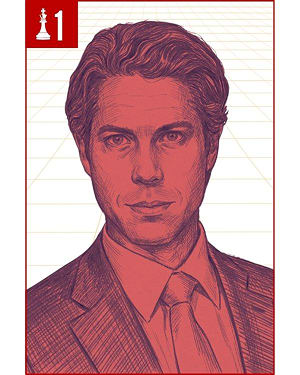
1. Benjamin Black
Chief executive officer | U.S. International Development Finance Corporation
Backstory: Benjamin Black — who was confirmed as CEO of the U.S. International Development Finance Corporation, or DFC, in October — takes on what many view as the quintessential “America First” development agency, which now boasts a more expansive mandate and tens of billions in additional funding that could one day help it approach the scale of China’s Belt and Road initiative. A long-time investor, Black’s most recent endeavor was as founder and managing partner of Fortinbras Enterprises, an investment firm. Black, who’s also worked in private equity and as a portfolio manager at other investment firms, is the son of billionaire investment banker Leon Black.
Why he’s on the list: Black was not only one of U.S. President Donald Trump’s early nominees — even if it took him many months to get confirmed — he was also one of the most unexpected. Neither a household name in Trump world nor a known figure in any development circles, he’s been handpicked to lead an agency that’s now at the forefront of an “America First” development agenda. With USAID’s demise came the rise of DFC, which was just reauthorized by Congress after months of political haggling over its scope and mandate.
The result is a massively strengthened agency — whose total investment cap mushroomed from $60 billion to $205 billion, with a newfound power to invest in high-income countries. DFC is also being positioned as a geostrategic counterweight to China, especially in the race for critical minerals. This has triggered concerns that DFC’s private sector-led approach will overshadow its original development focus.
For his part, Black has touted DFC’s “dual mandate” of advancing economic development and strategic foreign policy priorities. But he’s clearly a critic of traditional U.S. foreign aid spending. Last year, prior to Trump’s inauguration, he penned a blog post with tech entrepreneur Joe Lonsdale titled “How to DOGE US Foreign Aid” in which they argued that “much of our current foreign aid budget is waste and should be cut” and that a bulk of USAID’s budget should be shifted to DFC. Black will lead a newly reauthorized DFC that has a bigger budget and the ability to invest in many more countries around the world. So all eyes will be on where he takes DFC and whether its core development mission remains intact.
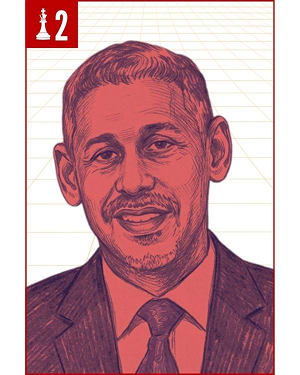
2. Sidi Ould Tah
President | African Development Bank
Backstory: Sidi Ould Tah, a Mauritanian economist, became president of the African Development Bank in 2025 after leading the Arab Bank for Economic Development in Africa, or BADEA, where he oversaw a 75% expansion in assets and drove nonperforming loans to historic lows. He previously served as Mauritania’s minister of economic affairs and development, giving him experience across government and multilateral finance.
Why he’s on the list: Tah takes the helm at AfDB as the institution becomes bigger, more visible, and more constrained all at once. He’s got a mandate, though: His predecessor, Nigeria’s Akinwumi Adesina, had to sit through six rounds of voting to get the job, while Tah made it in just three rounds. He inherits a bank whose capital tripled under his predecessor, yet is now staring down tighter donor budgets and just completed a high-stakes replenishment of the African Development Fund — missing an ambitious $25 billion target but raising a record $11 billion. Shareholders backed him in part for his deep relationships with Gulf financiers, hoping he can bring new capital into the bank (and the continent) at a moment when long-standing donors are retreating — and indeed, BADEA pledged $800 million, while the OPEC Fund for International Development promised up to $2 billion.
The search for fresh capital sits alongside AfDB’s plans to rely more on capital-market instruments and strengthen its private-sector work. Tah has framed jobs, peace, and climate resilience as his core priorities for a continent facing mounting demographic and economic pressures. His ability to anchor that vision in actual financing will define AfDB’s influence in the years ahead.
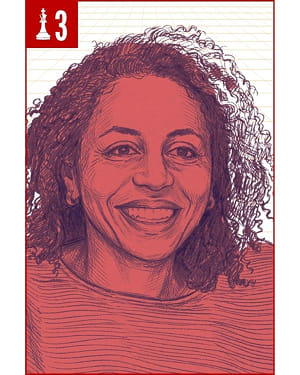
3. Anna Makanju
Vice president, global impact | OpenAI
Backstory: As OpenAI’s vice president of global impact, Anna Makanju sits at the nexus of model deployment, policy, and governance for one of the most influential artificial intelligence companies in the world. She joined OpenAI just a year before ChatGPT’s release upended the public’s relationship with AI, and served as the company’s head of public policy and vice president of global affairs.
She was also a special adviser to then-U.S. Vice President Joe Biden, director for Russia at the National Security Council, and senior official at the Pentagon. Her background includes international law and war-crimes tribunals, along with global policy roles at SpaceX and Facebook. Born in what was then the Soviet Union and raised mostly between Lagos and Leningrad before moving to Texas, she brings an unusually global lens to frontier-tech governance.
Why she’s on the list: Makanju has emerged as a key figure at the frontier of AI, with enormous influence over how next-generation AI systems will shape the developing world. She is leading OpenAI’s global outreach to governments, helping draft the first wave of AI guardrails and advising leaders on how to balance innovation with public safety. Her combination of national security, election integrity, and tech-policy experience has made her a trusted sounding board for regulators who are racing to understand the technology’s risks and societal implications. At OpenAI, she is at the center of debates over how far the company should go in embracing regulation — and how quickly powerful AI systems should be deployed. Makanju, who has said she is convinced that AI will transform everyday life within the decade, is focused on building the policy and governance infrastructure needed to ensure the technology benefits societies broadly.
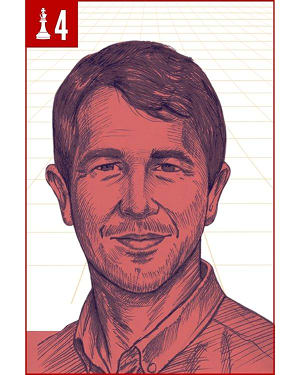
4. Alexander Berger
Cofounder and CEO | Coefficient Giving
Backstory: Alexander Berger was the first employee of Open Philanthropy — originally set up by Holden Karnofsky and Elie Hassenfeld, who are also the founders of effective altruism organization GiveWell. Open Philanthropy launched as an independent entity in 2017, and recently changed its name to Coefficient Giving, but Berger is still CEO.
Why he’s on the list: A power player in the effective altruism, or EA, movement, Alexander Berger is now poised to whisper in the ears of the world’s wealthiest would-be philanthropists. For years, he has helped perhaps the wealthiest EAs in the world — Cari Tuna and Dustin Moskovitz — rapidly dispense with their billions. The young couple's annual giving nearly rivals that of the Ford Foundation alone. Now, their philanthropic vehicle has been redesigned under Berger’s leadership to serve a new crop of donors under an aptly named new banner: Coefficient Giving. The timing is not incidental. EAs — whether they use that label or simply adhere to the utilitarian philosophy that underpins it — are well represented in two booming industries: crypto and artificial intelligence. The renamed organization has detailed plans to offer free advice to anyone planning to donate their money, including ultra-high-net-worth individuals from those very industries. It specifically has an in with the founders of Anthropic, the juggernaut AI company: Anthropic was cofounded by Daniela Amodei, whose husband is Holden Karnofsky, the man Berger succeeded. Daniela’s brother, Dario Amodei, the CEO of Anthropic, was once Karnofsky’s housemate and has been closely associated with the EA movement. (Karnofsky now works at Anthropic, too.) All this leaves Berger and the organization he leads unusually well positioned to capture the philanthropic windfall from the AI revolution.
Side note: At the age of 21, while an analyst at GiveWell, Berger donated a kidney to a stranger — and wrote an opinion piece in The New York Times explaining why it should be legal to sell your own organs.
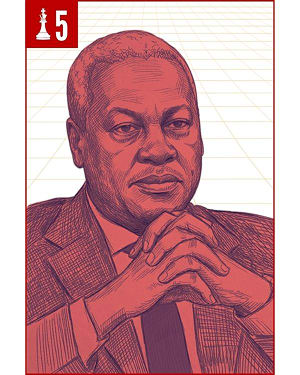
5. John Mahama
President of Ghana
Backstory: John Mahama assumed the presidency of Ghana in January. This is his second term — but not his second consecutive term. He was previously elected in 2012, but lost a reelection bid in 2016. He has also served as vice president, in parliament, and in ministerial roles – and was the first cochair of the United Nations Advocacy Group on the Sustainable Development Goals.
Why he’s on the list: Mahama has emerged as a leading voice pushing for a new deal for African development — shaping debates on debt relief, trade reform, and climate finance, arguing that Africa must renegotiate its place in the global economic order rather than simply adapt to declining aid. Last August, he hosted a group of African leaders, policymakers, and global health experts in the Ghanaian capital of Accra, where they launched a new vision toward African health sovereignty — rooted in national ownership and more equitable global cooperation. They then reconvened during the U.N. General Assembly this past September to expand the framework beyond health to development more broadly, and to move beyond the African continent to serve as a global agenda. They’ve dubbed it the “Accra Reset,” an effort to declare an end to the era of development-as-usual and to push for the creation of new governance, business, and financing models in response to the U.S. aid cuts. Mahama has served as the leading, hands-on advocate of this new vision, with former Nigerian President Olusegun Obasanjo advising him.
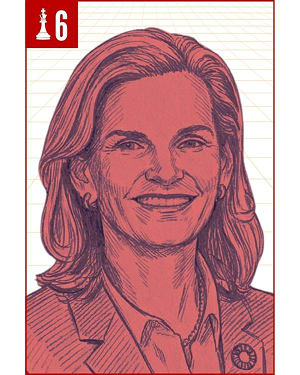
6. Doreen Bogdan-Martin
Secretary-general | International Telecommunication Union
Backstory: Doreen Bogdan-Martin is a veteran telecommunications specialist with more than 30 years of experience at the International Telecommunications Union — and is the first woman to be elected leader of the Geneva-based U.N. agency. Before joining ITU, she served in the U.S. Department of Commerce.
Why she’s on the list: Even as the U.S. has retreated from multilateralism, the Trump administration has shown considerable interest in influencing U.N. debates over the future of artificial intelligence and global digital standards, including for the global south. Last year, the U.S. Department of State announced its backing for the reelection of Bogdan-Martin, whose four-year term wraps up at the end of 2026. The U.S. support for Bogdan-Martin — and ITU — is noteworthy at a time when the Trump administration has issued scathing criticism of the U.N. and imposed billions of dollars in funding cuts to the world body. ITU has served as an obscure battleground in the big power struggle for influence over global communications, pitting the U.S. against China and Russia, which sought a stronger role for governments in managing communications across the internet. Before Bogdan-Martin’s election, ITU was led for eight years by a Chinese national, Houlin Zhao, and her main challenger for the top job was Rashid Ismailov, a former deputy minister of Russia’s communications ministry and a former executive at Chinese telecom company Huawei.
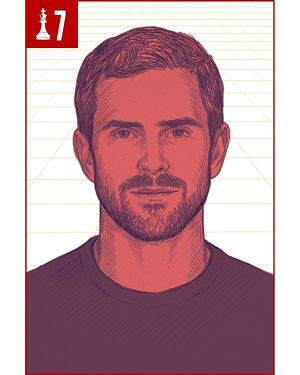
7. Keller Rinaudo Cliffton
Cofounder and CEO | Zipline
Backstory: The CEO and cofounder of Zipline, Keller Rinaudo Cliffton built the company from a robotics startup in 2014 into the world’s largest autonomous drone delivery system. While at Harvard, Cliffton raised $45,000 to build a rock-climbing wall, and before becoming a tech mogul he spent some time living out of his car as a professional climber.
Why he’s on the list: Zipline is a U.S. tech behemoth that delivers essential health commodities in Africa while cutting out NGOs and contractors in the process. It has long been deeply integrated with government health ministries, private companies, and international organizations, which allows for an exponential reduction in delivery times and an increase in cost-effectiveness of health supply chains. It’s also the poster child for the new “America First” aid model: With a $150 million grant from the State Department, the multibillion-dollar company is poised to triple its health commodity deliveries in Africa, where it currently operates on a national scale in five countries. In order to fully unlock the U.S. funding, Zipline has to negotiate contracts with African governments that commit them to ongoing payment for its services. It’s an arrangement the State Department is holding up as the future of U.S. global health investment — turning partner governments into “customers” of American technology and innovation. For Zipline, it means an even bigger foothold in an emerging market — and increased scrutiny of its ability to deliver better health outcomes at a better price than the organizations it is supplanting.
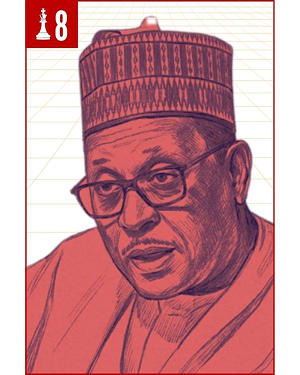
8. Muhammad Ali Pate
Nigeria’s coordinating minister of state for health and social welfare
Backstory: Muhammad Ali Pate is a trained doctor but has held a varied slate of positions — global director for health, nutrition, and population at the World Bank; CEO of Big Win Philanthropy; and professor of public health leadership at the Harvard T.H. Chan School of Public Health. In 2023, Pate was named the CEO-elect of Gavi, the Vaccine Alliance, but later turned that role down to take on his current role as Nigeria’s health minister.
Why he’s on the list: Pate is the leading voice advocating for improving health care access in Africa’s most populous nation, with a particular focus on sourcing health products domestically. In September, Pate announced that production of anti-malaria bed nets will soon begin at a factory outside Abuja, the first time nets will have been produced locally despite them being distributed for decades. But his advocacy extends beyond his home country as he fights to reform the international global health infrastructure — making him one of the most recognized health ministers on the African continent and beyond. He is an advocate for shifting the donor-recipient relationship toward more equal partnerships and greater health sovereignty for African nations, in line with the “Accra Reset.”
At the World Health Assembly in May, Nigeria sponsored an initiative aimed at strengthening global health financing and accelerating progress toward achieving universal health coverage, which countries adopted. In September, Nigeria hosted a high-level national policy dialogue on reimagining the future of health financing — and when U.S. officials outlined their “America First” plans for global health, Pate said “we welcome” the vision to sign bilateral agreements with African governments.
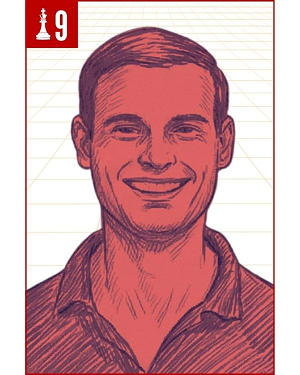
9. Jeremy Lewin
Senior official and undersecretary for foreign assistance, humanitarian affairs, and religious freedom | U.S. Department of State
Backstory: At 28 years old, Jeremy Lewin came to government with no prior diplomatic experience. Brought in specifically to dismantle USAID as part of President Donald Trump’s efficiency reforms, he now owns the task of putting U.S. foreign assistance back together at the State Department.
Why he’s on the list: Lewin now controls over $50 billion in annual U.S. foreign assistance as the State Department's senior official overseeing aid, humanitarian response, and global health. As part of the Department for Government Efficiency, or DOGE, he led historic cuts totaling billions of dollars in foreign assistance funding, and left little doubt about his distaste for USAID’s international NGO and contractor partners along the way. In Lewin’s telling, he is part of a historic effort to recapture U.S. foreign assistance from the “global humanitarian complex” and return it to the interests of the American people. We’re still waiting for the State Department to restart real aid spending and show the world what that new system looks like, but high-profile deals with the pharmaceutical manufacturer Gilead and the drone-robotics company Zipline suggest Lewin wants American tech firms to get a bigger piece of the pie. Whether he can reshape the entire foreign aid architecture to match DOGE principles while maintaining U.S. global influence is the question hanging over 2026.
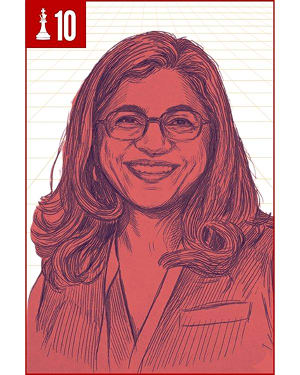
10. Binaifer Nowrojee
President | Open Society Foundations
Backstory: Binaifer Nowrojee has served as president of Open Society Foundations since 2024, after rising through the organization from its East Africa office to regional director for Asia and eventually vice president of programs. Previously, she spent a decade at Human Rights Watch, where she worked on sexual violence during the Rwandan genocide. The daughter of renowned Kenyan human rights advocate Pheroze Nowrojee, she told the Daily Nation that because of her father’s prominent political work, she couldn’t get into university in Kenya — so she went to the U.S., where she was educated at Columbia University and Harvard Law School.
Why she’s on the list: Nowrojee is leading OSF through a storm of upheaval and political crossfire. She took over just as the foundation shed three-quarters of its staff and consolidated its global footprint. That alone would have been a defining challenge, but the organization’s work on democracy and governance also took on new importance after U.S. aid cuts canceled 97% of programs focused on democracy, human rights, governance, and peacebuilding. Her presidency now unfolds under a hostile U.S. administration escalating its attacks on progressive institutions and singling out OSF’s founder, George Soros, as a political target. The organization is one of the most visible left-leaning philanthropies in the world, and the Trump administration has threatened to use the U.S. Justice Department and IRS to go after it and groups like it. Nowrojee has been defiant, saying the foundation will not change its U.S. programming and promising to challenge the administration in court if needed — a test that will undoubtedly shape how the rest of the field prepares for what comes next.
♟️Pro members get exclusive access to the full Devex Power 50 list.
About the author

Devex Editor
Thanks a lot for your interest in Devex News. To share news and views, story ideas and press releases, please email editor@devex.com. We look forward to hearing from you.
Search for articles




Most Read
- 1
- 2
- 3
- 4
- 5