2025 in food systems: 9 key things to watch
Major events like COP30 in Brazil and the Nutrition for Growth Summit in Paris will shape 2025's global focus on food security, agriculture, and climate action. Here’s what to watch in the year ahead.
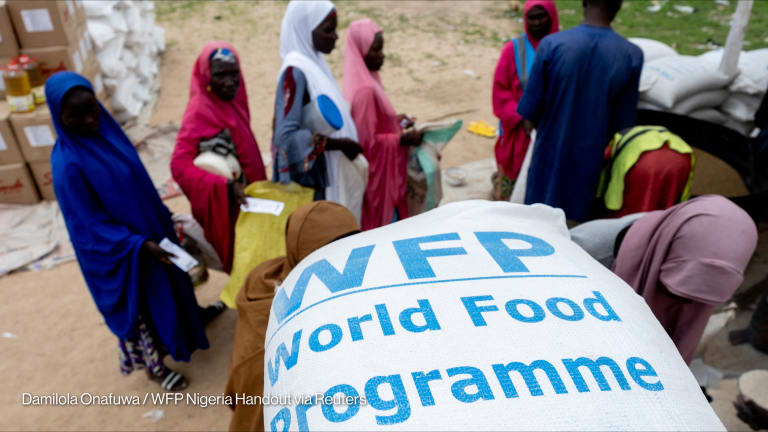
As 2025 unfolds, the intersection of food security, agriculture, and climate change takes center stage in global discussions. With major milestones, themes, and events such as the climate conference COP30 in Brazil and the Nutrition for Growth Summit in Paris, this year promises significant developments in addressing food insecurity, climate challenges, and global policy shifts. Here’s what to watch for: 1. The road to COP30 in Belém Agriculture and food systems will be a key focus at the United Nations COP30 in Brazil in November. But first, countries are due to submit their updated Nationally Determined Contributions, or NDCs, by February. These plans, though not legally binding, set goals to limit global warming to 1.5 degrees Celsius in line with the Paris climate agreement. Given agriculture’s role as a major greenhouse gas emitter, countries face strong pressure from climate advocates to include explicit reduction targets for the sector. Land-use changes, agricultural emissions, and other measures could deliver up to 20% of the mitigation needed by 2050 to reach the Paris agreement’s net-zero target, according to the NDC Partnership, an initiative to help countries meet their climate commitments. As of October, 41 countries had requested the NDC Partnership’s support on food systems actions such as implementing nature-positive food production practices, reducing food loss and waste, adopting sustainable diets, and ensuring well-funded, actionable plans. “COP30 is at the top of my mind and whether it will have a greater focus on food and agriculture than Baku,” said Jack Bobo, executive director of the UCLA Rothman Family Institute for Food Studies. “Recent deforestation data out of Brazil suggests the new administration has already taken steps to reduce deforestation. This may put the government in a better position to push for stronger commitments at COP30.” 2. Conflict and hunger crises stretch humanitarian budgets The outlook for global hunger in 2025 is troubling, with no signs of relief from the major drivers of acute food insecurity: conflict, climate extremes, and economic downturns. The U.N. Food and Agriculture Organization and World Food Programme estimate that 343 million people across 74 countries are acutely food insecure, nearly 200 million more than pre-pandemic levels and a 10% increase from the year prior. Sudan, Gaza, South Sudan, Haiti, and Mali remain at the highest levels of concern. Indeed, 14 out of 16 “hunger hotspots” identified in the report cited armed violence as a key reason for food insecurity. Poverty in fragile and conflict-affected countries has also risen, reversing trends of global poverty reduction seen after 2020. Sudan is a particularly dire case: In December, the Integrated Food Security Phase Classification, or IPC, found that famine has spread to five areas of the country, affecting 638,000 people. It projects that famine will continue to spread to five additional areas in North Darfur during the first half of 2025. Despite these escalating needs, funding for humanitarian organizations is falling dangerously short. As of November 2024, only 38% of the funding required according to the Global Humanitarian Overview had been received, leaving organizations such as WFP with significant resource gaps. “Funding shortages are hitting hard, and millions feel the sting of reduced food assistance. In most of its operations, WFP was forced to dramatically reduce the size of the assistance provided and the number of people reached,” WFP wrote of the Middle East in the same report. For 2025, WFP requires $16.9 billion to meet growing humanitarian needs, but the funding outlook remains grim. The funding crisis, along with persistent access constraints, forces WFP and its partners to leave some of the most vulnerable behind. 3. The Trump effect Donald Trump’s return to the United States presidency is poised to send shockwaves through global trade, with implications for food and agricultural commodities. His proposed tariffs of 10% to 25% on imported goods could reignite trade wars similar to those in his first term. While the Center for Strategic and International Studies warned that the volatility hurt African economic growth, a recent study published in the Journal of Policy Modeling found that the trade wars had a positive impact on Africa’s agriculture, food, and oil and gas sectors, and a negative one on its mineral, metal, and service sectors. Trump’s presidency is likely to also have a significant impact on international food aid. Late last year, the 2018 version of the farm bill — a trillion-dollar piece of legislation that governs both domestic agriculture policy and international food assistance — was extended once again, breathing yet another shaky year of life into legislation that was supposed to expire in 2023. Farm bill negotiations will now take place amidst a Republican trifecta, with the party set to control the White House, Senate, and House of Representatives by the end of the month. And as Washington reshuffles itself for the return of Donald Trump, the proposal put forward by the Republican-led House might get the boost it needs to become law. That version introduces new restrictions, reduces flexibility, and includes additional earmarks for nutritional programming — changes that aid agencies warned could result in 2.3 million fewer people receiving food aid. And if Trump’s first term can be a guide, this administration is likely to have a tense relationship with climate science featuring cuts to research funding. In addition, Project 2025 — a conservative blueprint for a Republican presidency — calls on the U.S. Department of Agriculture to end all efforts to transform the food system as they relate to climate change. 4. Global macroeconomic and climate headwinds Broader macroeconomic and climatic forces will play a critical role in shaping global food systems in 2025. Global commodity prices are projected to decline nearly 10% between 2024 and 2026, with food prices expected to fall 9% this year and an additional 4% in 2025, according to the World Bank. Despite these reductions, prices will remain 25% higher than the 2015-2019 average. Elevated food prices exacerbate global hunger as it makes it more difficult for both individuals and aid agencies to afford food. Meanwhile, the La Niña weather phenomenon, expected to persist into early 2025, could worsen food insecurity in already fragile regions. By cooling ocean surface temperatures in the central and eastern Pacific, La Niña could trigger flooding in areas such as Nigeria, Malawi, and South Sudan, while causing drought in Ethiopia, Kenya, and Somalia, WFP and FAO warned in a joint report. 5. A new 10-year plan for African agriculture 2025 will begin with the African Union unveiling the Kampala Declaration, a new 10-year plan for food security and agricultural transformation on the continent. Building on the goals of its predecessor, the Malabo Declaration — agricultural growth, hunger eradication, and sustainable farming — the Kampala Declaration is set to be presented and endorsed in Uganda’s capital this week. The results of the Malabo Declaration have been mixed. The continent overall remains offtrack — although the best-performing countries are Rwanda, Morocco, and Egypt, and others have met certain indicators. On some subgoals, such as enhancing investment finance in agriculture, all countries are off-track. For others, like increasing fertilizer use to the goal of 50kg/ha to boost productivity, four countries — Ethiopia, Egypt, Malawi, and Morocco — are on track. Agnes Kalibata, president of the Alliance for a Green Revolution in Africa, or AGRA, wrote in an opinion piece for Devex last month that the Kampala Declaration will build on the agendas of Malabo along with the 10-year Comprehensive Africa Agriculture Development Programme, or CAADP, by advocating for greater agricultural investment, particularly in smallholder farming, and innovative financial solutions to support sustainable practices. 6. A big push for investment in nutrition The Nutrition for Growth, or N4G, Summit, scheduled for March 27-28 in Paris, will be a key moment in 2025. Held every four years in the country that most recently hosted the Olympic and Paralympic Games, N4G serves as a high-profile pledging event to mobilize resources and commitments to combat malnutrition, particularly in the first 1,000 days of life. The previous summit, held in Japan in 2021, raised a record $27 billion from 181 organizations across 78 countries. Expectations for the 2025 summit are similarly high. While N4G’s secretary-general Brieuc Pont declined to disclose a specific fundraising target in a recent interview with Devex, he has expressed optimism about the level of interest and enthusiasm — particularly from financial institutions — despite competing global demands and a “replenishment traffic jam” for development funds. Nutrition and food security experts will be closely watching to see how pledges translate into concrete action for reducing malnutrition and improving health outcomes worldwide. Anup Jagwani, global head of agribusiness at the International Finance Corporation, or IFC, hopes that fortification — the addition of micronutrients to widely used food products — will be a major topic at the summit. “The low-hanging fruit within nutrition is fortification. … We are trying to incentivize companies. We are trying to ask them ‘Hey, can you fortify? Or what’s stopping you?’” 7. UNFSS+4 meeting on transforming food systems The latest U.N. Food Systems Summit, set to take place this year — details are still being finalized — will serve as a critical “stocktaking moment,” building on the work initiated four years ago at the inaugural UNFSS in 2021. This year’s event will be known as UNFSS+4. That first summit aimed to catalyze “bold new actions to deliver progress on all 17 SDGs.” Key objectives of UNFSS include integrating food systems transformation strategies into all national policies for sustainable development, increasing investment in research and data and ensuring the governance of food systems is fair, encouraging private sector participation, and integrating the voices of women, youth, and Indigenous peoples. The 2023 Stocktaking Moment, UNFSS+2, revealed encouraging progress, with two-thirds of countries embedding food systems into national strategies and 70% adopting food systems governance including decentralization, or moving food policy from the central government to the subnational level. The 2025 summit will be a critical opportunity to address lingering challenges, refine strategies, and mobilize resources. “The second stocktake to take place later this year provides an opportunity for governments to describe their imaginative approaches to coping with implementation challenges — including through encouraging more nutritious consumption practices using diverse foodstuffs, producing more of these foods domestically, promoting resilient smallholder farmer livelihoods and stimulating sustainable public-private partnerships,” said veteran food and nutrition expert David Nabarro. “It will be important that nations are able to share experiences with, and learn from, each other, and the stocktake will enable them to do so.” 8. Shifts in European Union policy After two decades of negotiations, the Mercosur-EU trade deal has been finalized, creating what could become one of the world’s largest free trade zones and covering 700 million people. The deal requires approval from 15 of the EU’s 27 member states, a challenging prospect given strong opposition from European farmers. For the four Mercosur countries party to the agreement — Argentina, Brazil, Paraguay, and Uruguay — this deal is expected to boost exports of agricultural goods. The Brazilian Confederation of Agriculture and Livestock called it a landmark agreement that brings “great prospects for the Brazilian agricultural sector.” But there are some concerns that it could fuel environmental destruction: “This deal will drive the destruction of nature in South America. Its environmental provisions are weak and the increase in agricultural exports is highly alarming,” Greenpeace warned. The agreement could provide Mercosur countries a way to bypass the EU’s deforestation laws, set to take effect in December 2025 after being delayed by one year. These laws, aimed at blocking deforestation-linked commodities from the EU market, require detailed due diligence, including geolocated land data. While a step toward sustainability, critics warn the regulations may place an undue burden on small-scale farmers lacking the resources to comply. 9. South Africa leads the G20 In 2025, food security is poised to remain a central focus in global forums as South Africa takes on the G20 presidency. The most recent Group of 20 leading economies’ host, Brazil, has already paved the way through the Global Alliance Against Hunger and Poverty, a G20 initiative designed to connect countries with proven policies, partnerships, and resources to combat hunger. At its core is a “policy basket,” showcasing successful legislation from around the world aimed at reducing hunger and poverty. South African President Cyril Ramaphosa recently unveiled the country’s G20 theme — solidarity, equality, and sustainability — emphasizing inclusive economic growth, food security, and artificial intelligence. With this agenda shaping discussions at the G20 summit and across 130 planned meetings in South Africa, the leadership of these global south nations is likely to ensure food security remains a top priority in global governance.
As 2025 unfolds, the intersection of food security, agriculture, and climate change takes center stage in global discussions. With major milestones, themes, and events such as the climate conference COP30 in Brazil and the Nutrition for Growth Summit in Paris, this year promises significant developments in addressing food insecurity, climate challenges, and global policy shifts.
Here’s what to watch for:
Agriculture and food systems will be a key focus at the United Nations COP30 in Brazil in November. But first, countries are due to submit their updated Nationally Determined Contributions, or NDCs, by February. These plans, though not legally binding, set goals to limit global warming to 1.5 degrees Celsius in line with the Paris climate agreement. Given agriculture’s role as a major greenhouse gas emitter, countries face strong pressure from climate advocates to include explicit reduction targets for the sector.
This article is free to read - just register or sign in
Access news, newsletters, events and more.
Join usSign inPrinting articles to share with others is a breach of our terms and conditions and copyright policy. Please use the sharing options on the left side of the article. Devex Pro members may share up to 10 articles per month using the Pro share tool ( ).
Ayenat Mersie is a Global Development Reporter for Devex. Previously, she worked as a freelance journalist for publications such as National Geographic and Foreign Policy and as an East Africa correspondent for Reuters.