• News
    • Latest news
    • News search
    • Health
    • Finance
    • Food
    • Career news
    • Content series
    • Focus areas
    • Try Devex Pro
  • Jobs
    • Job search
    • Post a job
    • Employer search
    • CV Writing
    • Upcoming career events
    • Try Career Account
  • Funding
    • Funding search
    • Funding news
  • Talent
    • Candidate search
    • Devex Talent Solutions
  • Events
    • Upcoming and past events
    • Partner on an event
  • Post a job
  • About
      • About us
      • Membership
      • Newsletters
      • Advertising partnerships
      • Devex Talent Solutions
      • Contact us
Join DevexSign in
Join DevexSign in

News

  • Latest news
  • News search
  • Health
  • Finance
  • Food
  • Career news
  • Content series
  • Focus areas
  • Try Devex Pro

Jobs

  • Job search
  • Post a job
  • Employer search
  • CV Writing
  • Upcoming career events
  • Try Career Account

Funding

  • Funding search
  • Funding news

Talent

  • Candidate search
  • Devex Talent Solutions

Events

  • Upcoming and past events
  • Partner on an event
Post a job

About

  • About us
  • Membership
  • Newsletters
  • Advertising partnerships
  • Devex Talent Solutions
  • Contact us
  • My Devex
  • Update my profile % complete
  • Account & privacy settings
  • My saved jobs
  • Manage newsletters
  • Support
  • Sign out
Latest newsNews searchHealthFinanceFoodCareer newsContent seriesFocus areasTry Devex Pro
    • Opinion
    • Predictions for Development

    Opinion: 2025, a year for Africa's pivot to sustainable agriculture

    The “Predictions for Global Development” series offers insight from thought leaders for the year ahead. For the African continent, 2025 holds promise for a sustainable food systems transformation.

    By Agnes Kalibata // 16 December 2024
    Photo by: Pylaia Chembe / UNDP Zimbabwe / CC BY-NC 2025 is poised to be a pivotal year for Africa’s agricultural transformation. With robust frameworks and evolving technologies, the continent is well-positioned to drive a shift toward sustainable, resilient, and inclusive food systems. Africa stands on the cusp of a transformative era, with several robust frameworks poised to reshape its food systems. The upcoming African Union’s Extraordinary Summit, scheduled for Jan. 9-11, 2025, will play a critical role in this journey as leaders convene to adopt the Comprehensive Africa Agriculture Development Programme, or CAADP, strategy and action plan for 2026-2035. This landmark event aims to set in motion a 10-year agenda to build strong and resilient agrifood systems that drive agricultural growth, transformation, and improved livelihoods across the continent. The coming year will also be pivotal in translating existing frameworks into action such as the commitments made at the 2023 Africa Climate Summit. The summit spotlighted the need for partnerships, climate finance, and investments, embedding youth voices in climate decision-making processes and promoting locally led climate actions to address grassroots needs. To bring all of these commitments to fruition, key national, regional, and continental interventions will be required to align efforts in supporting smallholder farmers’ resilience. This will further strengthen and harness Africa’s growing local food markets, boosting investment financing for Africa’s food systems transformation agenda. A balance between productivity and sustainability Governments play a pivotal role in enabling climate adaptation for smallholder farmers, who are the backbone of Africa’s food systems. By implementing policies that prioritize climate-resilient agriculture, states can support farmers in adopting sustainable practices and accessing critical resources. Frameworks such as the Malabo Declaration on Accelerated Agricultural Growth, which is drawing to an end, and the incoming Kampala migration and climate change declaration aim to improve agricultural productivity and sustainability by emphasizing climate-smart agriculture. These efforts align with broader initiatives such as the national adaptation plans and the Great Green Wall initiative, which focus on restoring degraded lands and promoting sustainable farming practices to combat the impacts of climate change. These frameworks advocate for techniques such as conservation agriculture and agroforestry, while supporting the development and distribution of drought-resistant, disease-resistant, and nutrient-rich seed varieties. Public and private partnerships play a crucial role in driving research and development to tailor these seeds to local conditions and create distribution networks that make them accessible to even the most remote farming communities. Additionally, public and private sector efforts to provide training, subsidies, and access to real-time weather data can empower smallholder farmers to adapt to changing climates effectively. As we move into 2025, continued adherence to these frameworks, coupled with the right partnerships will be crucial in addressing climate change challenges and building a sustainable future for Africa’s agricultural systems. Regional trade The African Continental Free Trade Area, or AfCFTA, offers transformative potential for African food systems by increasing market access, reducing trade barriers, and fostering regional value chains. Its success depends on overcoming challenges like uneven benefit distribution, varying trade infrastructure, and the need for significant institutional capacity and political commitment. Encouragingly, we are already witnessing efforts that are underway to address these challenges. Infrastructure initiatives such as the Programme for Infrastructure Development in Africa have played a critical role in addressing connectivity gaps, with projects such as the north-south corridor improving trade routes across southern and East Africa, and we can expect to see those expand in the future. “Africa stands on the cusp of a transformative era, with several robust frameworks poised to reshape its food systems.” --— Regional frameworks such as the Economic Community of West African States, or ECOWAS, complement AfCFTA by strengthening food security through a tiered reserve system spanning local, national, and regional levels, with international aid as a backup. Similarly, the Tripartite Free Trade Area, or TFTA, enhances integration by harmonizing trade policies and facilitating agricultural trade. Together, AfCFTA and TFTA lay the groundwork for resilient and interconnected food systems across Africa. Digital integration The African Union's Agenda 2063 emphasizes the need to build digital economies as a crucial step toward continental integration and sustainable, inclusive development. Digital technologies can play a transformative role in food systems by improving access to information, markets, and resources for farmers. For instance, mobile applications and platforms can provide real-time weather data, market prices, and agricultural advice, empowering smallholder farmers to make informed decisions and adapt to climate change. Additionally, technology can facilitate access to financial services, enabling farmers to invest in more resilient farming practices. By integrating digital solutions into Africa’s food systems, there is an opportunity to enhance productivity, reduce waste, improve supply chains, and ensure more equitable access to nutritious food. In 2025, I am hopeful that as the continent continues to build its digital economy, the intersection between technology and food systems will become increasingly evident in addressing Africa's food security challenges and promoting sustainable agricultural development. Innovative financing for food systems Food systems in Africa are heavily underinvested as most African governments invest less than 10% of their budgets in the agricultural sector. Meanwhile, the protagonists of the African food systems are smallholder farmers who lack access to finance due to the high risks and costs of servicing loans. However, solutions such as blended finance and securitization of portfolios are gaining traction on the continent as tools to mitigate some of the costs and risks. The Kampala declaration is expected to double down on the efforts of the CAADP agenda and the Malabo declaration and continue to advocate for increased investments in agriculture, particularly in smallholder farming and creating innovative financial solutions to support farmers in adopting sustainable practices. National development plans will be key in driving investment in the agricultural sector at the country level. We’ve seen so far how several African countries including Kenya, Rwanda, Ghana, and Nigeria have set clear targets for increasing the allocation of national budgets to agriculture in line with the CAADP agenda. We’ve also seen countries such as Rwanda and Morocco that have already made significant progress in achieving these targets by consistently prioritizing agriculture in their national development plans. In the coming year, we can expect to see more countries join this list as we renew our commitments and efforts at the Kampala summit. Digital services and impact pathways for food systems transformation Is a digital revolution in Africa’s food systems truly possible? What will it take to scale up digital technology to benefit Africa’s millions of smallholder farmers? Rwanda’s national strategy for agricultural digitalization, led by its Ministry of Agriculture, exemplifies a multisectoral approach, with platforms like e-Soko offering real-time market data to farmers. Private initiatives such as the Bank of Kigali's digitized supply chain for agro-input subsidies and international projects such as the International Institute of Tropical Agriculture’s regional pilots have further positioned Rwanda as a digital leader, recognized in the Global Innovation Index. Similarly, Kenya’s digital literacy program with the United Nations Development Programme trains farmers to access critical market and weather data, while Ghana’s partnership with Ignitia delivers hyper-local weather forecasts via SMS. However, several challenges hinder progress. Digital illiteracy, limited connectivity, and the prohibitive costs of technology restrict adoption, particularly in rural areas. Gender inequality further marginalizes women farmers, while diverse regulations, languages, and cultural contexts complicate scaling. Issues of data privacy, infrastructure gaps like unreliable electricity, and dependence on donor funding undermine long-term sustainability. Despite the rise of mobile money, access to digital financial services remains limited for many farmers, stalling widespread adoption. There are several opportunities to address these challenges and accelerate digital transformation in 2025. First, strengthening digital literacy programs and expanding connectivity infrastructure, especially in rural areas, could enhance adoption rates. Increased public-private partnerships could drive down the cost of technology and provide affordable solutions tailored to local contexts. Efforts to improve gender inclusivity, through targeted programs for women farmers could help bridge the gender gap. By taking these steps, Africa’s food systems can be better equipped for a digital revolution that benefits all farmers, regardless of their location or gender. With increased investments and renewed commitments to innovation and sustainability, Africa is laying the foundation for food systems that can not only meet the demands of a growing population but also inspire global leadership in agricultural innovation.

    Related Stories

    5 takeaways from the 2025 Africa Food Systems Forum
    5 takeaways from the 2025 Africa Food Systems Forum
    Africa needs agroecology, not cosmetic transformations
    Africa needs agroecology, not cosmetic transformations
    Opinion: Time to make food systems work in fragile settings
    Opinion: Time to make food systems work in fragile settings
    Innovation and trade: Twin engines for food security after COP30
    Innovation and trade: Twin engines for food security after COP30

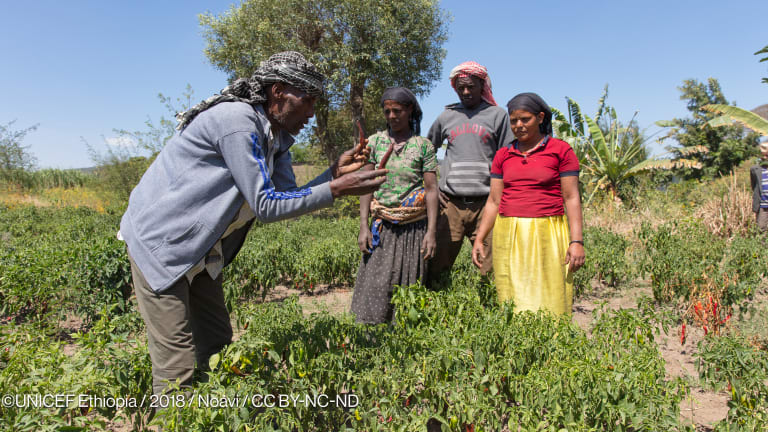
    Photo by: Pylaia Chembe / UNDP Zimbabwe / CC BY-NC

    2025 is poised to be a pivotal year for Africa’s agricultural transformation. With robust frameworks and evolving technologies, the continent is well-positioned to drive a shift toward sustainable, resilient, and inclusive food systems.

    Africa stands on the cusp of a transformative era, with several robust frameworks poised to reshape its food systems. The upcoming African Union’s Extraordinary Summit, scheduled for Jan. 9-11, 2025, will play a critical role in this journey as leaders convene to adopt the Comprehensive Africa Agriculture Development Programme, or CAADP, strategy and action plan for 2026-2035. This landmark event aims to set in motion a 10-year agenda to build strong and resilient agrifood systems that drive agricultural growth, transformation, and improved livelihoods across the continent.

    This article is free to read - just register or sign in

    Access news, newsletters, events and more.

    Join usSign in

    More reading:

    ► Opinion: Balanced fertilizer use is essential to agriculture in Africa

    ► Opinion: We can deliver a just agricultural transition if we act now

    ► Platform to transform African agriculture launches at Paris Peace Forum

    • Agriculture & Rural Development
    • Trade & Policy
    • Funding
    • Environment & Natural Resources
    Printing articles to share with others is a breach of our terms and conditions and copyright policy. Please use the sharing options on the left side of the article. Devex Pro members may share up to 10 articles per month using the Pro share tool ( ).
    The views in this opinion piece do not necessarily reflect Devex's editorial views.

    About the author

    • Agnes Kalibata

      Agnes Kalibata

      Agnes Kalibata has served as the president of AGRA since 2014, where she leads the organization’s efforts with public and private partners to ensure a food-secure and prosperous Africa through rapid, inclusive, sustainable agricultural growth, improving the productivity and livelihoods of millions of smallholder farmers in Africa. Prior to joining AGRA, Kalibata was Rwanda’s minister of agriculture and animal resources, and from 2019 to 2021, Kalibata served as the special envoy of the U.N. secretary-general for the 2021 Food Systems Summit.

    Search for articles

    Related Stories

    Food SystemsRelated Stories - 5 takeaways from the 2025 Africa Food Systems Forum

    5 takeaways from the 2025 Africa Food Systems Forum

    Opinion: Food SystemsRelated Stories - Africa needs agroecology, not cosmetic transformations

    Africa needs agroecology, not cosmetic transformations

    Sponsored by WelthungerhilfeRelated Stories - Opinion: Time to make food systems work in fragile settings

    Opinion: Time to make food systems work in fragile settings

    Sponsored by CropLife Related Stories - Innovation and trade: Twin engines for food security after COP30

    Innovation and trade: Twin engines for food security after COP30

    Most Read

    • 1
      Innovation meets impact: Fighting malaria in a warming world
    • 2
      The silent, growing CKD epidemic signals action is needed today
    • 3
      Building hope to bridge the surgical access gap
    • 4
      Why capital without knowledge-sharing won't solve the NCD crisis
    • 5
      3 ways AI can support drug innovation and global research equity
    • News
    • Jobs
    • Funding
    • Talent
    • Events

    Devex is the media platform for the global development community.

    A social enterprise, we connect and inform over 1.3 million development, health, humanitarian, and sustainability professionals through news, business intelligence, and funding & career opportunities so you can do more good for more people. We invite you to join us.

    • About us
    • Membership
    • Newsletters
    • Advertising partnerships
    • Devex Talent Solutions
    • Post a job
    • Careers at Devex
    • Contact us
    © Copyright 2000 - 2026 Devex|User Agreement|Privacy Statement