• News
    • Latest news
    • News search
    • Health
    • Finance
    • Food
    • Career news
    • Content series
    • Focus areas
    • Try Devex Pro
  • Jobs
    • Job search
    • Post a job
    • Employer search
    • CV Writing
    • Upcoming career events
    • Try Career Account
  • Funding
    • Funding search
    • Funding news
  • Talent
    • Candidate search
    • Devex Talent Solutions
  • Events
    • Upcoming and past events
    • Partner on an event
  • Post a job
  • About
      • About us
      • Membership
      • Newsletters
      • Advertising partnerships
      • Devex Talent Solutions
      • Contact us
Join DevexSign in
Join DevexSign in

News

  • Latest news
  • News search
  • Health
  • Finance
  • Food
  • Career news
  • Content series
  • Focus areas
  • Try Devex Pro

Jobs

  • Job search
  • Post a job
  • Employer search
  • CV Writing
  • Upcoming career events
  • Try Career Account

Funding

  • Funding search
  • Funding news

Talent

  • Candidate search
  • Devex Talent Solutions

Events

  • Upcoming and past events
  • Partner on an event
Post a job

About

  • About us
  • Membership
  • Newsletters
  • Advertising partnerships
  • Devex Talent Solutions
  • Contact us
  • My Devex
  • Update my profile % complete
  • Account & privacy settings
  • My saved jobs
  • Manage newsletters
  • Support
  • Sign out
Latest newsNews searchHealthFinanceFoodCareer newsContent seriesFocus areasTry Devex Pro
    • Opinion
    • #FutureFortified

    A mother's daunting task

    For many women around the globe, nutrition is a matter that goes beyond food. Cat Cora, the first female Iron Chef, shares her experience from a learning tour to Mozambique in this exclusive commentary.

    By Cat Cora // 24 September 2015

    Related Stories

    ‘We’re turning away 9 out of 10 hungry people’: The cost of shrinking aid
    ‘We’re turning away 9 out of 10 hungry people’: The cost of shrinking aid
    A decade of nutrition gains at risk as US-funded systems vanish in Nepal
    A decade of nutrition gains at risk as US-funded systems vanish in Nepal
    Devex Dish: Hope with a side of despair at the EAT-Lancet 2.0 report launch
    Devex Dish: Hope with a side of despair at the EAT-Lancet 2.0 report launch
    Scoop: State Department ends support for some food security programs
    Scoop: State Department ends support for some food security programs
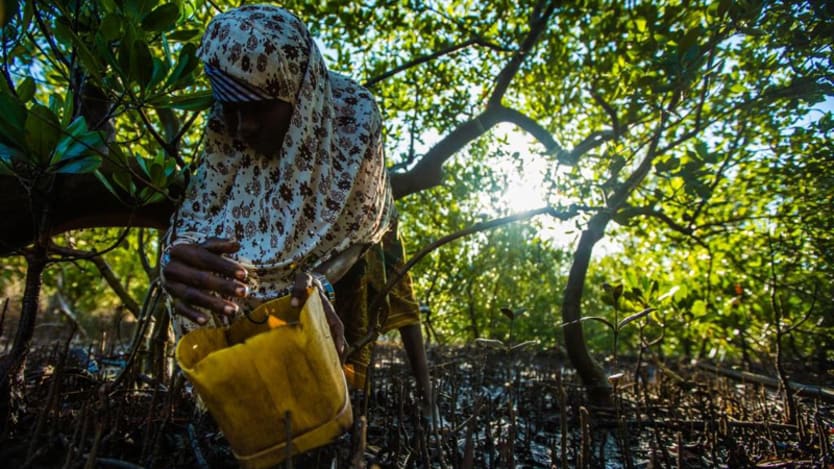
    Alima collects shells, crabs, clams and small fish from the mangroves in Mozambique. CARE and the World Wildlife Fund are partnering together on a program in Mozambique to protect the region's wildlife and habitats while strengthening the livelihoods of the people who depend on the area's marine and terrestrial resources. Photo by: Morgana Wingard / CARE

    No matter where you live, motherhood is a universal concept. As a chef, I know the importance of nutrition and the types of food I should be feeding my four children to ensure they grow healthy and strong. I find comfort in knowing that malnutrition is not a danger they face. Unfortunately, this certainty is a luxury that many mothers around the world do not have. Globally, over 795 million people are chronically hungry and over 160 million children are stunted.

    In August, I traveled with the poverty-fighting organization CARE on a learning tour to Mozambique to learn more about global food and nutrition security. CARE and the World Wildlife Fund are partnering together on a program in Mozambique to conserve the fragile ecosystem of the Primeiras e Segundas, a chain of islands and coastal communities in the Indian Ocean off of Africa’s southeast coast. The goal is to protect the region’s wildlife and habitats while strengthening the livelihoods of the people who depend on the area’s marine and terrestrial resources.

    For Alima Assane, a mother I met in northern Mozambique, access to nutritious food is a daunting task. It’s not a matter of going to the grocery store and whipping up a quick meal. Instead, it’s more than eight hours of gathering, cleaning and preparing the food that she can access on her small island. In Alima’s community, women harvest small fish, crabs and clams from the mangroves, which is their main source of food. Men fish in the estuary or the open ocean. However, they are catching fewer crabs and fish due to overfishing and the impacts of climate change on the environment.

    Alima faces particular challenges as her husband left to find work in Beira, a city in central Mozambique. She is now left alone to provide food for her family. Since it is taboo for a woman to fish from a boat due to cultural beliefs, Alima and her five children must rely on the small snails and occasional crabs she catches. A typical meal at her house consists of cassava and sea snails with peanut sauce. She has to rely on the generosity of her neighbors for fish and other foods. Alima and her family’s ability to access food is directly linked to the health of the mangroves, which are being cut for firewood, highlighting the importance of protecting the mangroves and promoting the sustainable use of natural resource management for this community and other poor communities around the world.

    The problem is larger than just availability of diverse foods and the environment that provides the food, however. The hours women spend struggling to put food on the table is time not spent earning an income, getting an education, supporting their children’s education, or accessing better health care. This is where my inner advocate goes into overdrive. Women’s empowerment has to be at the heart of all development programming.

    Malnutrition — particularly in the first 1,000 days from a mother’s pregnancy until her child’s second birthday — can permanently impair physical and cognitive development, creating a vicious cycle of poverty and hunger. Furthermore, feeding and nourishing today’s global population and a projected 9.6 billion people by 2050 while protecting the planet is perhaps today’s most significant challenge.

    But this year Congress has an opportunity to do something about it. As I witnessed in Mozambique, sustainable natural resource management and women’s empowerment are critical to feeding millions and ending the cycle of hunger in developing countries. The United States’ Global Food Security Act of 2015 (S.1252 and H.R. 1567) requires a comprehensive and coordinated strategy for global food security that focuses on women and smallholder producers and leverages best natural resource management practices. This bill maintains and improves U.S. programs in developing countries that increase sustainable and equitable agricultural development, reduce global hunger and improves nutrition. The Global Food Security Act also requires a strategic, effective and transparent approach to U.S. food security assistance, with annual reporting to both Congress and the American public.

    Join me in urging the passage of this bill and changing the trajectory of the current food crisis. It’s critical that we prioritize these issues for mothers and their families around the world.

    Future Fortified is a special online series exploring the impact and importance of food fortification to meet global development objectives. Join Devex — and our partner GAIN — in the conversation using #FutureFortified.

    • Agriculture & Rural Development
    • Global Health
    • Environment & Natural Resources
    • Mozambique
    Printing articles to share with others is a breach of our terms and conditions and copyright policy. Please use the sharing options on the left side of the article. Devex Pro members may share up to 10 articles per month using the Pro share tool ( ).
    The views in this opinion piece do not necessarily reflect Devex's editorial views.

    About the author

    • Cat Cora

      Cat Cora

      Chef Cat Cora is known for her role on Food Network’s Iron Chef, the competition’s first female winner. Cora is also the co-founder of the non-profit organization, Chefs for Humanity. She has worked with Michelle Obama’s Chefs Move to School campaign and has traveled with Save the Children, the World Food Program and several policy makers.

    Search for articles

    Related Stories

    Food systemRelated Stories - ‘We’re turning away 9 out of 10 hungry people’: The cost of shrinking aid

    ‘We’re turning away 9 out of 10 hungry people’: The cost of shrinking aid

    Food systemsRelated Stories - A decade of nutrition gains at risk as US-funded systems vanish in Nepal

    A decade of nutrition gains at risk as US-funded systems vanish in Nepal

    Devex DishRelated Stories - Devex Dish: Hope with a side of despair at the EAT-Lancet 2.0 report launch

    Devex Dish: Hope with a side of despair at the EAT-Lancet 2.0 report launch

    Food SystemsRelated Stories - Scoop: State Department ends support for some food security programs

    Scoop: State Department ends support for some food security programs

    Most Read

    • 1
      Exclusive: Former Iraqi president picked to lead UN Refugee Agency
    • 2
      Invest in diagnostics to win the health fight
    • 3
      Financing Asia’s transformation: How to plug the trillion-dollar gap
    • 4
      Future forward: Closing infrastructure gaps for climate innovation
    • 5
      Opinion: A blueprint for country ownership and transition
    • News
    • Jobs
    • Funding
    • Talent
    • Events

    Devex is the media platform for the global development community.

    A social enterprise, we connect and inform over 1.3 million development, health, humanitarian, and sustainability professionals through news, business intelligence, and funding & career opportunities so you can do more good for more people. We invite you to join us.

    • About us
    • Membership
    • Newsletters
    • Advertising partnerships
    • Devex Talent Solutions
    • Post a job
    • Careers at Devex
    • Contact us
    © Copyright 2000 - 2025 Devex|User Agreement|Privacy Statement