Abidjan: West Africa's growing global development hub
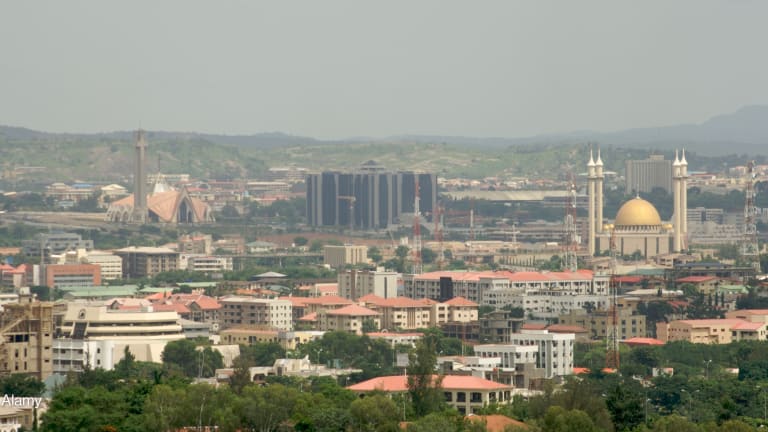
Côte d'Ivoire has rebound from political instability to attract investors and establish itself as a growing hub for global development organizations and professionals. A number of U.N. agencies have offices in the city that also hosts an EU delegation and the African Development Bank headquarters. Here are some of the international and regional organizations that have set up shop in Abidjan and are part of its growing development community.
ABIDJAN — In recent years, Abidjan has worked to establish itself as a development hub in West Africa. Africa’s fastest growing economy of 2016, Côte d'Ivoire has rebound from political instability to attract investors increasingly impressed by the country’s growth and also intrigued by its potential. The world’s leading cocoa and coffee producer plans to harness this promise through the implementation of a National Development Plan that aims to drastically reduce poverty, promote manufacturing, and make Côte d'Ivoire an emerging market by 2020. While regional offices for several humanitarian agencies — including Save the Children, World Vision International, International Federation of the Red Cross, and the United Nations — are based in Dakar, Senegal, the African Development Bank returned its headquarters to Abidjan in 2014 after a nine-year relocation. Furthermore, the government has emphasized plans to develop various sectors such as renewable energies, information and communication technologies, and mass retail sector — while providing a business environment that facilitates investments. Attention to policies, quality standards, competition, and the economic potential of the nation’s arable land also attract international companies and visitors. In addition to the AfDB headquarters, Abidjan hosts a number of U.N. representations, international humanitarian agencies, and the country’s EU delegation. Devex looks at some of the international and regional organizations contributing to the cities growing global development community. African Development Bank (AfDB) AfDB is focused on fostering economic development and social progress across its 50 regional member countries, mobilizing the continents’ resources. Civil war forced the bank to move its headquarters to Tunisia, where it was based until just three years ago when it returned to Abidjan. As part of its focus to decentralize and move operations closer to its beneficiaries, AfDB has also established more than 20 field and country offices across the continent. After years of reforms and restructuring, the bank is now made up of a board of governors, a board of directors, the president, and several vice presidential complexities that address Africa’s development issues. These complexes are: regional development integration and business development; power, energy, climate, and green growth; agriculture, health, and social development; private structure, infrastructure, and industrialization; economic growth and knowledge management; finance; and human resources and corporate services. The bank is currently in the midst of a hiring surge looking to add capacity and modernize the institution by building new skills and expertise. You can view current job openings here. Economic Community of West African States (ECOWAS) ECOWAS is a regional group of 15 African nations with headquarters in Abuja, Nigeria, and an office in Abidjan. It promotes economic integration across all fields of economic activities, particularly industry, telecommunications, energy, agriculture, natural resources, and commerce. The group comprises of four institutions; the Commission, the Community Parliament, the Community Court of Justice, and ECOWAS Bank for Investment and Development (EBID), which is based in Togo. It also includes a number of specialized agencies such as the West African Health Organisation (WAHO) and the West African Monetary Agency (WAMA). European Union The EU’s political and economic relations with Côte d'Ivoire are outlined in the Cotonou Agreement, which aims to promote a common strategic approach to poverty reduction and the gradual integration of African, Caribbean, and Pacific countries into the global economy. At a regional level, the EU works to support the country in regaining its status as a regional center of stability and growth. It does this by supporting trade and investment in Côte d'Ivoire, as well as technical and financial cooperation, civil society dialogue, and humanitarian aid. International Monetary Fund (IMF) With 189 member countries, IMF works to promote global monetary cooperation, facilitate international trade, foster high employment, and support sustainable economic growth and financial security. Côte d'Ivoire joined the IMF in 1963 and Abidjan hosts the country's resident representative office. In addition to budgetary reviews and support, the agency produces research and analysis on a range of development issues, including the informal economy in Africa, growth breaks and growth spells in Côte d'Ivoire, and the policy causes and implications of food inflation. International Committee of the Red Cross (ICRC) Established in 1863, the ICRC works around the world to protect and assist people affected by conflict and armed violence. The organization's headquarters are in Geneva, but it has staff across 80 countries including Côte d'Ivoire. Their delegation there, based in Abidjan, helps displaced persons across the country, as well as Malian refugees in Burkina Faso. In every region in which the ICRC works, its staff visit places of detention and help authorities promote international humanitarian law. The organization also works to restore family links and help prisoners of war and detainees, as well as work in the areas of water, habitat, the environment, and warfare. International Organization for Migration (IOM) The leading intergovernmental organization in the field of migration, IOM works across migration and development, facilitating migration and regulating forced migration. The organization has 165 member states including Côte d’Ivoire, which joined as a member in 2000. The country falls under the scope of the IOM regional office for Central and West Africa, which is based in Dakar. The organization has an office in Abidjan, however, which helps implement its main activities across Côte d'Ivoire in the areas of emergencies and post-crisis operations, migration health, immigration and border management, migrant assistance, and labor migration. United Nations Development Programme (UNDP) UNDP is the specialized agency of the U.N. focusing on development and working toward achieving the 17 Sustainable Development Goals by supporting sustainable development, democratic governance and peacebuilding, climate and disaster resilience, gender equality, crisis response, and development impact. The agency reopened its office in Abidjan in 2011, working initially with NGOs along the country’s western border with Liberia to assist recently returned internally displaced people. UNICEF Working with the United Nations and other U.N. agencies, the United Nations Children's Fund is committed to protecting the rights of children around the world. Their regional office in Abidjan oversees their activities in the country, which are determined and coordinated in collaboration with the Ivorian government. For some years, the organization focused on the reintegration of families and children returning after the civil war. Nowadays the agency supports the survival, growth, and development of women and children in the country through programs in education, protection, HIV/AIDS, and water and sanitation. World Food Programme (WFP) As the food arm of the U.N., the agency uses food aid as an instrument to promote food security while working to prevent hunger and the need for food assistance. While its international headquarters are in Italy, the WFP has been in Côte d'Ivoire since 1968. Its work there focuses on school meals as a means to boost school attendance, particularly in rural areas, and it distributes school meals to 571,000 children daily. In Côte d'Ivoire, WFP also provides girls with a take home ration or cash transfer to encourage families to send them to school, and supports nutrition programs for babies, young children, and their mothers. What did we miss? What other global development organizations have a foothold in Abidjan? Please leave them in the comments below.
ABIDJAN — In recent years, Abidjan has worked to establish itself as a development hub in West Africa. Africa’s fastest growing economy of 2016, Côte d'Ivoire has rebound from political instability to attract investors increasingly impressed by the country’s growth and also intrigued by its potential.
The world’s leading cocoa and coffee producer plans to harness this promise through the implementation of a National Development Plan that aims to drastically reduce poverty, promote manufacturing, and make Côte d'Ivoire an emerging market by 2020.
While regional offices for several humanitarian agencies — including Save the Children, World Vision International, International Federation of the Red Cross, and the United Nations — are based in Dakar, Senegal, the African Development Bank returned its headquarters to Abidjan in 2014 after a nine-year relocation.
This story is forDevex Promembers
Unlock this story now with a 15-day free trial of Devex Pro.
With a Devex Pro subscription you'll get access to deeper analysis and exclusive insights from our reporters and analysts.
Start my free trialRequest a group subscription Printing articles to share with others is a breach of our terms and conditions and copyright policy. Please use the sharing options on the left side of the article. Devex Pro members may share up to 10 articles per month using the Pro share tool ( ).
Christin Roby worked as the West Africa Correspondent for Devex, covering global development trends, health, technology, and policy. Before relocating to West Africa, Christin spent several years working in local newsrooms and earned her master of science in videography and global affairs reporting from the Medill School of Journalism at Northwestern University. Her informed insight into the region stems from her diverse coverage of more than a dozen African nations.
For four years, Emma Smith covered careers and recruitment, among other topics, for Devex. She now freelances for Devex and has a special interest in mental health, immigration, and sexual and reproductive health. She holds a degree in journalism from Glasgow Caledonian University and a master’s in media and international conflict.