
Amid water stress, experts want the world to get serious about irrigation



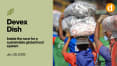
For decades, food productivity in many parts of the world has relied on the expansion of irrigation. But that model is now running up against hard limits — from groundwater depletion to climate change-driven rainfall volatility — forcing policymakers and financiers to rethink how water is managed in agriculture.
Agriculture accounts for around 70% of freshwater withdrawals, according to the World Bank — making it the most water-intensive sector. Water use has been steadily increasing for decades: Since 1980, the global demand for freshwater has been increasing by just under 1% per year.
Food systems and water conservation experts argue that the future of food security will depend less on building large-scale irrigation schemes and more on flexible, farmer-led water management approaches. Many farmers are already combining rainfall and irrigation by installing small pumps and harvesting rainwater. These experts want finance and policy to align with these existing solutions.
About the author

Jesse Chase-Lubitz
Jesse Chase-Lubitz covers climate change and multilateral development banks for Devex. She previously worked at Nature Magazine, where she received a Pulitzer grant for an investigation into land reclamation. She has written for outlets such as Al Jazeera, Bloomberg, the Organized Crime and Corruption Reporting Project, and The Japan Times, among others. Jesse holds a master’s degree in Environmental Policy and Regulation from the London School of Economics.
Search for articles


Most Read
- 1
- 2
- 3
- 4
- 5