
• News
    • Latest news
    • News search
    • Health
    • Finance
    • Food
    • Career news
    • Content series
    • Focus areas
    • Try Devex Pro
  • Jobs
    • Job search
    • Post a job
    • Employer search
    • CV Writing
    • Upcoming career events
    • Try Career Account
  • Funding
    • Funding search
    • Funding news
  • Talent
    • Candidate search
    • Devex Talent Solutions
  • Events
    • Upcoming and past events
    • Partner on an event
  • Post a job
  • About
      • About us
      • Membership
      • Newsletters
      • Advertising partnerships
      • Devex Talent Solutions
      • Contact us
Join DevexSign in
Join DevexSign in

News

  • Latest news
  • News search
  • Health
  • Finance
  • Food
  • Career news
  • Content series
  • Focus areas
  • Try Devex Pro

Jobs

  • Job search
  • Post a job
  • Employer search
  • CV Writing
  • Upcoming career events
  • Try Career Account

Funding

  • Funding search
  • Funding news

Talent

  • Candidate search
  • Devex Talent Solutions

Events

  • Upcoming and past events
  • Partner on an event
Post a job

About

  • About us
  • Membership
  • Newsletters
  • Advertising partnerships
  • Devex Talent Solutions
  • Contact us
  • My Devex
  • Update my profile % complete
  • Account & privacy settings
  • My saved jobs
  • Manage newsletters
  • Support
  • Sign out
Latest newsNews searchHealthFinanceFoodCareer newsContent seriesFocus areasTry Devex Pro
    • News
    • Environment

    As COP30 spotlights adaptation, India’s toxic air demands action

    According to the recently released Lancet Countdown report on climate and health, more than 1.7 million people died of air pollution in India in 2022 alone.

    By Cheena Kapoor // 12 November 2025
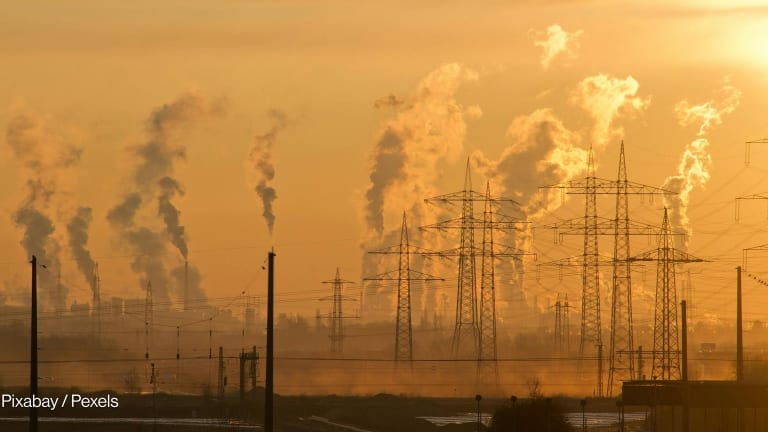
    It is that time of year again when 37-year-old Ramesh Mathur wakes up choking every day, and becomes a shut-in, with five air purifiers running in his Delhi home. Mathur, a personal relations manager at an international firm and native of the capital, is a long-term asthmatic and has been warned to either move out or stay indoors if he wishes to live till 60. “I just do not step out of the house at all for a month or so. If I step onto my balcony at all, I feel itchy in the throat and my eyes water. This is an apocalyptic situation,” said Mathur, who has been aggressively posting about deteriorating air quality on his social media account. His plight was portrayed in the recently released Lancet Countdown report on climate and health, which confirmed that the climate crisis is taking a huge toll on India’s health. The report showed that nearly two-thirds of the indicators tracking climate-linked health threats have reached unprecedented levels globally. It also found that at least 1.7 million people died in India in 2022 from outdoor PM2.5 air pollution from human activities, a huge spike from 724,000 deaths in 2020, and 41% of these deaths were directly related to the burning of fossil fuels. Carbon monoxide, ozone, nitrogen dioxide, and nitric oxide are the commonly known pollutants; however, the most lethal among all is particulate material, also known as PM2.5. The fine particulate matter in the air, with a diameter of 2.5 micrometers or smaller, can go into the lungs on deep inhalation. Doctors at the Indian Medical Association, or IMA, have repeatedly declared a public health emergency for some weeks around the festival of Diwali in October and November in the last few years, when the air quality index crosses hazardous levels to over 400, and has even reached 999, which is equal to smoking 50 cigarettes a day. On Tuesday, following weekend protests by civil society groups demanding cleaner air near Delhi's Parliament, the country imposed stage three of the Graded Response Action Plan, under which nonessential construction and industrial activities are banned in the city. The World Health Organization standard for daily permissible levels of PM2.5 in the air is 15 μg/m3, while India’s national ambient air quality standard is 2.4 times higher at 60 μg/m3. The period around Diwali adds about 40 μg/m3 to PM2.5 particulate concentrations due to festive fireworks and farmers burning crop stubble. This level of PM can not only lead to lung injury but also can precipitate cardiac death, according to IMA. Despite the overwhelming evidence, global adaptation measures remain alarmingly inadequate. The Lancet report notes that delays in implementing urgently needed adaptation measures have left communities vulnerable to escalating climate risks, worsening the health impacts of climate change. Limited funding for adaptation remains a major obstacle, falling far short of the financial needs. Concrete and meaningful action is needed to safeguard populations from the now-inevitable effects of climate change — and to prevent future threats from surpassing the capacity to adapt. As the 30th United Nations Climate Change Conference, or COP30, which is being hailed as the “Adaptation COP,” begins in Belém, Brazil, the report brings India face-to-face with its weak adaptation planning, leaving millions exposed to preventable illnesses and premature death. COP30 is being seen as an opportunity to promote action, as the final list of indicators to monitor progress against the Global Goal on Adaptation is expected to be agreed at COP30. This would include specific indicators for improving health resilience and reducing the health impacts of climate change, as well as specific indicators to track adaptation progress in relevant sectors. Importantly, COP30 will see the conclusion of the “Baku to Belém Roadmap to 1.3T,” which will help mobilize at least $1.3 trillion annually in climate finance for developing countries by 2035, providing an opportunity to close the global climate finance gap. But experts say India’s struggle is not only due to weak adaptation but also systematic data gaps. Dr. Poornima Prabhakaran, a leading environmental health researcher based in New Delhi, points out that between 2016 and 2019, India lacked sufficient ground-level monitoring stations to measure air quality accurately. “What we don’t measure, we don’t know,” she explained. “There was a huge gap in pollution monitoring. We’ve started bridging it with more local data, satellite imagery, and models, but there’s still a long way to go.” Children and pregnant people face higher risks of low birth weight and developmental complications. Outdoor workers, construction laborers, street vendors, and traffic police suffer prolonged exposure with limited access to health care. In hospitals, doctors report a rise in cases related to respiratory and pregnancy-related complications during pollution peaks around Diwali and winter. For India’s already overburdened health care system, such seasonal surges add to an already chronic lack of infrastructure and personnel. Air pollution in India is driven primarily by the burning of fossil fuels, coal-fired power plants, vehicular emissions, industrial output, and biomass combustion. Crop-residue burning in Punjab and Haryana states adds another seasonal layer of toxic haze to the mix. “Air pollution is a multi-source problem, and fossil fuels are at the heart of it,” Prabhakaran said. “We have enough evidence of the health effects on respiratory health, cardiovascular disease, pregnancy outcomes, even diabetes and hypertension. What we need now is the political will to act decisively.” Prabhakaran also points to the only known case in the United Kingdom of a 9-year-old girl, Ella Adoo-Kissi-Debrah, where, after campaigning by her mother, the cause of death was changed to air pollution seven years after her death. “There is a long way to go before we get to that stage when India starts acknowledging certain deaths as air pollution deaths,” Prabhakaran said. India launched the National Clean Air Programme, or NCAP, in 2019 to enhance air quality at both the regional and national levels. The target was set to reduce particulate matter by 20%-30% by 2024, which was later extended to 2026 with a revised target of a 40% reduction in PM10 levels compared to 2017. According to a recent report, out of 130 cities, 28 still do not have continuous ambient air quality monitoring stations. Among the 102 cities that do have monitoring stations, only 97 cities reported 80% or more PM10 data coverage, and of these 97 NCAP cities, 29 recorded an increase in PM10 concentrations. While PM2.5 is more harmful and should be prioritized, the present NCAP is focused on PM10, which is larger in size and can be filtered out by the nose, while PM2.5 can penetrate the bloodstream. This highlights a lack of focus on health-driven priorities and delayed efforts to tackle PM2.5 pollution. NCAP 2.0 must address this oversight and should shift its primary focus to PM2.5, according to the progress report on NCAP by the Centre for Research on Energy and Clean Air, an independent think tank. The economic argument for action is equally strong. Air pollution not only claims lives but also reduces labor productivity, increases health care costs, and burdens insurance systems. In 2022, the total economic loss from pollution-linked mortality was estimated at nearly 5% of the global gross domestic product. For a fast-growing economy like India, such losses undermine development goals and deepen inequalities, as poorer communities suffer the worst exposure while having the least means to adapt. As world leaders gather in Brazil for COP30, where climate adaptation is taking center stage, India’s polluted air is a reminder of what inaction looks like. For citizens like Ramesh Mathur, this means another winter trapped indoors, with purifiers running and windows sealed. For millions of others without such privileges, it means breathing air that silently takes away years from their lives. “I’ll just count days and wait for the winter to go over until I come out from my hibernation while also worrying about my future generation,” Mathur said. This story was produced as part of the 2025 Climate Change Media Partnership, a journalism fellowship organized by Internews' Earth Journalism Network and the Stanley Center for Peace and Security. Devex retains full editorial independence.

    Related Stories

    Slashing super pollutants is a win. So where's the money?
    Slashing super pollutants is a win. So where's the money?
    Air pollution gets ignored in UNGA noncommunicable disease declaration
    Air pollution gets ignored in UNGA noncommunicable disease declaration
    Philanthropies commit $300M for climate-health solutions at COP30
    Philanthropies commit $300M for climate-health solutions at COP30
    Devex CheckUp: What to expect when you’re expecting new global health agreements
    Devex CheckUp: What to expect when you’re expecting new global health agreements

    It is that time of year again when 37-year-old Ramesh Mathur wakes up choking every day, and becomes a shut-in, with five air purifiers running in his Delhi home. Mathur, a personal relations manager at an international firm and native of the capital, is a long-term asthmatic and has been warned to either move out or stay indoors if he wishes to live till 60.

    “I just do not step out of the house at all for a month or so. If I step onto my balcony at all, I feel itchy in the throat and my eyes water. This is an apocalyptic situation,” said Mathur, who has been aggressively posting about deteriorating air quality on his social media account.

    His plight was portrayed in the recently released Lancet Countdown report on climate and health, which confirmed that the climate crisis is taking a huge toll on India’s health. The report showed that nearly two-thirds of the indicators tracking climate-linked health threats have reached unprecedented levels globally. It also found that at least 1.7 million people died in India in 2022 from outdoor PM2.5 air pollution from human activities, a huge spike from 724,000 deaths in 2020, and 41% of these deaths were directly related to the burning of fossil fuels.

    This article is free to read - just register or sign in

    Access news, newsletters, events and more.

    Join usSign in

    Read more:

    ► Air pollution gets ignored in UNGA noncommunicable disease declaration

    ► Deadly issue of air pollution needs attention — and money, experts warn

    ► How air pollution is aggravating malnutrition in India

    • Environment & Natural Resources
    • Global Health
    • Democracy, Human Rights & Governance
    Printing articles to share with others is a breach of our terms and conditions and copyright policy. Please use the sharing options on the left side of the article. Devex Pro members may share up to 10 articles per month using the Pro share tool ( ).

    About the author

    • Cheena Kapoor

      Cheena Kapoorcheenakapoor

      Cheena Kapoor is a Delhi-based independent journalist and photographer focusing on health, environmental, and social issues. Her work has been published by The Guardian, The Telegraph, Reuters, BBC, and Al Jazeera, among many others. Her long-term project "Forgotten daughters" about abandoned women in Indian mental asylums has been widely published and exhibited across Europe. Follow Cheena on Twitter and Instagram.
    Search for articles

    Related Stories

    COP30Related Stories - Slashing super pollutants is a win. So where's the money?

    Slashing super pollutants is a win. So where's the money?

    UNGA 2025Related Stories - Air pollution gets ignored in UNGA noncommunicable disease declaration

    Air pollution gets ignored in UNGA noncommunicable disease declaration

    COP30Related Stories - Philanthropies commit $300M for climate-health solutions at COP30

    Philanthropies commit $300M for climate-health solutions at COP30

    Devex CheckUpRelated Stories - Devex CheckUp: What to expect when you’re expecting new global health agreements

    Devex CheckUp: What to expect when you’re expecting new global health agreements

    Most Read

    • 1
      Building hope to bridge the surgical access gap
    • 2
      Innovation meets impact: Fighting malaria in a warming world
    • 3
      Turning commitments into action: Financing a healthier future after HLM4
    • 4
      Why women’s health innovation needs long-term investment
    • 5
      How country-led ecosystems drive sustainable health impact
    • News
    • Jobs
    • Funding
    • Talent
    • Events

    Devex is the media platform for the global development community.

    A social enterprise, we connect and inform over 1.3 million development, health, humanitarian, and sustainability professionals through news, business intelligence, and funding & career opportunities so you can do more good for more people. We invite you to join us.

    • About us
    • Membership
    • Newsletters
    • Advertising partnerships
    • Devex Talent Solutions
    • Post a job
    • Careers at Devex
    • Contact us
    © Copyright 2000 - 2025 Devex|User Agreement|Privacy Statement