• News
    • Latest news
    • News search
    • Health
    • Finance
    • Food
    • Career news
    • Content series
    • Focus areas
    • Try Devex Pro
  • Jobs
    • Job search
    • Post a job
    • Employer search
    • CV Writing
    • Upcoming career events
    • Try Career Account
  • Funding
    • Funding search
    • Funding news
  • Talent
    • Candidate search
    • Devex Talent Solutions
  • Events
    • Upcoming and past events
    • Partner on an event
  • Post a job
  • About
      • About us
      • Membership
      • Newsletters
      • Advertising partnerships
      • Devex Talent Solutions
      • Contact us
Join DevexSign in
Join DevexSign in

News

  • Latest news
  • News search
  • Health
  • Finance
  • Food
  • Career news
  • Content series
  • Focus areas
  • Try Devex Pro

Jobs

  • Job search
  • Post a job
  • Employer search
  • CV Writing
  • Upcoming career events
  • Try Career Account

Funding

  • Funding search
  • Funding news

Talent

  • Candidate search
  • Devex Talent Solutions

Events

  • Upcoming and past events
  • Partner on an event
Post a job

About

  • About us
  • Membership
  • Newsletters
  • Advertising partnerships
  • Devex Talent Solutions
  • Contact us
  • My Devex
  • Update my profile % complete
  • Account & privacy settings
  • My saved jobs
  • Manage newsletters
  • Support
  • Sign out
Latest newsNews searchHealthFinanceFoodCareer newsContent seriesFocus areasTry Devex Pro
    • News
    • COP30

    Slashing super pollutants is a win. So where's the money?

    At COP30, nine countries pledged new action on black carbon, but the health and climate gains from cutting super pollutants still don’t count toward global climate targets.

    By Jesse Chase-Lubitz // 20 November 2025
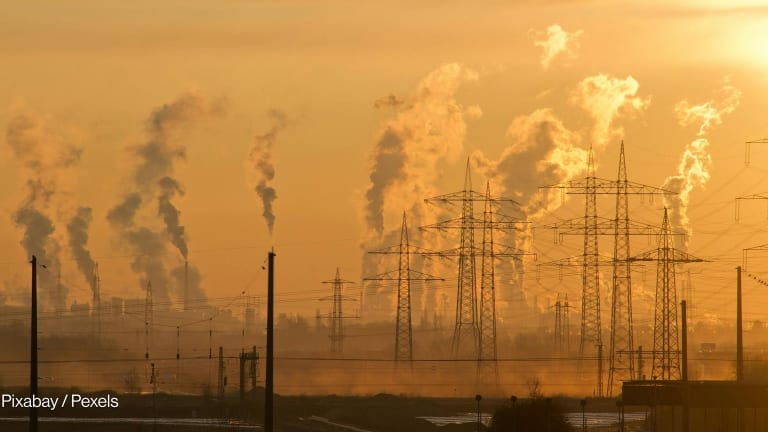
    While carbon dioxide is the primary focus of climate change discussions, almost half of global warming recorded to date comes from pollutants that disappear from the atmosphere within weeks. Known as “super pollutants,” their presence is rapid but mighty, trapping heat far more effectively than carbon and therefore commanding a greater warming effect. But super pollutants are nowhere to be found on the official agenda of the 30th United Nations Climate Change Conference, COP30, in Belem, Brazil, except for a few nods to methane. Still, super pollutants are starting to gain more attention. A report from the United Nations Environment Programme released at COP30 found that methane emissions are still rising but that proven, low-cost measures could cut them by up to 45% within 15 years — avoiding significant near-term warming. There’s a slow and rising push for super pollutant reduction efforts to count toward countries’ climate change mitigation plans, which could potentially unlock the climate finance that comes with those targets. “If we want to bend the curve quickly, this is how you do it,” Kiff Gallagher, founding executive director of the Global Heat Reduction Initiative, told Devex. “Because they don’t stay in the atmosphere for a long time, if you address them, then you can bend the curve quickly.” Super pollutants is an umbrella term for several climate-warming and health-harming emissions: methane, which comes from agriculture and organic waste; black carbon, or soot, the fine particulates produced by diesel engines, coal combustion, and wood and biomass burning; hydrofluorocarbons, which are used in air conditioning, refrigeration, fire suppression and aerosols; and tropospheric ozone, a greenhouse gas and component of smog formed when sunlight reacts with other pollutants. Action on super pollutants is often framed as a public health intervention, as they contribute to cardiovascular and respiratory diseases, from asthma to heart disease. Many experts say counting these efforts toward climate mitigation as well could benefit both the environment and human health. Targeting black carbon On Wednesday, in a first for COP30, a group of nine countries committed to taking action on reducing major sources of black carbon — a super pollutant considered uniquely harmful because it directly affects human health. Black carbon is a fine particulate matter known as PM2.5, which contributes to millions of premature deaths worldwide. PM2.5 is about one-thirtieth the width of a human hair, small enough to penetrate deep into the lungs, enter the bloodstream, and affect the heart, lungs, and brain. Ministers and senior officials from Cambodia, Canada, Chile, Costa Rica, Colombia, Dominican Republic, Madagascar, Nigeria, Sri Lanka, and Uganda signed on. The actions will be pushed forward with a mix of funding, according to the Clean Air Fund. Some countries will use domestic budgets, but many of the countries will need additional support from international sources to fund their plans and projects. Some countries, as part of the announcement, called for additional support from multilateral development banks for this purpose, many of which had representatives in attendance. The announcement is based on “non-binding, voluntary targets driven in a nationally determined manner,” according to a statement on Wednesday. The goal includes new plans to integrate black carbon into national plans to keep global warming beneath 1.5 degrees Celsius — known as nationally determined contributions, or NDCs — and includes reducing black carbon from electricity, transport, and oil and gas sectors, measuring black carbon to inform national planning, and new policies on clean cooking. “Acting on black carbon is one of the fastest ways to protect health, improve equity, and support our climate goals,” said Dr. Maisa Rojas, Chile’s minister of environment, in a statement before the agreement was launched. “Especially when we target the sectors that matter most. Chile’s updated NDC commits to reducing black carbon emissions by at least 25% by 2030 and at least 30% by 2035 compared to 2016 levels.” While carbon dioxide remains the dominant focus of COP30 climate negotiations, Wednesday’s announcement was a small but significant indication that more attention could soon turn to super pollutants. “A lot of people have talked about air pollution and the subsequent consequences that come with it,” said Bob Natifu, assistant commissioner for climate change in Uganda’s Ministry of Water and Environment, during the Wednesday event. “From our side, it’s actually the second largest risk factor to premature mortality in Uganda, contributing to about 29,000 deaths annually. Uganda calls for strengthened international cooperation.” The health connection Much of the action thus far on super pollutants has been led by public health divisions. For example, the Indian government has subsidized large-scale programs to curb soot from household cooking. Kenya and Uganda have targeted vehicle emissions in fast-growing cities. In Latin America, Mexico and Chile have pursued stricter industrial and transport air-quality rules, including programs to replace inefficient wood stoves, aiming to lower harmful PM2.5 exposure while providing climate co-benefits. But money for such projects is limited and tends to come from local or national governments — and not sources of international climate finance, such as the $300 billion promised last year that’s meant to go from high-income to low- and middle-income countries. “Less than 0.5% of development finance flowed to projects tackling major sources of black carbon in 2023, highlighting a missed opportunity for funding flows towards projects that deliver on climate and health,” said Tom Grylls, head of Super Pollutants Programme at Clean Air Fund. “As part of the announcement at COP30, several countries called for targeted financial and technical support to turn their policies and plans into action,” he added. Experts argue that because these are also climate mitigation efforts, they should qualify as such, potentially unlocking those sources of climate finance. “The vast majority of countries with black carbon policies are low- or middle-income countries,” Jane Burston, CEO of the Clean Air Fund, told Devex. They’re enacting black carbon reduction policies “entirely voluntarily” because of the health impact. “There's no incentive to do it, there’s no support for it, there's no specific funding for it, and the climate benefit of it is not recognized in the U.N. system,” said Burston. “Given that it does have some climate impact, and given that developing countries want to include it, shouldn't we be allowing them to claim the benefits of having done that reduction, and get the finance?” Hello and goodbye Unlike carbon dioxide, which can linger in the atmosphere for thousands of years, super pollutants last as little as weeks or are easily washed away by the rain. But their concentration is what makes them powerful. For black carbon specifically, this is because of its physical properties. The particles absorb sunlight extremely efficiently. While carbon dioxide traps the heat the Earth gives off, black carbon absorbs the sun’s energy as soon as it hits the particles. This means black carbon warms the air almost instantly. The reason something so short-lived can have a lasting warming influence is that climate change is shaped by both long-term and near-term forces. Even though black carbon dissipates quickly, each burst of emissions creates a period (however short) of intense warming. When these pulses happen continuously — through everyday activities such as diesel transportation, household cooking with biomass, brick-kiln operations, or open burning — they add up to a persistent warming effect. In regions covered by snow and ice, black carbon also darkens surfaces when it settles, reducing reflectivity and accelerating melting. That means the landscape continues absorbing more heat even after the black carbon particles themselves have vanished. Can they get the cash? The challenge for funding lies in officially recognizing these reductions in climate frameworks. Doing that requires a way to count them. Because black carbon is short-lived and its warming effect varies by location, it is difficult to convert its reduction into carbon dioxide equivalents — the standard metric for climate accounting. “Methane was in the Kyoto Protocol, and there are methods for including methane in the countries’ climate targets that have been around for a long time,” said Drew Shindell, chair of the Climate and Clean Air Coalition Scientific Advisory Panel, referring to the first major international treaty to set legally binding greenhouse gas reduction targets, including methane. “It's still not super easy to compare because of the different lifetime, but at least it sort of fits more neatly in the kind of CO2 equivalent.” “Black carbon, on the other hand, is pretty local,” he added. “And the global effects can be small, but the local effects might be large. Numerically, putting it in the same accounting line is probably not sensible, or something you could easily reach consensus on.” There are also still questions about how much global warming black carbon causes. “There will be a different level of warming for black carbon depending on where it’s emitted,” Burston explained. It’s also just harder to explain — and thus, gain consensus around reducing it. “Companies and governments have had a hard enough time getting their arms around just reducing carbon,” Gallagher said, referring to CO2. In COP30’s final days, action on black carbon is unlikely to make headlines. For now, countries acting on black carbon and other short-lived climate pollutants are doing so largely without recognition, incentives, or access to finance. But with mounting evidence that cutting super pollutants could buy the world critical time, advocates say the pressure to integrate them into formal climate accounting — and the money that follows — is only set to grow. Update, Nov. 21, 2025: This article has been updated to clarify that nine countries committed to taking action on reducing major sources of black carbon.

    Related Stories

    As COP30 spotlights adaptation, India’s toxic air demands action
    As COP30 spotlights adaptation, India’s toxic air demands action
    As COP30 begins, new funding targets methane from oil, rice and waste
    As COP30 begins, new funding targets methane from oil, rice and waste
    Devex Newswire: Civil society makes its case to G20 head honchos
    Devex Newswire: Civil society makes its case to G20 head honchos
    Air pollution gets ignored in UNGA noncommunicable disease declaration
    Air pollution gets ignored in UNGA noncommunicable disease declaration

    While carbon dioxide is the primary focus of climate change discussions, almost half of global warming recorded to date comes from pollutants that disappear from the atmosphere within weeks.

    Known as “super pollutants,” their presence is rapid but mighty, trapping heat far more effectively than carbon and therefore commanding a greater warming effect. But super pollutants are nowhere to be found on the official agenda of the 30th United Nations Climate Change Conference, COP30, in Belem, Brazil, except for a few nods to methane.

    Still, super pollutants are starting to gain more attention. A report from the United Nations Environment Programme released at COP30 found that methane emissions are still rising but that proven, low-cost measures could cut them by up to 45% within 15 years — avoiding significant near-term warming. There’s a slow and rising push for super pollutant reduction efforts to count toward countries’ climate change mitigation plans, which could potentially unlock the climate finance that comes with those targets.

    This article is free to read - just register or sign in

    Access news, newsletters, events and more.

    Join usSign in

    More reading:

    ► As COP30 begins, new funding targets methane from oil, rice and waste

    ► Cities in the global south demand climate finance ahead of COP30

    ► Opinion: Clean energy success demands country-specific solutions

    • Environment & Natural Resources
    • Funding
    • Global Health
    • Trade & Policy
    Printing articles to share with others is a breach of our terms and conditions and copyright policy. Please use the sharing options on the left side of the article. Devex Pro members may share up to 10 articles per month using the Pro share tool ( ).

    About the author

    • Jesse Chase-Lubitz

      Jesse Chase-Lubitz

      Jesse Chase-Lubitz covers climate change and multilateral development banks for Devex. She previously worked at Nature Magazine, where she received a Pulitzer grant for an investigation into land reclamation. She has written for outlets such as Al Jazeera, Bloomberg, the Organized Crime and Corruption Reporting Project, and The Japan Times, among others. Jesse holds a master’s degree in Environmental Policy and Regulation from the London School of Economics.

    Search for articles

    Related Stories

    EnvironmentRelated Stories - As COP30 spotlights adaptation, India’s toxic air demands action

    As COP30 spotlights adaptation, India’s toxic air demands action

    The Road to COP30Related Stories - As COP30 begins, new funding targets methane from oil, rice and waste

    As COP30 begins, new funding targets methane from oil, rice and waste

    Devex NewswireRelated Stories - Devex Newswire: Civil society makes its case to G20 head honchos

    Devex Newswire: Civil society makes its case to G20 head honchos

    UNGA 2025Related Stories - Air pollution gets ignored in UNGA noncommunicable disease declaration

    Air pollution gets ignored in UNGA noncommunicable disease declaration

    Most Read

    • 1
      Innovation meets impact: Fighting malaria in a warming world
    • 2
      The silent, growing CKD epidemic signals action is needed today
    • 3
      Building hope to bridge the surgical access gap
    • 4
      Inside Amazon’s human rights journey
    • 5
      3 ways AI can support drug innovation and global research equity
    • News
    • Jobs
    • Funding
    • Talent
    • Events

    Devex is the media platform for the global development community.

    A social enterprise, we connect and inform over 1.3 million development, health, humanitarian, and sustainability professionals through news, business intelligence, and funding & career opportunities so you can do more good for more people. We invite you to join us.

    • About us
    • Membership
    • Newsletters
    • Advertising partnerships
    • Devex Talent Solutions
    • Post a job
    • Careers at Devex
    • Contact us
    © Copyright 2000 - 2026 Devex|User Agreement|Privacy Statement