




Breast cancer reconstruction is all too often considered nonessential, despite the fact that it addresses profound aspects of identity, confidence, and quality of life following cancer treatment. This perception reflects a broader pattern in which women’s health needs are undervalued unless they are life or death.
The path forward requires funders, practitioners, and policymakers to embed reconstruction into cancer pathways from the start, invest in training, systems, and infrastructure, and support patient networks to address stigma and disparities.
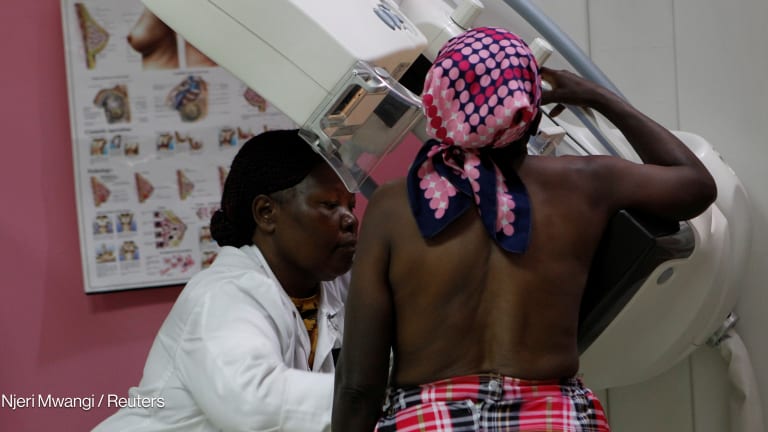
Breast cancer is the most common cancer among women worldwide, with more than 2.3 million women a year receiving a diagnosis. But the story of treatment and survivability varies drastically by location.
In the United States, the five-year post-diagnosis survival rate is 91%, thanks to early detection and advanced, comprehensive treatment options. In contrast, in sub-Saharan Africa, breast cancer is the leading diagnosed cancer and second-most common cause of cancer mortality, with five-year survival rates hovering just at 40%.
As countries work to increase their capacity for detection and pathways for comprehensive treatment options, reconstructive surgery is rarely offered as part of that care plan in low- and middle-income countries. Promising cases in Ethiopia and Vietnam show how giving access to reconstruction options as essential care, and not an optional afterthought, can further women's dignity.
Ensuring access from the start
Abeba, a young woman from Addis Ababa, whose name has been changed to protect her identity, felt lucky to survive her battle with breast cancer. Yet, the aftermath of her double mastectomy brought a new struggle as she tried to reconcile with a body that felt unfamiliar. Like many women whose cancer is detected in an LMIC setting, the only solution offered was the full removal of a breast (or both), without further consideration for the impact on a woman’s life.
Breast reconstruction occupies a distinct place in restoring both physical form and psychological well-being. For survivors fortunate enough to have had reconstruction as part of their post-mastectomy care, many feel that reconstructive surgery is a core part of restoring their identity, confidence, and well-being.
The U.S. acknowledged this through the Women’s Health and Cancer Rights Act in 1998, requiring health insurance carriers to include and cover reconstruction options to all women who received mastectomies. Countries could take note of this journey and take the opportunity to embed reconstruction into cancer care from the start.
Investing in training, infrastructure, and more women surgeons
In order for health care systems to cover reconstruction options, there needs to be a specialized workforce available.
Unfortunately, there is a massive shortage of reconstructive surgeons in LMICs. In Uganda, for example, there is only one reconstructive surgeon serving 3 million people — in the U.S., there are 2.42 per every 100,000, nearly a 75-fold difference.
In LMICs, the paucity of specialized reconstructive surgeons means only a few from this thin selection are trained to perform breast cancer reconstruction, partially because it requires microsurgery — a precision procedure performed under a microscope that enables surgeons to reconnect nerves, blood vessels, skin, bone, and tissue.
To support this skilled surgical workforce, there also needs to be trained perioperative teams, along with capital investment from hospitals to maintain the infrastructure and systems that complex surgeries require. This includes longer operating room usage times, specialized equipment, and developed supply chains for costly and scarce disposables such as microsutures or implants.

Having a proper enabling environment for health care staff will allow for specialized skill acquisition to take place locally. Training centers and fellowships specific to microsurgery and breast reconstruction based in LMICs are needed so surgeons don’t have to travel abroad to learn techniques.
Breast cancer is a disease that may be very culturally complex for women to communicate their full concerns. Yet most patients are treated by male physicians. Training more women surgeons will be crucial to improving both clinical outcomes and ensuring culturally sensitive, patient-centered care.
Examples of success: Vietnam and Ethiopia
These investments may seem high — but these challenges are not insurmountable. One promising example is in Vietnam, where global surgery nonprofit ReSurge International has been working since 1989, recently establishing the first breast cancer training program with Dr. Trung Hau. Medical volunteer trainers such as Dr. Dung Nguyen, the director of breast reconstruction at Stanford University, mentor aspiring women surgeon trainees from around the world as part of the ReSurge Pioneering Women in Reconstructive Surgery Program.
This decades-long partnership has led to Hau and his team now performing one to two breast cancer reconstruction surgeries a week. Connecting with survivor networks, such as the Pink Bows, has been critical to the success of the clinical team to spread the word that these services are available and provide networks of support and counseling. As patient awareness, interest, and demand have spread in the country, Hau has gone on to train more surgeons in breast reconstruction, creating a ripple effect in access.
Learning from the successes of this program, ReSurge has started to work with ALERT Hospital in Addis Ababa, where local surgeons have returned home from training abroad, and now work locally to build a microsurgery program. This was how Abeba first learned that breast reconstruction was an option, when she was recruited to participate in a pioneering microsurgery training workshop.
ALERT Hospital boasts one of the largest plastic and reconstructive training programs in the entire region, and is now building the skills to pioneer the first center in the country to offer access to breast reconstruction services, giving women like Abeba the opportunity to access comprehensive post-cancer care.
Addressing survivor stigma through patient support networks
Medical advancements alone are not enough. In Ethiopia, we have learned that most patients don’t know reconstruction services exist as an option. Those who learn about it may think the surgery is unattainable due to exorbitant costs or availability only in the capital city. This is yet another barrier since 74% of the 135 million population live in rural Ethiopia, and transportation costs alone can be prohibitive.
Stigma and cultural misconceptions surrounding surgery and mastectomy, in particular, are a barrier in themselves. Women who undergo the procedure have given testimonies of feeling labeled as “less of a woman,” facing judgment from families and communities. And if they do get a breast reconstruction, many worry they will be seen as selfish.
Survivor groups, like the Pink Bows in Vietnam and Abeba’s support group in Ethiopia, offer numerous benefits, including opportunities to share personal experiences, exchange information, provide mutual support, and develop individual coping strategies.
Abeba’s network’s support and the connections established with women surgeons helped her decide to go forward and become the first patient at ALERT Hospital, and possibly the country, to undergo an autologous breast reconstruction. Autologous breast reconstruction rebuilds a breast using living tissue — most often from your stomach — to create a soft, natural result, and it is a more technically complex procedure that avoids the necessity for implants.
While there is much work to be done on prevention, detection, and access to broader cancer care, it is worthwhile to invest in the continuum of care from the beginning.
Making breast reconstruction services accessible to all signals to women that their dignity, confidence, and quality of life matter. Closing this gap in access to care is fundamentally about addressing and advancing health equities.
By investing in microsurgery training in LMICs, training more women surgeons, strengthening infrastructure, creating policies that integrate holistic care into the cancer treatment and recovery pathways, and supporting counseling and survivor networks, we can ensure more women have the right toward dignity and choice over mere survival.
Holistic cancer care in LMICs shouldn’t wait: Breast reconstruction should no longer be seen as a luxury, but as an essential part of comprehensive cancer care.
About the author

Contributors
Dr. Hanna Atlabachew is a plastic surgery resident with a strong interest in reconstructive, microsurgery, and breast surgery. Dr. Hellina Legesse Mamo is a plastic and reconstructive surgeon, currently working in ALERT Comprehensive Specialized Hospital, located in Addis Ababa, Ethiopia. Natalie Meyers, MPH, is executive vice president of programs and partnerships at ReSurge International, leading global efforts to expand access to reconstructive surgery. Anna Santos is the chief marketing officer at ReSurge International, leading marketing and storytelling to expand access to reconstructive surgery.
Search for articles



Most Read
- 1
- 2
- 3
- 4
- 5