• News
    • Latest news
    • News search
    • Health
    • Finance
    • Food
    • Career news
    • Content series
    • Focus areas
    • Try Devex Pro
  • Jobs
    • Job search
    • Post a job
    • Employer search
    • CV Writing
    • Upcoming career events
    • Try Career Account
  • Funding
    • Funding search
    • Funding news
  • Talent
    • Candidate search
    • Devex Talent Solutions
  • Events
    • Upcoming and past events
    • Partner on an event
  • Post a job
  • About
      • About us
      • Membership
      • Newsletters
      • Advertising partnerships
      • Devex Talent Solutions
      • Contact us
Join DevexSign in
Join DevexSign in

News

  • Latest news
  • News search
  • Health
  • Finance
  • Food
  • Career news
  • Content series
  • Focus areas
  • Try Devex Pro

Jobs

  • Job search
  • Post a job
  • Employer search
  • CV Writing
  • Upcoming career events
  • Try Career Account

Funding

  • Funding search
  • Funding news

Talent

  • Candidate search
  • Devex Talent Solutions

Events

  • Upcoming and past events
  • Partner on an event
Post a job

About

  • About us
  • Membership
  • Newsletters
  • Advertising partnerships
  • Devex Talent Solutions
  • Contact us
  • My Devex
  • Update my profile % complete
  • Account & privacy settings
  • My saved jobs
  • Manage newsletters
  • Support
  • Sign out
Latest newsNews searchHealthFinanceFoodCareer newsContent seriesFocus areasTry Devex Pro
    • News
    • Transparency

    Clinton Foundation controversies throw spotlight on nonprofit finances

    Amid controversies surrounding the Clinton Foundation's alleged financial misdeeds and improprieties, Devex canvassed several leading advocates for nonprofit transparency for their opinions and elicited seven rules for excelling in accountability in this new age of heightened scrutiny.

    By Till Bruckner // 18 May 2015
    Addressing participants at the closing session of the Clinton Global Initiative’s Middle East and Africa meeting in Marrakech, Morocco, earlier this month, Bill Clinton invoked what he called the “grandfather test”: “When I see a child, I ask myself, which course would be best for this child’s future?” Clinton’s lofty pronouncement sought to bring a warm, feel-good ending to an event that for three days had been in the eye of the political storm surrounding the wider Clinton Foundation. The furor had originally been sparked by the launch of a book, “Clinton Cash,” which alleged multiple improprieties connected with the Clinton family’s charitable endeavor. While some of the book’s claims have since been refuted, it has set off a treasure hunt among the who’s who of investigative journalists, including seasoned sleuths from the The New York Times, The Washington Post, Politico and the International Business Times. Since the media hounds caught the first whiff of blood, hardly a single day has gone by without new allegations about misdeeds and improprieties at the $2 billion foundation appearing in the press. The debate has moved the issue of nonprofit funding and transparency from the shadows to center stage. Two facts stand out. First, the Clinton Foundation has attracted severe criticism for opacity despite broadly disclosing more information than legally required. Second, no clear and universally recognized transparency standards for the sector exist. For example, Transparency International, arguably the most prominent pro-transparency advocacy group worldwide, has to date not developed any standards or guidelines for foundation transparency and does not formally require its national chapters that make up its global network to reveal in detail who funds their work. (Disclosure: The author is a former employee of Transparency International Georgia, and has undertaken consulting work for the TI Secretariat. He currently serves as Transparify’s advocacy manager.) While Transparency International itself does disclose its donors in great detail, many other prominent international pro-transparency nongovernmental organizations are reportedly somewhat opaque about their own financial backers. With scrutiny of nonprofits’ operations on the rise worldwide — the government of India recently moved to place restrictions on the Ford Foundation and on advocacy groups, while some U.S. foundations have come under fire in Germany — and a lack of universally accepted standards, what should development actors do to demonstrate their commitment to transparency, allay suspicions of “hidden agendas” and pre-empt similar criticisms? Devex canvassed several leading advocates for nonprofit transparency for their opinions and elicited seven rules for excelling in accountability in this new age of heightened scrutiny. Rule 1: Some donors are worse than no donors. “The question from a public benefit organization’s perspective is whether you have the funds to support the programs you think are critical to improving people’s lives,” Steven Lawrence, director of research at the Foundation Center, told Devex. “That said, I would expect that many organizations would refuse gifts from the North Korean government based on their policies, just as many have refused funds from major tobacco companies.” Rule 2: Develop crystal-clear contributions policies. “We advocate for corporations to publicly disclose all of their political spending. Shareholders have a right to know if their money is being spent for political purposes. Disclosure is good risk management and forces corporations to be accountable,” Marrian Currinder, associate director at the Center for Political Accountability, noted. “Foundations, like corporations, need to have a board-approved policy in place that governs contributions.” Rule 3: Establish clear ground rules with donors. “Organizations need to be clear with donors as to what they plan to do with their contributions and then deliver fully on those promises,” Lawrence said. “At the same time, if a donor wants to be more directive about the work of the organization than the organization believes is appropriate, then the organization should not take money from that donor.” Rule 4: Be at least as transparent as your governmental peers. “Imagine you’re an activist in Nepal trying to track how the earthquake relief money is being spent. I don’t think you care if the money comes from a government or a foundation. You want to know how much there is, what it is being spent on and what effect it is having,” Publish What You Fund CEO Rupert Simons explained. “We would like to see foundations publish where their money comes from, where it goes and what impact it has. In particular, we encourage foundations to sign up to the voluntary International Aid Transparency Initiative standards; some have already done so.” Rule 5: Use financial transparency as a risk management tool. “Public disclosure of contributions and spending is good governance. Being transparent forces recipients to consider whether they are really comfortable disclosing and defending big contributions they have received,” Currinder highlighted. “If the Clinton Foundation had been fully transparent when Hillary was U.S. secretary of state, perhaps it would not have accepted some of the foreign contributions that have since raised eyebrows. I think the lesson learned from this controversy is not to accept contributions that you are not comfortable publicly disclosing, explaining and defending. Rule 6: Beware of inviting political actors onto your leadership team or board. “Private foundations should not be established or controlled by government officials or those running for public office,” Craig Holman, a Public Citizen government affairs lobbyist, argued. “We should recognize that such foundations often serve as a means for special interests to throw money at the feet of those in power in order to curry favor. Such relationships pose an inherent conflict of interest.” Rule 7: Remember that external accountability challenges are legitimate. “Our position is that there are legitimate questions to be raised and answered, including questions about the organization's financial disclosures … and whether there are potential conflicts of interest,” Jenn Topper, spokeswoman for the Sunlight Foundation, stressed. Read more international development news online, and subscribe to The Development Newswire to receive the latest from the world’s leading donors and decision-makers — emailed to you FREE every business day.

    Related Stories

    New global nonprofit accounting standard aims to save NGOs millions
    New global nonprofit accounting standard aims to save NGOs millions
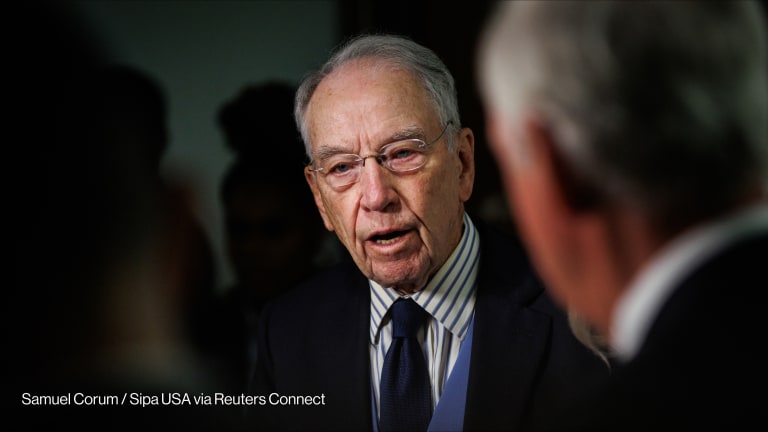
    Sen. Grassley probes top foundations' China funding, nonprofit status
    Sen. Grassley probes top foundations' China funding, nonprofit status
    Money Matters: How development philanthropy came under attack
    Money Matters: How development philanthropy came under attack
    What is Trump doing to US nonprofits and philanthropies?
    What is Trump doing to US nonprofits and philanthropies?

    Addressing participants at the closing session of the Clinton Global Initiative’s Middle East and Africa meeting in Marrakech, Morocco, earlier this month, Bill Clinton invoked what he called the “grandfather test”: “When I see a child, I ask myself, which course would be best for this child’s future?”

    Clinton’s lofty pronouncement sought to bring a warm, feel-good ending to an event that for three days had been in the eye of the political storm surrounding the wider Clinton Foundation. The furor had originally been sparked by the launch of a book, “Clinton Cash,” which alleged multiple improprieties connected with the Clinton family’s charitable endeavor.

    While some of the book’s claims have since been refuted, it has set off a treasure hunt among the who’s who of investigative journalists, including seasoned sleuths from the The New York Times, The Washington Post, Politico and the International Business Times. Since the media hounds caught the first whiff of blood, hardly a single day has gone by without new allegations about misdeeds and improprieties at the $2 billion foundation appearing in the press.

    This article is free to read - just register or sign in

    Access news, newsletters, events and more.

    Join usSign in
    • Worldwide
    Printing articles to share with others is a breach of our terms and conditions and copyright policy. Please use the sharing options on the left side of the article. Devex Pro members may share up to 10 articles per month using the Pro share tool ( ).

    About the author

    • Till Bruckner

      Till Bruckner

      Till Bruckner is the founder of TranspariMED, an initiative that works to end evidence distortion in medicine, and manages advocacy for Transparify, an initiative promoting transparency and integrity in policy research. In his previous life, he worked in international development, occupying both field and research roles. Till is interested in the hidden power relationships that structure global politics and our everyday lives, and in finding new ways of using research and advocacy to make the world a better place. Till holds a Ph.D. in Politics from the University of Bristol, U.K.

    Search for articles

    Related Stories

    Transparency and accountabilityRelated Stories - New global nonprofit accounting standard aims to save NGOs millions

    New global nonprofit accounting standard aims to save NGOs millions

    Transparency and accountabilityRelated Stories - Sen. Grassley probes top foundations' China funding, nonprofit status

    Sen. Grassley probes top foundations' China funding, nonprofit status

    Devex Money MattersRelated Stories - Money Matters: How development philanthropy came under attack

    Money Matters: How development philanthropy came under attack

    Philanthropy Related Stories - What is Trump doing to US nonprofits and philanthropies?

    What is Trump doing to US nonprofits and philanthropies?

    Most Read

    • 1
      Why NTDs are a prime investment for philanthropy
    • 2
      When business moves faster than politics
    • 3
      Why are 3.4 billion people still offline?
    • 4
      Climate change mandates more innovation in yellow fever vaccines
    • 5
      Why a new partnership model is key to future of development finance
    • News
    • Jobs
    • Funding
    • Talent
    • Events

    Devex is the media platform for the global development community.

    A social enterprise, we connect and inform over 1.3 million development, health, humanitarian, and sustainability professionals through news, business intelligence, and funding & career opportunities so you can do more good for more people. We invite you to join us.

    • About us
    • Membership
    • Newsletters
    • Advertising partnerships
    • Devex Talent Solutions
    • Post a job
    • Careers at Devex
    • Contact us
    © Copyright 2000 - 2026 Devex|User Agreement|Privacy Statement