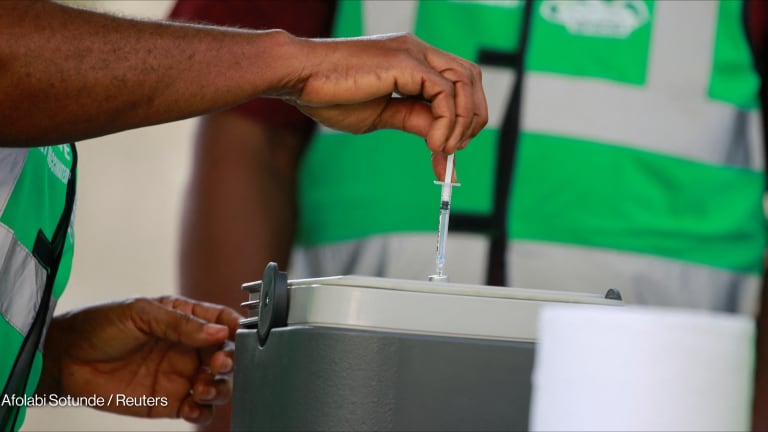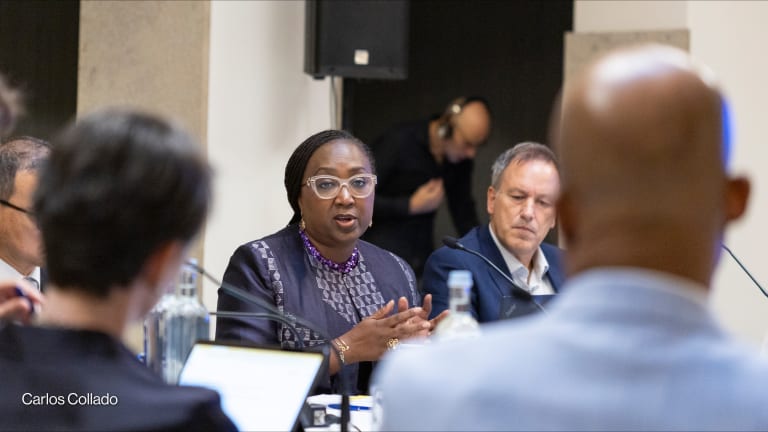




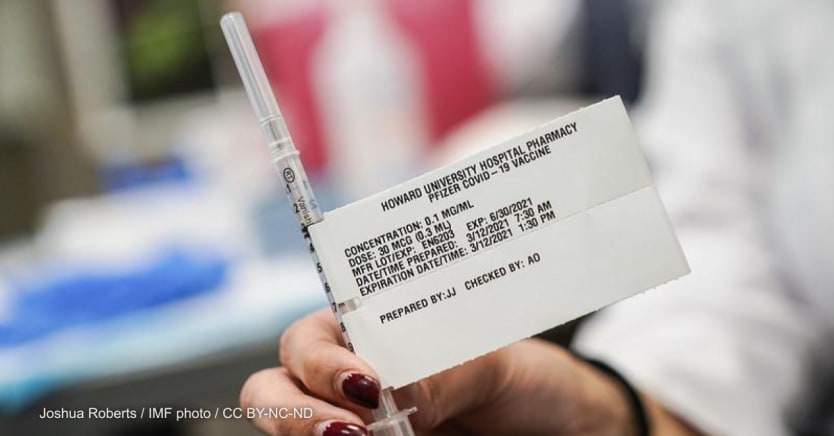
If wealthy nations — currently flush with COVID-19 vaccines — decide to give their populations booster shots, it could have “huge implications” for the availability of doses globally, a World Health Organization official said during a press conference Thursday.
Sign up for Devex CheckUp
The must-read weekly newsletter for exclusive global health news and insider insights.
The statement by Africa Regional Director Matshidiso Moeti came a day after Pfizer said a third dose of its vaccine could improve immunity. While receiving two doses still provides strong, sustained protection against serious disease, effectiveness decreases over six months. The company said it plans to seek U.S. approval for a booster shot.
Why this matters: Many wealthy countries have hoarded large supplies of vaccine doses, including by reserving them through prepayments with manufacturers. This has limited availability for low-income countries that, even with access to financing, have struggled to purchase doses.
Fewer than 2% of the people on the African continent are fully vaccinated.
Now that wealthy countries have vaccinated large portions of their populations, they are starting to donate doses. U.S. President Joe Biden announced last month that his government would give 500 million Pfizer doses to low- and lower-middle-income countries.
But booster shots could change this, according to Moeti.
“Our concern is [that] decisions to provide a third dose might influence the availability of vaccines for our countries, which are already going through a very difficult situation,” she said.
More doses needed: The African Union, which aims to vaccinate 60% of the continent’s population, also anticipates needing more doses than initially projected, as the delta variant has increased the coronavirus’s rate of reproduction.
“We may need more vaccines than we initially stated,” said John Nkengasong, director at the Africa Centres for Disease Control and Prevention.

About the author

Sara Jervingsarajerving
Sara Jerving is a Senior Reporter at Devex, where she covers global health. Her work has appeared in The New York Times, the Los Angeles Times, The Wall Street Journal, VICE News, and Bloomberg News among others. Sara holds a master's degree from Columbia University Graduate School of Journalism where she was a Lorana Sullivan fellow. She was a finalist for One World Media's Digital Media Award in 2021; a finalist for the Livingston Award for Young Journalists in 2018; and she was part of a VICE News Tonight on HBO team that received an Emmy nomination in 2018. She received the Philip Greer Memorial Award from Columbia University Graduate School of Journalism in 2014.