David Beasley: WFP’s unorthodox money magnet leaving as crises mount
With the war in Ukraine approaching its second year and famine wreaking havoc in the Horn of Africa and threatening Haiti, WFP Executive Director David Beasley is leaving office as the world braces for another year of skyrocketing need.
Loved by many for his Southern charm and unapologetic Christianity, David Beasley is pilloried in equal measure for his management style and unofficial diplomacy. But like or dislike him, it’s hard to deny the former governor of South Carolina has been a highly effective fundraiser for the World Food Programme. As global hunger has soared following the COVID-19 pandemic and the increasingly dire effects of climate change and conflict on food security, Beasley has raised record amounts of money as executive director of the humanitarian organization. Last year, WFP raised $14.2 billion, more than double the $6 billion in 2017, the year he took office. Yet the money is not enough, he laments. An estimated 350 million people in 49 countries are “at famine’s door,” and WFP is forced to cut rations amid budget shortfalls. We’re “taking away from the hungry to feed the starving,” Beasley often repeats. “The world is so fragile,” the 65-year-old told Devex during an interview on a recent trip to Washington. So much could be gained by a piecemeal focus on thorny conflicts such as Yemen or Syria so humanitarian attention isn’t split so thinly between disasters, he argued. “We’re playing whack-a-mole out there, and nobody’s slowing down to solve one problem.” Now, with the war in Ukraine approaching its second year and famine wreaking havoc in the Horn of Africa and threatening Haiti, Beasley is leaving office and will hand the job to someone else — perhaps Cindy McCain, the United States ambassador to the United Nations agencies for food and agriculture — as the world braces for another year of skyrocketing need. Some fear his departure could leave a gaping fundraising hole for WFP, which won the Nobel Peace Prize in 2020 under his leadership. His exit, originally scheduled for April 2022, was already delayed by U.N. Secretary-General António Guterres after Russia invaded Ukraine early last year and food prices soared globally. Beasley has sought to simplify the message about what WFP does and why it is important, he said, instead of using “a vernacular that people don’t understand.” “I caught some hell about this my first year — ‘You shouldn’t say it like this.’ And I’m like ‘Well, if I say it your way, we’re not getting more money,’” Beasley said, noting that the U.N. “does some really good things” but often fails to package the message properly. Put forward for head of WFP by former U.S. President Donald Trump, Beasley’s appointment in 2017 caused some consternation. He had no experience running a major international relief operation or background with multilateral organizations. He wasn’t initially sold, either. Known for his preference for tea over coffee, he called U.N. “not my cup of tea.” But persuasion from friends — one told him WFP did “God’s work on earth” — and his wife Mary Wood’s desire to see him re-engage with public life to combat what they viewed as increasingly ugly political discourse, led him to accept the position. Beasley abandoned politics in 1998 after losing his reelection bid in a nasty campaign seen partially as a referendum on his decision to remove the Confederate flag from the South Carolina state capitol — more than two decades before similar action became widespread across the U.S. during waves of protests demanding racial justice. After Trump’s election in 2016, panic spread throughout Washington’s humanitarian community over fears he would slash funding, including to WFP. Beasley, who spent his early political years as a Democrat, was viewed as uniquely able to stop Trump from following through and maintain bipartisan support from Congress. “I like to get things done,” said Beasley, who as a native South Carolinian grew up on a farm. The father of four received his undergraduate and law degrees from the University of South Carolina. He made it clear when he joined WFP that his goal as chief was to fundraise, according to his predecessor Ertharin Cousin, who led the agency from 2012 to 2017. “I was surprised when I heard this; because he said it to me, but then he said it to the team. He said, ‘Look, under Ertharin’s leadership, this organization developed a road map for how to move forward. I support the implementation of that road map, and my goal, my job, is to go out and raise enough money for you to implement that,’” Cousin told Devex. “Lots of leaders feel as if they need to come in and no matter what has come before them, that they need to change everything. He didn't do that.” His six-year term leading WFP ends in April, and while fears of drastic budget cuts have abated, the need for an aggressive fundraiser for humanitarian relief has only increased. Last year’s estimated total global needs topped $51 billion — but only 47% of that was funded. Beasley argues the system must function better to meet ever-increasing requirements. “Be strategic with your funding. Where can you use a dollar to get the greatest result for your taxpayer?” he said. “I make that case. Some people don’t like the way I say certain things, but we went from instead of our budget being cut — we’ll probably be $13 billion this year.” While the U.S. — the agency’s largest donor — can unofficially appoint an American to serve the five-year term as head of WFP, President Joe Biden followed the precedent of past presidents by declining to renominate Beasley in favor of putting forward his own candidate. Guterres does not confirm who is under consideration for the post before an announcement is made, but Devex reported that Biden has nominated McCain. The decision not to keep him on was met with some outrage on Capitol Hill, where Beasley is highly regarded and often testifies with the cadence of a preacher. He has close relationships with members from both parties, exchanging text messages with the likes of Delaware Senator Chris Coons, who chairs the Senate Appropriations Subcommittee on State, Foreign Operations, and Related Programs, and also sits on the Foreign Relations Committee. Coons, a Democrat, calls Beasley “a spectacular human being,” who brought a new level of “energy and engagement” to the role not seen before. “David and I have traveled together, worked together, prayed together, fought together, and I think he is one of the most impressive, most effective advocates, leaders in fighting hunger globally,” Coons told Devex. “Personal, active, direct in pressing the questions, in demanding more significant contributions and … a record amount of aid.” Support for WFP seems to be on the narrowing list of consensus items in an increasingly rancorous Congress. “David is a guy that relates to all kinds of different people. I think he’s unique in the sense of being a former governor, a former state legislator — he understands government so he’s able to work that system,” Republican Senator John Boozman of Arkansas told Devex. “He’s very comfortable with who he is. It’s all about others, it’s not about him.” This familiarity with government has made some critical of Beasley, claiming he has overstepped his bounds as the head of a U.N. organization because he is not an official government representative. Some diplomats argue he has no place trying to negotiate peace deals for some of the conflicts — such as in Sudan — exacerbating global hunger. Beasley acknowledges he’s rubbed some people the wrong way but is adamant he was doing the right thing. “In case I’m missing something,” he said, there isn’t enough money to feed the 350 million people approaching starvation — a hefty increase from 80 million in 2016. “Why? Because the others who are running their mouth aren't doing their job. If they would do their job and end the wars, end the conflicts, do the diplomacy that’s necessary, then I wouldn’t have to be out there doing their job,” Beasley said. “You don’t want me out there? Do your job. Get it done. What I’m seeing out there is it’s not getting done. It’s not happening, and people are dying for it. I’m not going to sit idly by and worry about somebody’s little ego.” During Beasley’s tenure, conflicts such as Syria and Yemen worsened, while new crises in places such as Ethiopia and Ukraine further diverted humanitarian resources. “David’s put bandaids on problems that we as a larger community are failing to meet our commitments,” Cousin said. “No matter how much money he raises, if we don’t solve the underlying challenges, those people are going to continue to face acute hunger.” Beasley’s aggressive travel schedule brings him often to Washington to speak with U.S. officials and other food security advocates — such as World Central Kitchen Founder José Andrés, chef and winner of James Beard Foundation Awards, whose call to Beasley’s cell phone interrupted the interview for this story. But Beasley also jumps from war zone to disaster scene with regularity, visiting more than 30 countries in 2022 alone. He frequently posts videos on Twitter describing the dire humanitarian need he’s witnessing, while showcasing WFP’s response. On these trips, Beasley likes to meet with staff as well as people benefiting from the organization’s work, according to Gary Karr, a former journalist who worked on Beasley’s WFP communications team after covering him as South Carolina governor. He called Beasley “pretty exacting” but “high energy” and “not a sidelines guy.” He would demand to know why there were free hours on his schedule when traveling, Karr said. “To sit in Rome and do a bunch of meetings and have a lot of paper flying around his desk is just not his speed at all. That’s not what he wants to do,” Karr said. “He doesn't really want to do meetings unless there’s a specific aim.” Beasley trusted the team he inherited in Rome, with no desire to micromanage, said Karr, and he has remained largely hands off with the day-to-day machinations of the organization; a different approach from some past leaders. “I thought management was a big part of the job. He had a different opinion,” former WFP Executive Director Catherine Bertini, who was appointed by former President George H.W. Bush and led the agency from 1992 to 2002, told Devex. “He didn’t consider management part of what he needed to do.” A January 2020 internal audit that assessed the “Tone-at-the-Top and WFP’s leadership Arrangements” said that “the outward focus of the Executive Director, and his extensive travel commitments” risked eroding trust in the leadership across all levels of WFP. “Some of the Executive Director’s authority or responsibilities being managed in the Chief of Staff’s office, have resulted in the further delegation of authority and activities which has, in the audit’s observation, caused extra unnecessary work, chatter, anxiety and frustration, as well as some confusion over some of the roles and responsibilities at the Leadership level,” the report said. Beasley’s tenure has also brought criticism of a “mainly white, male-dominated club” in the upper echelons of WFP. More than 250 employees signed a letter sent to the executive director in March 2020 after a photo of Beasley and WFP’s all-male response team in Lviv, Ukraine, was posted on Twitter. It called lack of gender parity and diversity an “entrenched problem” within the organization. Despite differing views on management, Beasley is exactly what WFP needs right now, Bertini said. “An organization is fortunate if it has the right leadership with the right skill set at the right time,” said Bertini, who is now a professor emeritus at Syracuse University. “His vocal and articulate advocacy … this was the right place and time for that.” He approaches anyone he thinks he can convince to pledge money to feed hungry people. And his strong Christian faith and connections to religious groups have made Beasley an incredibly effective fundraiser, particularly in the U.S. This allows him to connect with private American donors, according to Barron Segar, head of WFP USA, an independent nonprofit that raises money for the U.N. organization from private Americans, businesses, and philanthropies. Segar has what he described as direct access to Beasley, compared to the layers of bureaucracy he encountered in his former role leading UNICEF USA. Beasley is “a partner” who has spoken directly with almost every one of the high-net-worth donors who have contributed to WFP USA, Segar said. This has helped the nonprofit’s fundraising skyrocket to $174 million from $20 million when Segar started in 2020. “One of the legacies that he leaves behind is not only creating a brand for the World Food Programme in the United States, but working in collaboration with the World Food Programme USA to unlock the private sector,” Segar said. “Creating an emotional connection is the key to success. … David Beasley has created an emotional connection with the American audience.” In the secular U.N., the use of religion to create that connection is unorthodox. But Beasley explains that’s just how he approaches everything in his life. “Everything I do is based on my faith. The essence of everything I believe in is based upon the simple teaching: Love your neighbor as yourself,” Beasley said. “That teaching transcends all world religions, so no matter where you go if a child’s suffering, struggling, people not getting food — that’s my brother, that’s my sister.” After Beasley departs in April, WFP USA wants to keep him on in a “lifetime honorary position,” Segar said. He lauded Beasley’s unabashed way of asking for money wherever he thinks a blank check may be waiting. This includes appeals to the likes of billionaire Elon Musk. Last year, Beasley engaged in an extended — and public — back and forth with the billionaire on Twitter, albeit before Musk owned the social network. Beasley challenged Musk, who had recently become the world’s richest man, to use some of that wealth to help save 42 million people from famine with $6.6 billion. Musk asked for a breakdown of that number, Beasley posted a brief summary of how WFP would use the money, and — no donation ensued. Initially, even Segar was “uncomfortable” with Beasley’s approach to soliciting funds from Musk. “It’s important for me to say this … at one point I was doubting what David Beasley was doing, his strategy,” Segar said. But he was converted because the episode did so much to boost WFP’s name recognition and mission. WFP USA began receiving donations made in “honor” of Musk’s failure to pledge his own money to the cause. “I got calls from my peers, who were saying ‘holy s. What an amazing job that David Beasley is doing. I wish our executive director would do this,’” Segar said. Ultimately, the answer to poverty isn’t philanthropy, Beasley believes, but the need for the private sector to invest in economic development which can improve people’s lives. He remains incredibly concerned about rising global food insecurity, he said, and worries there will be a food availability crisis this year. He plans to go “full speed ahead” until he leaves office in April but gave no indications of his plans after departing. Serving as WFP executive director has been the “greatest joy of my life,” Beasley said. “It’s been the greatest heartbreak, too. It’s bittersweet.” “I’ve put my heart in it. I think everybody knows that. I’ve given it my all, and that’s all I can do. Now it’s time for someone else, and I will do everything I can to support who comes in after me and make the transition as smooth and as effective as possible.”
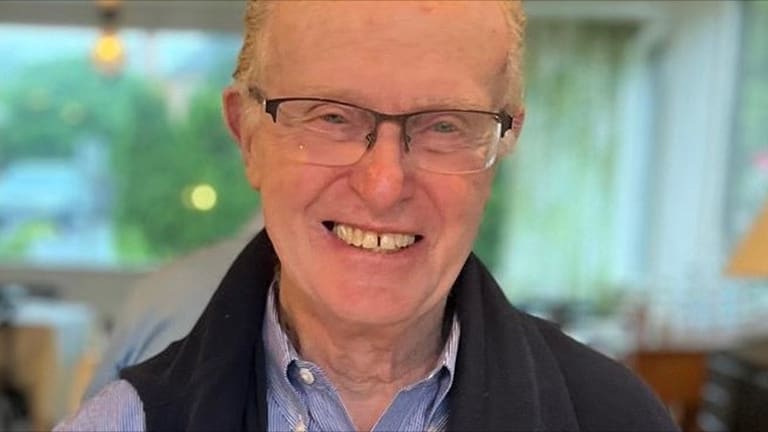
Loved by many for his Southern charm and unapologetic Christianity, David Beasley is pilloried in equal measure for his management style and unofficial diplomacy. But like or dislike him, it’s hard to deny the former governor of South Carolina has been a highly effective fundraiser for the World Food Programme.
As global hunger has soared following the COVID-19 pandemic and the increasingly dire effects of climate change and conflict on food security, Beasley has raised record amounts of money as executive director of the humanitarian organization. Last year, WFP raised $14.2 billion, more than double the $6 billion in 2017, the year he took office.
Yet the money is not enough, he laments. An estimated 350 million people in 49 countries are “at famine’s door,” and WFP is forced to cut rations amid budget shortfalls. We’re “taking away from the hungry to feed the starving,” Beasley often repeats.
This article is free to read - just register or sign in
Access news, newsletters, events and more.
Join usSign inPrinting articles to share with others is a breach of our terms and conditions and copyright policy. Please use the sharing options on the left side of the article. Devex Pro members may share up to 10 articles per month using the Pro share tool ( ).
Teresa Welsh is a Senior Reporter at Devex. She has reported from more than 10 countries and is currently based in Washington, D.C. Her coverage focuses on Latin America; U.S. foreign assistance policy; fragile states; food systems and nutrition; and refugees and migration. Prior to joining Devex, Teresa worked at McClatchy's Washington Bureau and covered foreign affairs for U.S. News and World Report. She was a reporter in Colombia, where she previously lived teaching English. Teresa earned bachelor of arts degrees in journalism and Latin American studies from the University of Wisconsin.