Devex Newswire: GCF's slow process fails to match climate urgency
Despite its "simplified approval process," getting funding from the Green Climate Fund can take years; why climate philanthropy should focus on reparations and not donations; and the western Pacific prepares for the next pandemic.
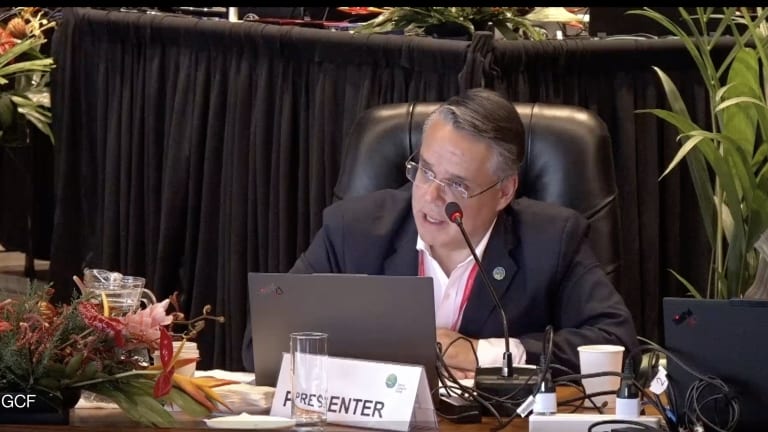
The Green Climate Fund, set up more than a decade ago, is facing criticism for the difficulty low-income countries experience in accessing funding — even through its more simplified process. Also in today’s edition: Climate philanthropy advocates say the sector’s traditional funding approach needs to change, and efforts are underway to boost vaccine manufacturing capabilities in the western Pacific. + Join us today for a Devex Career event to learn the art of building a powerful personal brand that resonates with your target audience. Can’t attend live? Register anyway and we’ll send you a recording. Hoops and hurdles GCF is a major source of funding for climate change adaptation and mitigation projects in low-income countries. But, the fund has been criticized for its slow and cumbersome application process — which can make it difficult for organizations to access the funding needed to address the climate crisis. In 2017, GCF introduced the Simplified Approval Process, or SAP, to streamline the application process for smaller projects. However, NGOs that have used SAP say that it is not much faster than the standard process, writes Natalie Donback for Devex. The problem is compounded by the fact that GCF often requests detailed data that is difficult or impossible to find, especially for organizations in low-income countries. This can further delay the approval process and make it difficult to implement projects effectively, given how quickly the science and predictions about climate impacts can change. Organizations, such as the Palli Karma-Sahayak Foundation in Bangladesh, recount lengthy approval processes, with one project taking almost four years from application to approval. “The flood levels now are completely different to five years ago, 10 years [ago],” says Fazle Rabbi Sadeque Ahmed, the project coordinator for an SAP project on drought resilience. “Adaptation science or predictions and future scenarios are changing very quickly.” In a statement to Devex, a GCF spokesperson said that what’s different about SAP isn’t the application process, which is similar to the standard one. Instead, NGOs are asked for “a reduced number of documents, in simpler formats and with fewer information requirements,” the spokesperson said. Still, many NGOs are calling for GCF to reform its approval process to help ensure low-income countries can access the funding needed. And the criticism comes on the heels of the United Nations Environment Programme’s “Adaptation Gap Report 2023,” which revealed that the adaptation finance needs in low-income countries is at least 50% bigger than previously thought. Read: Why the Green Climate Fund’s simplified approvals aren't that simple (Pro) ICYMI: Climate adaptation finance gap widens by 50%, says UN report + A Devex Pro membership brings you essential analysis, data-driven funding insights, and access to the world’s largest global development job board. Get these perks and more by signing up to our 15-day free trial. A humble approach to climate philanthropy Climate activists are urging philanthropists to take bold action in addressing the escalating need for humanitarian aid caused by weather-related emergencies, which has increased by 800% over the last 20 years, according to Oxfam. While philanthropy is seen as a potential solution to funding shortfalls, critics argue that the current system — rooted in colonialism and capitalism — perpetuates exploitation, writes Devex contributing reporter David Njagi. There should be a shift in the traditional philanthropic approach to encourage global north donors to listen to and support the preferences of the communities they aim to assist in dealing with the climate crisis, according to Gloria Mugabekazi, a feminist funder working in Uganda. “Traditionally, funding has been from the point of the haves and the don’t haves. This is problematic because countries that consider themselves to have, come with strategies, ideas, and solutions that are already curated for the people they are going to support on development,” she said during a recent WINGSForum held in Nairobi ahead of the upcoming COP 28 climate summit. Funders should abandon the savior mentality and adopt a trust-based approach that helps communities instead of imposing solutions from the outside, she added. Philanthropic efforts should also focus on reparations rather than mere donations to address the historical injustices caused by high-income countries, Dhananjayan Sriskandarajah, the chief executive at Oxfam GB, said at the same event. This debate is expected to be a focal point at COP 28, where philanthropists are seen as having a crucial role in supporting and funding climate solutions. Read: Why activists want philanthropists to pay climate reparations Background reading: Climate philanthropy report shows 'disappointing' lack of funding Not-so-global development Around 13% of the grant dollars U.S.-based foundations provided for international causes in the period of 2016-2019 went to organizations headquartered in the countries where the work being funded would take place, according to findings from Candid, a U.S.-based philanthropic research organization, and the Council on Foundations, a group that represents the U.S. philanthropy sector. That is a slight increase from approximately 12% in the 2011-2015 period, the groups said in a recently released report. The number of direct grants to local organizations remained unchanged at 23%, they found. When funders did give directly, rather than distributing grants through intermediaries, that funding tended to go to global north organizations, the data showed. Health received $16.2 billion or almost 49% of global grant dollars from U.S. foundations and the Bill & Melinda Gates Foundation accounted for more than half of that giving, Candid and COF found. Human rights had the fastest growth among philanthropic priorities with an increase to $3.7 billion or 11% of global grant funding in 2016-2019 compared to less than 7% in the 2011-2015 period. The Gates Foundation was the top global funder and accounted for more than $15 billion or 45% of global giving by U.S. foundations, according to the report. The second top giver was the Susan Thompson Buffett Foundation, founded by billionaire investor Warren Buffett, which provided roughly $1.2 billion or 3.6% of all of the grant dollars tracked. The world of tomorrow The COVID-19 pandemic highlighted gaps in many countries' preparedness to manage and respond to a global health threat. In the western Pacific region, these gaps include weak surveillance, testing, and capacity to develop and produce vaccines. However, work is now underway to address these gaps. The World Health Organization has developed a new framework to help countries have a more comprehensive health security response in the event of another health crisis. Many countries in the region, such as South Korea and Vietnam, have also built or are developing genomic surveillance capacities to track the evolution of viruses and inform the development of vaccines and other tools. And some countries in the region have also started to develop their vaccine manufacturing capacities, my colleague Jenny Lei Ravelo writes. However, it is not enough to have manufacturing facilities. Countries also need to have strong regulatory systems in place to ensure the quality of vaccines, says Jinho Shin, a medical officer on essential medicines and health technologies at WHO western Pacific. They also need to be prepared to invest in the development of future vaccines, including clinical trials, he says. In addition to these measures, countries also need to have the appropriate legal mechanisms and protections in place. This includes legal protections for government officials who engage in advance purchasing agreements for vaccines, as well as legal protections for vaccine manufacturers and individuals who may suffer injuries from receiving a vaccine. Read: Is the western Pacific ready for the next pandemic? + For more content like this, sign up to Devex CheckUp — our free, weekly global health newsletter. In other news An aid agency warns that around 15,000 babies expected to be born in Gaza between Oct. 7 and the end of 2023 are at serious risk due to escalating violence, with severe shortages of medical care supplies, clean water, and food. [Save the Children] A comprehensive federal report highlighted the growing impact of climate change across the U.S., which will likely strengthen the U.S.'s case for its own climate policies at COP 28. [Axios] Cholera vaccines are set to reach Sudan this month as its population continues to face a deadly outbreak amid the ongoing conflict, with over 3.1 million people estimated to be at risk through the end of the year. [UN News] Sign up to Newswire for an inside look at the biggest stories in global development.
The Green Climate Fund, set up more than a decade ago, is facing criticism for the difficulty low-income countries experience in accessing funding — even through its more simplified process.
Also in today’s edition: Climate philanthropy advocates say the sector’s traditional funding approach needs to change, and efforts are underway to boost vaccine manufacturing capabilities in the western Pacific.
+ Join us today for a Devex Career event to learn the art of building a powerful personal brand that resonates with your target audience. Can’t attend live? Register anyway and we’ll send you a recording.
This article is free to read - just register or sign in
Access news, newsletters, events and more.
Join usSign inPrinting articles to share with others is a breach of our terms and conditions and copyright policy. Please use the sharing options on the left side of the article. Devex Pro members may share up to 10 articles per month using the Pro share tool ( ).
Stephanie Beasley is a Senior Reporter at Devex, where she covers global philanthropy with a focus on regulations and policy. She is an alumna of the UC Berkeley Graduate School of Journalism and Oberlin College and has a background in Latin American studies. She previously covered transportation security at POLITICO.