

• News
    • Latest news
    • News search
    • Health
    • Finance
    • Food
    • Career news
    • Content series
    • Focus areas
    • Try Devex Pro
  • Jobs
    • Job search
    • Post a job
    • Employer search
    • CV Writing
    • Upcoming career events
    • Try Career Account
  • Funding
    • Funding search
    • Funding news
  • Talent
    • Candidate search
    • Devex Talent Solutions
  • Events
    • Upcoming and past events
    • Partner on an event
  • Post a job
  • About
      • About us
      • Membership
      • Newsletters
      • Advertising partnerships
      • Devex Talent Solutions
      • Contact us
Join DevexSign in
Join DevexSign in

News

  • Latest news
  • News search
  • Health
  • Finance
  • Food
  • Career news
  • Content series
  • Focus areas
  • Try Devex Pro

Jobs

  • Job search
  • Post a job
  • Employer search
  • CV Writing
  • Upcoming career events
  • Try Career Account

Funding

  • Funding search
  • Funding news

Talent

  • Candidate search
  • Devex Talent Solutions

Events

  • Upcoming and past events
  • Partner on an event
Post a job

About

  • About us
  • Membership
  • Newsletters
  • Advertising partnerships
  • Devex Talent Solutions
  • Contact us
  • My Devex
  • Update my profile % complete
  • Account & privacy settings
  • My saved jobs
  • Manage newsletters
  • Support
  • Sign out
Latest newsNews searchHealthFinanceFoodCareer newsContent seriesFocus areasTry Devex Pro
    • News
    • Devex @ UNGA80

    Experts push for action in tackling NCDs crisis

    While the high-level meeting at UNGA80 can bring attention to NCDs, targeted investments and accountability systems are needed to translate a piece of paper into measurable progress on the ground.

    By Jenny Lei Ravelo // 23 September 2025
    Experts are hoping the high-level meeting on noncommunicable diseases this week at the 80th United Nations General Assembly will draw attention to it as an important public health issue — and lead to much-needed investments and a multisectoral response. There is no debate that investments are needed in both preventing and treating noncommunicable diseases, which are killing over 43 million people globally each year. Early action on NCDs helps reduce long-term health care costs and prevents overburdening health systems, but “denying treatment is not an option” for the millions already living with a chronic disease, Dr. Saia Ma’u Piukala, World Health Organization regional director for the Western Pacific, said during a Devex panel session on the sidelines of UNGA in New York. However, funding for NCDs is currently a small fraction of international aid, he said. Implementing both prevention and treatment interventions on the ground is also challenging, especially among communities displaced by wars and conflict, and those living in resource-poor settings. “When I think about prevention, I wonder how much control do these populations really even have over the way they live their lives,” said Dr. Anjoli Anand, NCDs adviser for Doctors Without Borders. “You think about food access, and we maybe want to control access to highly processed foods … but these are people who are living in food deserts who have very little individual control over what they can choose.” Access to lifesaving treatments is also a challenge. In many low-income countries, the cost of insulin pens — which are convenient to use for people with diabetes who need to control their blood sugar — is so expensive that they become practically inaccessible. Many also don’t have access to finger stick glucometers to monitor their blood sugar levels at home. In some places, Anand said people living with diabetes have to go to the hospital twice a day for insulin injections. “How do you maintain a job when that is what you were doing every single day? How do you go to school if you are a child on this kind of a regimen? I have seen 20-year-olds with cataracts in both eyes. I have seen 20-year-olds with kidney failure as a result of these kinds of lack of access to basic commodities,” she added. Adding to the challenge of affordability are middlemen jacking up prices for medicines, including for generic cancer treatments, said Emmanuel Akpakwu, CEO and founder of Axmed, a Swiss-based startup that helps aggregate medicine orders to improve access and reduce medicine costs in low-income countries. Recipe for action To better prevent and treat NCDs, experts have called for investments in primary health care and strengthening health systems rather than focusing on individual diseases, as well as engaging the private sector. They also said addressing NCDs will require a whole-of-government and whole-of-society approach, including communities affected by and at risk of developing NCDs. In the city of Carnot in the Central African Republic, Anand said patients themselves have formed associations and are looking for ways to support each other for the home management of diabetes. And for the high-level meeting to translate into action, experts in a separate Devex panel session highlighted the need for clear accountability systems in place. This is where civil society — which has been instrumental in efforts to address HIV and AIDS, as well as polio — plays a significant role. Also key are data systems and the use of digital tools to help monitor progress, and identify the gaps and manage them. Countries can also assess how they’re doing on NCDs through the voluntary national review, which helps countries identify their progress on the Sustainable Development Goals. And while investing in both NCD prevention and treatment is equally important, experts said more can be done when it comes to prevention, especially at a time of shrinking resources for health globally due to aid cuts. “It's significantly cheaper to prevent a chronic disease than to have to treat it. And I'm concerned that perhaps there just hasn't been enough focus on the prevention side of things,” said John Hewko, general secretary and CEO of Rotary International.

    Related Stories

    Opinion: The time to prioritize early and integrated CKM care is now
    Opinion: The time to prioritize early and integrated CKM care is now
    From promises to action on NCDs and mental health
    From promises to action on NCDs and mental health
    Building stronger primary care to tackle NCDs and mental health
    Building stronger primary care to tackle NCDs and mental health
    Invest in diagnostics to win the health fight
    Invest in diagnostics to win the health fight

    Experts are hoping the high-level meeting on noncommunicable diseases this week at the 80th United Nations General Assembly will draw attention to it as an important public health issue — and lead to much-needed investments and a multisectoral response.

    There is no debate that investments are needed in both preventing and treating noncommunicable diseases, which are killing over 43 million people globally each year.

    Early action on NCDs helps reduce long-term health care costs and prevents overburdening health systems, but “denying treatment is not an option” for the millions already living with a chronic disease, Dr. Saia Ma’u Piukala, World Health Organization regional director for the Western Pacific, said during a Devex panel session on the sidelines of UNGA in New York.

    This article is free to read - just register or sign in

    Access news, newsletters, events and more.

    Join usSign in

    More reading:

    ► NCDs political declaration risks watered-down ambitions

    ► Air pollution gets ignored in UNGA noncommunicable disease declaration

    ► Noncommunicable diseases: A policy success but implementation failure

    • Global Health
    • Private Sector
    • Trade & Policy
    Printing articles to share with others is a breach of our terms and conditions and copyright policy. Please use the sharing options on the left side of the article. Devex Pro members may share up to 10 articles per month using the Pro share tool ( ).

    About the author

    • Jenny Lei Ravelo

      Jenny Lei Ravelo@JennyLeiRavelo

      Jenny Lei Ravelo is a Devex Senior Reporter based in Manila. She covers global health, with a particular focus on the World Health Organization, and other development and humanitarian aid trends in Asia Pacific. Prior to Devex, she wrote for ABS-CBN, one of the largest broadcasting networks in the Philippines, and was a copy editor for various international scientific journals. She received her journalism degree from the University of Santo Tomas.

    Search for articles

    Related Stories

    Sponsored by The Global Alliance for Patient AccessRelated Stories - Opinion: The time to prioritize early and integrated CKM care is now

    Opinion: The time to prioritize early and integrated CKM care is now

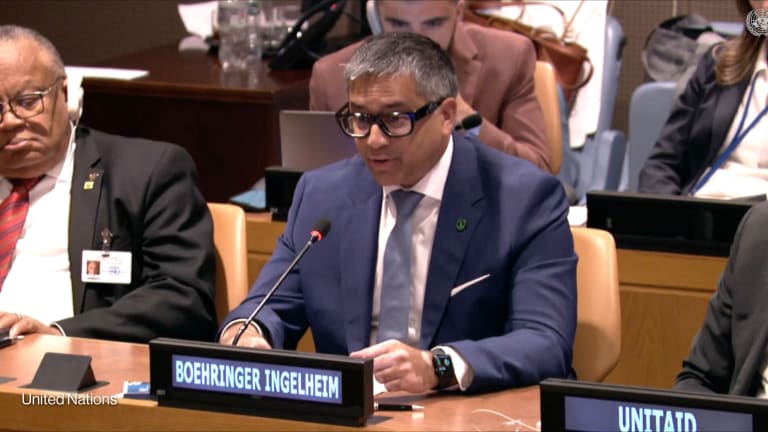
    Sponsored by Boehringer IngelheimRelated Stories - From promises to action on NCDs and mental health

    From promises to action on NCDs and mental health

    Sponsored by HemoCueRelated Stories - Building stronger primary care to tackle NCDs and mental health

    Building stronger primary care to tackle NCDs and mental health

    Sponsored by Philips and RocheRelated Stories - Invest in diagnostics to win the health fight

    Invest in diagnostics to win the health fight

    Most Read

    • 1
      Building hope to bridge the surgical access gap
    • 2
      Turning commitments into action: Financing a healthier future after HLM4
    • 3
      Why women’s health innovation needs long-term investment
    • 4
      Innovation meets impact: Fighting malaria in a warming world
    • 5
      How country-led ecosystems drive sustainable health impact
    • News
    • Jobs
    • Funding
    • Talent
    • Events

    Devex is the media platform for the global development community.

    A social enterprise, we connect and inform over 1.3 million development, health, humanitarian, and sustainability professionals through news, business intelligence, and funding & career opportunities so you can do more good for more people. We invite you to join us.

    • About us
    • Membership
    • Newsletters
    • Advertising partnerships
    • Devex Talent Solutions
    • Post a job
    • Careers at Devex
    • Contact us
    © Copyright 2000 - 2025 Devex|User Agreement|Privacy Statement