


• News
    • Latest news
    • News search
    • Health
    • Finance
    • Food
    • Career news
    • Content series
    • Focus areas
    • Try Devex Pro
  • Jobs
    • Job search
    • Post a job
    • Employer search
    • CV Writing
    • Upcoming career events
    • Try Career Account
  • Funding
    • Funding search
    • Funding news
  • Talent
    • Candidate search
    • Devex Talent Solutions
  • Events
    • Upcoming and past events
    • Partner on an event
  • Post a job
  • About
      • About us
      • Membership
      • Newsletters
      • Advertising partnerships
      • Devex Talent Solutions
      • Contact us
Join DevexSign in
Join DevexSign in

News

  • Latest news
  • News search
  • Health
  • Finance
  • Food
  • Career news
  • Content series
  • Focus areas
  • Try Devex Pro

Jobs

  • Job search
  • Post a job
  • Employer search
  • CV Writing
  • Upcoming career events
  • Try Career Account

Funding

  • Funding search
  • Funding news

Talent

  • Candidate search
  • Devex Talent Solutions

Events

  • Upcoming and past events
  • Partner on an event
Post a job

About

  • About us
  • Membership
  • Newsletters
  • Advertising partnerships
  • Devex Talent Solutions
  • Contact us
  • My Devex
  • Update my profile % complete
  • Account & privacy settings
  • My saved jobs
  • Manage newsletters
  • Support
  • Sign out
Latest newsNews searchHealthFinanceFoodCareer newsContent seriesFocus areasTry Devex Pro
    • News
    • The future of US aid

    Is PEPFAR a Trump budget winner? Not so fast...

    In Trump's skinny budget, international HIV programs look like a rare bright spot among global health and development programs targeted for deep cuts. But health experts are urging caution before jumping to that conclusion.

    By Michael Igoe // 24 March 2017
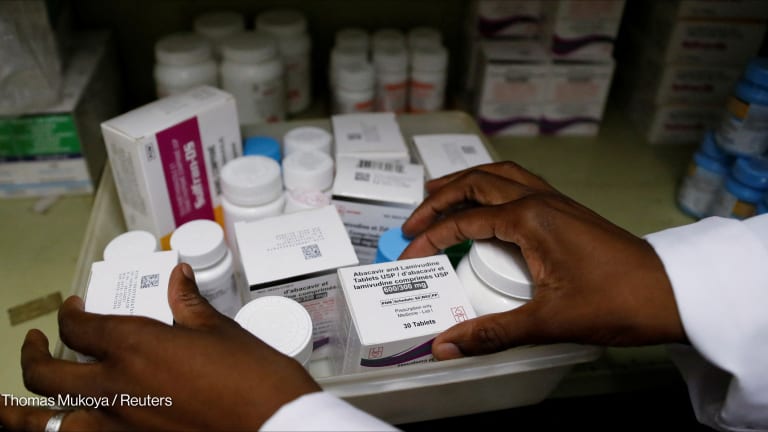
    Global health leaders in the United States are urging development advocates to think twice before declaring international HIV and AIDS programs safe from President Donald Trump’s pursuit of sweeping foreign affairs budget cuts. The budget outline Trump released last week was full of bad news for U.S. global development programs and implementing organizations. The White House singled out foreign assistance for aggressive cuts in its effort to boost military spending without blowing up the budget deficit — even though aid programs make up less than 1 percent of the federal budget. Trump’s “skinny budget” called for a 28 percent cut to foreign affairs spending — which climbs to 37 percent when all the relevant funding streams are taken into account — and White House Budget Director Mick Mulvaney suggested foreign assistance, not diplomacy, would absorb the bulk of it. Amid the general doom and gloom, some media outlets thought they found a few “winners.” The President’s Emergency Plan for AIDS Relief — or PEPFAR — was one budget line some commentators pointed to as a lone foreign assistance survivor in a budget outline designed to signal a shift in U.S. spending away from development assistance and toward military readiness. Devex spoke to the leader of one U.S. global health organization who received congratulatory emails from colleagues who viewed a single sentence in the president’s spending blueprint as a budgetary victory for the flagship, multi-billion dollar health initiative. Vox called the fight against HIV one the Trump budget’s two health “winners.” Laurie Garrett, a global health expert and Council on Foreign Relations senior fellow, was similarly relieved. “Crucially, the cuts do not include overseas programs that specifically target child vaccination, HIV, TB or malaria,” Garrett wrote in a CFR blog. It’s not clear, however, if the White House skinny budget is actually making those promises. The relevant budget text says the president’s spending plan — which is expected to arrive with greater detail sometime in May — “provides sufficient resources to maintain current commitments and all current patient levels on HIV/AIDS treatment under [PEPFAR].” U.S. global health experts say the budget language is too vague to warrant too much optimism, and the integration of global health and development programs means that cuts in other areas could still harm efforts to achieve an AIDS-free generation. “On the one hand, the skinny budget — which does not have a lot of detail — does call out PEPFAR, and I think that’s an intentional signal, which is good for PEPFAR,” said Jen Kates, vice president and director of global health & HIV policy at the Kaiser Family Foundation. “On the other hand it is not specific about any funding amount,” she added. PEPFAR’s security may depend on what the White House considers to be “sufficient,” what they regard as a “commitment,” and how narrowly they wish to define “treatment.” The language in the budget proposal leaves plenty of room for the administration’s “legal and the legislative wizards” to interpret their funding obligation, said the leader of a U.S. global health organization who spoke anonymously to discuss sensitive funding issues. “Define ‘current patient levels.’ Does that mean no more expansion whatsoever? How much of the last appropriated budget for PEPFAR was for further expansion of testing and treating, for example? Or for prevention activities around DREAMS?” the health leader asked, referring to the $385 million partnership to reduce HIV infections among adolescent girls and young women in 10 sub-Saharan African countries. PEPFAR’s 2017 congressional budget justification describes numerous instances where appropriated funds will be used to expand HIV treatment and prevention programs. Does Trump’s budget outline suggest such expansion is off the table, or does it suggest PEPFAR’s budget request for 2018 will be the same as its current budget? At this point, it’s not possible to judge, experts say. “The only clear signal we really do have on the blueprint is that the administration is very much interested in cuts and not doing business as usual when it comes to foreign assistance,” said Loyce Pace, executive director of the Global Health Council. “I wouldn’t say anyone in our community is celebrating. I think we would see that as a bit premature,” she added. In addition to treating people infected with HIV, one of PEPFAR’s most promising functions right now is preventing new infections, Kates said. “PEPFAR and the Global Fund and other partners are actually starting to see a real drop in new infections and turning the epidemic around. The question or the concern is — if there is a reduced budget, will PEPFAR be able to see those gains? That really is the answer to the HIV epidemic, is driving down new infections,” she said. At some point it comes down to a basic math problem. Of the roughly $45 billion foreign affairs budget, global health spending accounts for about 20 percent, and about two-thirds of that is made up of PEPFAR and contributions to the Global Fund to Fight HIV, Tuberculosis and Malaria, another budget line Trump’s budget appears to support. If Trump wants to see cuts at the scale he is proposing — roughly one-third of all foreign affairs spending when all accounts are included — it is difficult to imagine how he would accomplish that without targeting big-ticket items, including PEPFAR. “I don’t know if the math will allow it if they’re really going to stick to their guns on the numbers and the scope of the cutbacks that they’re talking about,” the global health leader said. A State Department spokesperson said the president’s 2018 budget request will include more details on specific funding and declined to speculate on the final budget request for PEPFAR or any other program. The spokesperson added, “PEPFAR is better positioned than ever to have the greatest impact with every dollar to do two things: save lives and change the course of the pandemic.” PEPFAR benefits from some very well-placed advocates inside the administration. Vice President Mike Pence — who testified before Congress on behalf of PEPFAR’s reauthorization — and first-daughter Ivanka Trump both reportedly played a role in retaining Ambassador Deborah Birx, an Obama appointee, as U.S. global AIDS coordinator. In a recent interview with Devex, conducted before the skinny budget was released, Birx suggested that better data and efficiency gains will allow PEPFAR to weather any cuts. “If there are budget cuts, we will be able to make them in the areas that won't impact our ability to control this epidemic,” she said. But, even if PEPFAR does manage to escape the Trump administration’s budget request unscathed, supporters of U.S. HIV/AIDS programs should likely be wary of declaring victory. Global health programs including PEPFAR have undergone a gradual shift from treating individual diseases — by delivering health commodities — to more integrated approaches that include building local and national health systems and addressing conditions that make people vulnerable to disease in the first place. That means health and development programs are increasingly intertwined in the places where they operate. If PEPFAR’s budget comes at the expense of other global health and development programs, it could still hamper the effort to achieve an AIDS-free generation. “We’ve actually done such a good job in recent years as a community to integrate health delivery on the ground,” Pace said. “Pulling one thread is really going to affect the entire landscape.” Trump’s proposed cuts should not push the development community into turf battles pitting one program against another, Pace said. “We can either all win or all lose,” she said. Stay tuned to Devex for more news and analysis of what the Trump administration means for global development. Read more coverage here and subscribe to The Development Newswire.

    Related Stories

    How will America's new global health strategy change PEPFAR?
    How will America's new global health strategy change PEPFAR?
    Senate blocks $400M cut to PEPFAR, but it's a shell of its former self
    Senate blocks $400M cut to PEPFAR, but it's a shell of its former self
    US Congress clears Trump's $9 billion rescissions package
    US Congress clears Trump's $9 billion rescissions package
    Trump's $5B 'pocket rescission' escalates foreign aid funding fight
    Trump's $5B 'pocket rescission' escalates foreign aid funding fight

    Global health leaders in the United States are urging development advocates to think twice before declaring international HIV and AIDS programs safe from President Donald Trump’s pursuit of sweeping foreign affairs budget cuts.

    The budget outline Trump released last week was full of bad news for U.S. global development programs and implementing organizations. The White House singled out foreign assistance for aggressive cuts in its effort to boost military spending without blowing up the budget deficit — even though aid programs make up less than 1 percent of the federal budget.

    Trump’s “skinny budget” called for a 28 percent cut to foreign affairs spending — which climbs to 37 percent when all the relevant funding streams are taken into account — and White House Budget Director Mick Mulvaney suggested foreign assistance, not diplomacy, would absorb the bulk of it.

    This article is free to read - just register or sign in

    Access news, newsletters, events and more.

    Join usSign in
    • Trade & Policy
    • Global Health
    • Funding
    • United States
    Printing articles to share with others is a breach of our terms and conditions and copyright policy. Please use the sharing options on the left side of the article. Devex Pro members may share up to 10 articles per month using the Pro share tool ( ).

    About the author

    • Michael Igoe

      Michael Igoe@AlterIgoe

      Michael Igoe is a Senior Reporter with Devex, based in Washington, D.C. He covers U.S. foreign aid, global health, climate change, and development finance. Prior to joining Devex, Michael researched water management and climate change adaptation in post-Soviet Central Asia, where he also wrote for EurasiaNet. Michael earned his bachelor's degree from Bowdoin College, where he majored in Russian, and his master’s degree from the University of Montana, where he studied international conservation and development.
    Search for articles

    Related Stories

    The Future of Global HealthRelated Stories - How will America's new global health strategy change PEPFAR?

    How will America's new global health strategy change PEPFAR?

    Global HealthRelated Stories - Senate blocks $400M cut to PEPFAR, but it's a shell of its former self

    Senate blocks $400M cut to PEPFAR, but it's a shell of its former self

    The Trump effectRelated Stories - US Congress clears Trump's $9 billion rescissions package

    US Congress clears Trump's $9 billion rescissions package

    The Trump EffectRelated Stories - Trump's $5B 'pocket rescission' escalates foreign aid funding fight

    Trump's $5B 'pocket rescission' escalates foreign aid funding fight

    Most Read

    • 1
      Building hope to bridge the surgical access gap
    • 2
      Turning commitments into action: Financing a healthier future after HLM4
    • 3
      Why women’s health innovation needs long-term investment
    • 4
      Innovation meets impact: Fighting malaria in a warming world
    • 5
      How country-led ecosystems drive sustainable health impact
    • News
    • Jobs
    • Funding
    • Talent
    • Events

    Devex is the media platform for the global development community.

    A social enterprise, we connect and inform over 1.3 million development, health, humanitarian, and sustainability professionals through news, business intelligence, and funding & career opportunities so you can do more good for more people. We invite you to join us.

    • About us
    • Membership
    • Newsletters
    • Advertising partnerships
    • Devex Talent Solutions
    • Post a job
    • Careers at Devex
    • Contact us
    © Copyright 2000 - 2025 Devex|User Agreement|Privacy Statement