New effort to 'decolonise' African education research
How to "decolonise" African research and get more funding going directly to the continent's academics — so that local policy can be informed by local evidence and context — was the topic of a workshop in Nairobi last week.
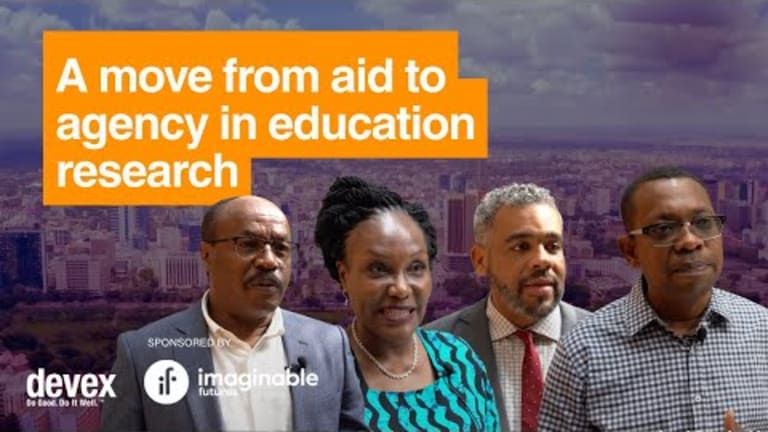
By Sophie Edwards // 10 October 2023Education academics from across Africa gathered in Kenya last week to come up with solutions to help “decolonise” African research, which they say is comparatively underfunded and invisible next to evidence produced by academics from the global north. Despite high quality research produced in Africa, data show that only a tiny fraction gets published in international journals, if at all. Much languishes as “gray literature,” which means it is not published in journals or books, including evaluation reports and working papers which are often unavailable online. In addition, data show a clear funding gap between African education research organizations, which get far less money than those based in Europe and North America, even when they do much of the research. This is colonialist and represents a huge missed opportunity to drive locally-informed policymaking and practice, experts say, which is key to improving dismal learning outcomes across the continent and meeting the ambitious 2030 sustainable development agenda. Sustainable Development Goal 4 covers education and includes the target of free, quality universal primary and secondary schooling by 2030. “This is the legacy of colonialism and systemic bias and it is imperative that we decolonise such an unfortunate legacy,” Daniel Hawkins Iddrisu, a researcher at the Research for Equitable Access and Learning, or REAL, Centre at Cambridge University, wrote to Devex. According to Iddrisu, the current bias towards non-African research is perpetuating “African underdevelopment.” “The true knowledge and evidence that can guide solutions and interventions are thrown away and external solutions are borrowed and forced to fit in a totally different context,” he added. Lucy Heady, CEO of Education Sub-Saharan Africa, or ESSA, which co-convened the two-day workshop in Nairobi with the REAL Centre, agreed and called for a greater focus on locally relevant research. “If we want to achieve SDG 4, we have to re-center knowledge on education in Africa to build up the continent's ability to shape and drive the agenda,” Heady told Devex during a phone interview. In response, ESSA and the REAL Centre organized a workshop to bring together more than 50 education academics from across Africa to come up with demand-driven, practical solutions around how funders and policymakers can better support them. ESSA has seed funding from the Hilton Foundation and the Bill & Melinda Gates Foundation to pilot some of these solutions. The event featured scholars working on foundational numeracy and literacy and early childhood education, which are the funders’ respective priority areas. Ben Piper, head of global education at the Gates Foundation, emphasized the need to foster homegrown intellectual leadership across Africa. “To improve foundational literacy and numeracy outcomes in sub-Saharan Africa, we must re-center knowledge, intellectual leadership, and political will for education on the continent,” Piper said in an email. “The true knowledge and evidence that can guide solutions and interventions are thrown away and external solutions are borrowed and forced to fit in a totally different context.” --— Daniel Hawkins Iddrisu, researcher, Research for Equitable Access and Learning “African education researchers are generally highly motivated and have the ability to produce high quality research. However, support is needed at the individual, institutional and systems levels to enable them to succeed and have positive and sustainable impact on education,” he added. More direct funding The need for more funding to be channeled directly to African scholars was a dominant theme. Currently, grants usually go first to universities or think tanks in the global north, which then sub-grant to African-based academics. Meanwhile, African researchers are often seen as “second-class” and relegated to being “data collectors” when they should be leading the work and setting the research priorities, Iddrisu told Devex. An obvious solution is for funding to be paid directly to African researchers, a number of workshop attendees said. However, they also need to up their game to attract funding, according to John Mugo, executive director of Zizi Afrique Foundation. “There is more money out there than we need but the question is, ‘where is our agency to connect with the opportunities?’ We should not sit and complain, but go out there and find it,” Mugo, also an academic, said during the workshop. He called on academics to “improve the quality” of their research in order to be more competitive with other non-African researchers, while working more closely with policymakers to “co-create” research problems. “You need to involve policymakers in the process,” Mugo said, adding, “rather than producing results and taking them to policymakers, think about co-creating the research problem with them because then they will be able to co-own it.” This need to connect with policymakers was echoed by Kolosa Nonkenge, assistant director at South Africa’s department for basic education. “All of the research means nothing if it’s not implemented and sustainable within the system,” she said during the workshop. Other challenges Other issues raised during the session included the difficulties facing female and early career researchers, who often struggle to access funding and get published. Data from the African Education Research Database, or AERD, which is hosted by ESSA and is a collaboration between ESSA and the REAL Centre, shows that far more male authors’ work is published in international journals compared to women’s. “Women, where is our research? Are we publishing?” Eunice Mueni Williams, research associate at the REAL Centre, said during the workshop. AERD seeks to map the African education research landscape by collating education research published in 2010 onwards. This includes peer-reviewed articles, chapters, Ph.D. theses, and working papers. The database, which is currently funded by the Hilton and Gates foundations, aims to raise the visibility and availability of African education research while highlighting the major gaps and disparities between research from the global south and north. The database also shows that there is very little collaboration among researchers in sub-Saharan Africa; instead, they work in isolation or competition to the detriment of the education sector, presenters said. Furthermore, a lot of education research funding goes to health-related programming, including nutrition, while learning through play and increasing access for children with disabilities gets very little funding, Williams said. Another challenge is the vast majority of African research published internationally is written in English, while very little is in French or other dominant languages on the continent. This makes it difficult for French-speaking researchers to make their work visible and potentially to access non-French research. Closing the workshop, Pauline Essah, director of research at ESSA, said there was reason for hope and called on participants to collaborate more. “The funders are listening … and hopefully the tide is turning in our favor but we also need to be bold and to amplify our voices,” she said. Update, Oct. 11, 2023: This article has been updated to clarify who the current funders of the AERD are and when it started collating research.
Education academics from across Africa gathered in Kenya last week to come up with solutions to help “decolonise” African research, which they say is comparatively underfunded and invisible next to evidence produced by academics from the global north.
Despite high quality research produced in Africa, data show that only a tiny fraction gets published in international journals, if at all. Much languishes as “gray literature,” which means it is not published in journals or books, including evaluation reports and working papers which are often unavailable online.
In addition, data show a clear funding gap between African education research organizations, which get far less money than those based in Europe and North America, even when they do much of the research.
This article is free to read - just register or sign in
Access news, newsletters, events and more.
Join usSign inPrinting articles to share with others is a breach of our terms and conditions and copyright policy. Please use the sharing options on the left side of the article. Devex Pro members may share up to 10 articles per month using the Pro share tool ( ).
Sophie Edwards is a Devex Contributing Reporter covering global education, water and sanitation, and innovative financing, along with other topics. She has previously worked for NGOs, and the World Bank, and spent a number of years as a journalist for a regional newspaper in the U.K. She has a master's degree from the Institute of Development Studies and a bachelor's from Cambridge University.