• News
    • Latest news
    • News search
    • Health
    • Finance
    • Food
    • Career news
    • Content series
    • Focus areas
    • Try Devex Pro
  • Jobs
    • Job search
    • Post a job
    • Employer search
    • CV Writing
    • Upcoming career events
    • Try Career Account
  • Funding
    • Funding search
    • Funding news
  • Talent
    • Candidate search
    • Devex Talent Solutions
  • Events
    • Upcoming and past events
    • Partner on an event
  • Post a job
  • About
      • About us
      • Membership
      • Newsletters
      • Advertising partnerships
      • Devex Talent Solutions
      • Contact us
Join DevexSign in
Join DevexSign in

News

  • Latest news
  • News search
  • Health
  • Finance
  • Food
  • Career news
  • Content series
  • Focus areas
  • Try Devex Pro

Jobs

  • Job search
  • Post a job
  • Employer search
  • CV Writing
  • Upcoming career events
  • Try Career Account

Funding

  • Funding search
  • Funding news

Talent

  • Candidate search
  • Devex Talent Solutions

Events

  • Upcoming and past events
  • Partner on an event
Post a job

About

  • About us
  • Membership
  • Newsletters
  • Advertising partnerships
  • Devex Talent Solutions
  • Contact us
  • My Devex
  • Update my profile % complete
  • Account & privacy settings
  • My saved jobs
  • Manage newsletters
  • Support
  • Sign out
Latest newsNews searchHealthFinanceFoodCareer newsContent seriesFocus areasTry Devex Pro
    • Opinion
    • Development Finance

    Opinion: A fair future for Africa starts with true and systemic IMF reform

    Kenya's debt crisis has exposed flaws in a global financial system designed 80 years ago. Reform must prioritize an economy that works for the people and the planet.

    By Jack Odiwa // 02 October 2024
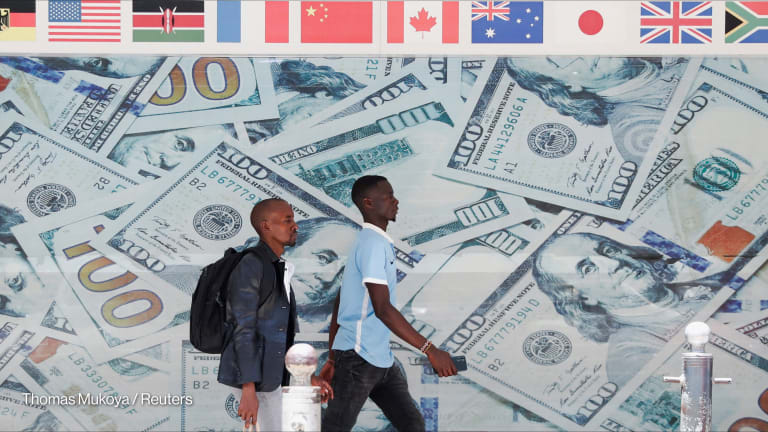
    As U.N. Secretary-General António Guterres said at the Summit of the Future last week, global governance and financial systems “reflect a bygone era,” and they are in urgent need of reform. For those of us living in Kenya, such reform cannot come soon enough. Kenya has been in the news for its recent protests, where more than 60 people lost their lives. Although complex, these demonstrations were largely sparked by the International Monetary Fund’s pressure on the Kenyan government to pass a new finance bill that imposed taxes on essential goods such as bread, agricultural inputs, fuel, and sanitary pads. These painful austerity measures and regressive taxes were required for Kenya to qualify for a $2.7 billion loan from the IMF. While the general public are struggling to pay for basic items, the government introduced a tax exemption for the importation of aircrafts, including helicopters and spare parts. People are angry because the conditions attached to these loans affect our everyday lives, particularly girls, women, and people who are vulnerable, including small-scale farmers. Demonstrators asked Kenyan President William Ruto to withdraw from the now-defunct IMF-driven finance bill with placards reading “IMF, keep your hands off Kenya.” People are also angry because of the lack of transparency and accountability attached to the loans. Who is Kenya borrowing from, how much, and what are the conditions? The general public is greatly affected by the consequences of these loans, but knows very little about the details. They may see the opulent lifestyles of the politicians but very little in terms of benefits from the loans. Kenya has been borrowing from the IMF and World Bank for almost 50 years, with significant acceleration under then-President Uhuru Kenyatta from 2013. He borrowed heavily for large infrastructure projects such as roads, railways, and dams, which were supposed to drive economic growth but have left Kenya drowning in debt. Today, due to these lending and borrowing practices, the nation owes a staggering $80 billion in domestic and foreign public debt. More troubling, following IMF’s advice, Kenya spends more on servicing this debt than on education, social protection, or health care, sectors critical for its long-term development and sustainable economic growth. President Ruto said that for every 10 Kenyan shilling, 7 is spent on debt repayment. The result? The Kenyan government is freezing employment in the health and education sectors; while the health system is struggling without enough doctors and nurses, and children in rural areas are not receiving even the most basic vaccines, and schools are not receiving the funds they need to run. This is not just a financial problem; it is a political one with consequences for society and the climate. A neocolonial system perpetuated by the IMF Founded 80 years ago, it’s not surprising that the Bretton Woods institutions of the IMF and the World Bank don’t work for African countries like Kenya. After all, these institutions were created in the 1940s, a time when most of Africa was still colonized, representing U.S. and Eurocentric colonial interests. The neocolonial relationship has endured, trapping countries like Kenya in a cycle of debt and dependency, all while exporting raw resources with little to show for it in terms of industrial development or poverty reduction. The IMF, the so-called lender of last resort, operates on a quota system where voting power is determined by the size of a member’s economy. The United States, for example, holds 16.5% of the vote share, while the seven largest European nations hold another 21.5%. In stark contrast, 46 countries in sub-Saharan Africa hold just 4.7%. The U.S. has a veto on any major IMF decisions since they require 85% approval and has used this veto to persistently block any progress in giving the global south a greater voice. Several quota reforms have resulted in only three board seats allocated to the whole of Africa, out of 25 effective in November, while the U.S., U.K., France, Germany, Saudi Arabia, Japan, and China each have individual seats. This imbalance extends to the IMF's allocation of Special Drawing Rights — an international reserve asset which could be a game-changer in tackling the debt crisis. After the COVID-19 crisis, the IMF issued the largest amount of SDRs in history, but the distribution was far from equitable. “We need a level and transparent playing field in the global governance structure where creditors and borrowers can negotiate as equals.” --— The U.S. received $113 billion, while the entire African continent, home to 1.5 billion people, received $33 billion — less than a third of that amount. For Kenya, this translated into $737.6 million, an amount grossly inadequate to address the scale of the country’s challenges. Many African countries, including Malawi, used their SDRs to repay their debt, but their health systems were overwhelmed; there was an acute lack of vaccines, testing facilities, personal protective equipment for health care workers, and hundreds of thousands of people lost their livelihoods during the pandemic. Shortly after the COVID-19 crisis, Kenya experienced its worst drought in almost 40 years and then devastating floods. However, facing a high risk of debt distress, it has limited funds to address climate change. The few funds that Kenya does receive for climate change comes in the forms of loans and is primarily to address transitioning to renewable energy sources, rather than climate change adaptation and loss and damage. Together with responsible principles of lending and borrowing, we need a level and transparent playing field in the global governance structure where creditors and borrowers can negotiate as equals to meet debt servicing, human rights obligations, development objectives, and climate financing needs — where African nations decide their own priorities. While the Summit of the Future offered a timely opportunity to address these issues, the language of the draft document was disappointingly vague. The Pact for the Future calls for a reform in the international financial architecture “to strengthen the voice and representation of developing countries,” but does little to outline how this would be achieved. A proposed review of the sovereign debt architecture, led by the IMF, lacks credibility as the fund itself has a vested interest in the current system. How can we expect meaningful change when the institution that benefits from the status quo is tasked with reforming it? What Africa needs from global financial reform We need a financial system that prioritizes equity and fairness, an economy that works for the people and the planet: a “Rights-Based Economy.” Instead of the current “one dollar, one vote” system at the IMF, African countries should have a voice in line with their needs and their populations. This means comprehensively reforming the governance structures of the IMF and World Bank to significantly increase the voting power of the global south, where every country, regardless of its economic size, has an equal say in decisions that affect their futures. We also need a multilateral debt workout mechanism under the United Nations that addresses unsustainable debt. This should include extensive debt cancellation for nations in distress, allowing them to prioritize human development and climate adaptation and mitigation over debt repayment. All creditors — whether multilateral, bilateral, or private — must be part of these restructuring processes and bound to the terms. This is particularly important in Kenya, where the majority of the loans are now provided by private creditors. The stakes for African countries such as Kenya are too high. If global financial architecture remains unchanged, we risk perpetuating, even exacerbating, cycles of poverty, debt, and vulnerability to climate change. The text in the Pact for the Future calling for reform of financial architecture is more than welcome, but only if the world is willing to shed the colonial shackles of the past and embrace true and systemic reform.

    Related Stories

    Ghana’s debt deal stabilizes economy, but not living costs
    Ghana’s debt deal stabilizes economy, but not living costs
    G20 panel calls for a new debt refinancing plan for low-income nations
    G20 panel calls for a new debt refinancing plan for low-income nations
    How debt is undermining countries’ fight against climate change
    How debt is undermining countries’ fight against climate change
    Why the ‘vicious cycle’ of debt needs to be stopped
    Why the ‘vicious cycle’ of debt needs to be stopped

    As U.N. Secretary-General António Guterres said at the Summit of the Future last week, global governance and financial systems “reflect a bygone era,” and they are in urgent need of reform. For those of us living in Kenya, such reform cannot come soon enough.

    Kenya has been in the news for its recent protests, where more than 60 people lost their lives. Although complex, these demonstrations were largely sparked by the International Monetary Fund’s pressure on the Kenyan government to pass a new finance bill that imposed taxes on essential goods such as bread, agricultural inputs, fuel, and sanitary pads.

    These painful austerity measures and regressive taxes were required for Kenya to qualify for a $2.7 billion loan from the IMF. While the general public are struggling to pay for basic items, the government introduced a tax exemption for the importation of aircrafts, including helicopters and spare parts.

    This article is free to read - just register or sign in

    Access news, newsletters, events and more.

    Join usSign in

    Read more:

    ► African countries urged to look internally to manage debt

    ► Can African countries overcome the cycle of debt?

    ► Global south now repays more in debt than it gets in grants and loans (Pro)

    • Banking & Finance
    • Funding
    • Economic Development
    • International Monetary Fund (IMF)
    • World Bank Group
    • Kenya
    Printing articles to share with others is a breach of our terms and conditions and copyright policy. Please use the sharing options on the left side of the article. Devex Pro members may share up to 10 articles per month using the Pro share tool ( ).
    The views in this opinion piece do not necessarily reflect Devex's editorial views.

    About the author

    • Jack Odiwa

      Jack Odiwa

      Jack Odiwa is a seasoned policy advocacy and campaigns leader with more than eight years’ experience in Africa. He is currently the Africa advocacy adviser at Christian Aid. He has previously worked in similar regional advocacy roles within INGOs, including Mercy Corps, ActionAid, and Plan International. Jack is also currently a national chairperson of Kenya's Socio-Economic and Financial Inclusion Sector Working Group, which is a platform that convenes diverse stakeholders and policy makers.

    Search for articles

    Related Stories

    Development FinanceRelated Stories - Ghana’s debt deal stabilizes economy, but not living costs

    Ghana’s debt deal stabilizes economy, but not living costs

    FinanceRelated Stories - G20 panel calls for a new debt refinancing plan for low-income nations

    G20 panel calls for a new debt refinancing plan for low-income nations

    Opinion: Climate FinanceRelated Stories - How debt is undermining countries’ fight against climate change

    How debt is undermining countries’ fight against climate change

    Devex @ World Bank-IMF 2025Related Stories - Why the ‘vicious cycle’ of debt needs to be stopped

    Why the ‘vicious cycle’ of debt needs to be stopped

    Most Read

    • 1
      How green bonds can close the infrastructure finance gap
    • 2
      From India to the world: Advancing quality maternal care at scale
    • 3
      Climate change mandates more innovation in yellow fever vaccines
    • 4
      Inside Mars, Inc.'s $1 billion pivot toward sustainability
    • 5
      Africa can pay for its own health if we choose efficiency over dependency
    • News
    • Jobs
    • Funding
    • Talent
    • Events

    Devex is the media platform for the global development community.

    A social enterprise, we connect and inform over 1.3 million development, health, humanitarian, and sustainability professionals through news, business intelligence, and funding & career opportunities so you can do more good for more people.

    • About us
    • Membership
    • Newsletters
    • Advertising partnerships
    • Devex Talent Solutions
    • Post a job
    • Careers at Devex
    • Contact us
    © Copyright 2000 - 2026 Devex|User Agreement|Privacy Statement