Opinion: As seen in Gaza, aid delivery without trust is not possible
Recent efforts to deliver aid in Gaza fly in the face of a preexisting U.N. mechanism built on trust and transparency.
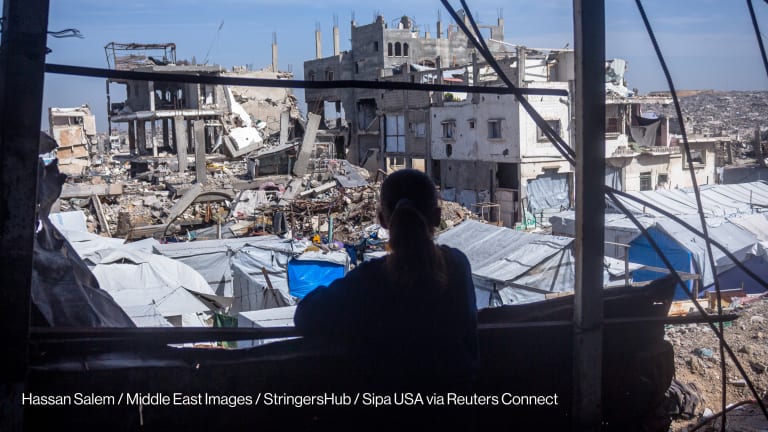
By Jorge Moreira da Silva // 29 May 2025Over the last few days, attempts at setting up a new aid delivery mechanism in Gaza — private, militarized, and without United Nations involvement — have threatened some fundamental pillars of humanitarian aid: transparency, accountability, and non-conditionality. In the world’s most fragile contexts, helping people is never just about logistics. It’s also fundamentally about trust. It is vital to look at what transparency and trust can achieve in humanitarian responses in Gaza and beyond. Without some degree of trust, you can’t negotiate, de-escalate, and ultimately respond to people’s needs. You can’t provide access to basic services or deliver essential goods. Without trust, even the best-intentioned relief efforts can falter. Yet in Gaza, an aid-distribution mechanism designed around transparency and trust already existed. How confidence-building mechanisms work to build trust Building trust requires systems that all parties — governments, communities, donors — can rely on. Mechanisms to foster trust, transparency, and accountability are key to response and recovery efforts in conflict zones. The U.N. is uniquely well-placed to support these processes because of its impartiality and neutrality. This is particularly important now, in an age defined by declining global trust in institutions. With the multilateral system under attack, confidence-building mechanisms go beyond a lifeline for communities in conflict. They also serve as a reminder that the international community can come together and achieve results for communities in need. UNOPS — the U.N. organization that I lead — works mostly in fragile and conflict-affected areas. We deliver infrastructure, procurement, and project management services in the most challenging contexts. Among other work, we manage some impactful U.N. confidence-building mechanisms. One example is in Yemen, where a decade of conflict, climate change, and a deteriorating economy have led to a dire humanitarian situation, with over half of the population in need of assistance and protection services. UNOPS helps to facilitate the flow of essential goods into Yemen to reach people in need. With the U.N. Office for the Coordination of Humanitarian Affairs, we established the U.N. Verification and Inspection Mechanism for Yemen in December 2015. We did this on behalf of the government of Yemen, the U.N., and its member states. The purpose was to support the monitoring and inspection services of commercial and bilateral assistance cargo destined for Yemeni Red Sea ports, which are not under the control of the government of Yemen. Since the beginning of its operations, the mechanism has facilitated the discharge of over 2,900 vessels. These vessels were transporting food, fuel, and other essential cargo, including medicine and humanitarian cargo. UNVIM has helped to facilitate the entry of over 36 million metric tons of food, over 18 million metric tons of fuel, and nearly 9 million metric tons of other cargo into Yemen. It has cut the average time that vessels wait for clearance to less than 24 hours, down from several days in May 2016. All of this data is available publicly. In Gaza, the situation is volatile and the stakes are extremely high, with its entire population — approximately 2.1 million people — at critical risk of famine. The need for trust to allow the U.N. and humanitarian partners to deliver for civilians has never been stronger. A preexisting aid delivery system in Gaza Prior to the most recent events, in 2023, the U.N. Security Council mandated the establishment of the UN2720 Mechanism for Gaza, which is set up to expedite, streamline, and accelerate the delivery of aid into Gaza. UNOPS designed and set up this mechanism. We developed a single, comprehensive humanitarian aid supply chain management system for Gaza — from the point when a humanitarian partner indicates an intention to send aid to the point of delivery in Gaza. And we designed systems to reduce multiple inspections and transloading points, so we could reduce delays at the screening points. We continue to manage the mechanism. “Aid in Gaza is running the risk of becoming conditional on political and military aims. We can not turn starvation into a bargaining chip.” --— Alongside this, UNOPS has also managed the humanitarian fuel mechanism, supporting the delivery, distribution, and monitoring of fuel for humanitarian operations inside Gaza. During the ceasefire at the start of the year, when the security conditions allowed, the mechanism worked effectively to temporarily alleviate the suffering of the population, bringing aid to those in need. Between Jan. 19 and March 2, through the mechanism, UNOPS ramped up its operations to deliver over 1 million liters of fuel per day, a tenfold increase from the previous average of 100,000 liters per day since the start of the conflict triggered by the Oct. 7, 2023, Hamas attack. Another testament that transparent, confidence-building mechanisms work. We pride ourselves on the design and implementation of these mechanisms. Yet the effective delivery of aid at the scale required will simply not be possible without political will, necessary security and safety guarantees, and an enabling environment. It will not be possible without trust. Aid in Gaza is running the risk of becoming conditional on political and military aims. We can not turn starvation into a bargaining chip. This sets a dangerous precedent for solutions that risk undermining the Security Council’s authority and fragmenting the urgently needed response amid a humanitarian catastrophe. This work may seem distant and technical. But it literally saves lives. Mechanisms such as UNVIM and UN2720 help build confidence that aid is not only reaching its destination, but doing so without inadvertently exacerbating conflict. And in an era when global trust in institutions is strained, they serve as a reminder that multilateralism can indeed work. In an increasingly violent world, trust is a lifeline. We have a moral responsibility to build that trust, so that we can deliver for people now and pave the way for a more peaceful and prosperous future.
Over the last few days, attempts at setting up a new aid delivery mechanism in Gaza — private, militarized, and without United Nations involvement — have threatened some fundamental pillars of humanitarian aid: transparency, accountability, and non-conditionality.
In the world’s most fragile contexts, helping people is never just about logistics. It’s also fundamentally about trust. It is vital to look at what transparency and trust can achieve in humanitarian responses in Gaza and beyond.
Without some degree of trust, you can’t negotiate, de-escalate, and ultimately respond to people’s needs. You can’t provide access to basic services or deliver essential goods. Without trust, even the best-intentioned relief efforts can falter. Yet in Gaza, an aid-distribution mechanism designed around transparency and trust already existed.
This article is free to read - just register or sign in
Access news, newsletters, events and more.
Join usSign inPrinting articles to share with others is a breach of our terms and conditions and copyright policy. Please use the sharing options on the left side of the article. Devex Pro members may share up to 10 articles per month using the Pro share tool ( ).
The views in this opinion piece do not necessarily reflect Devex's editorial views.
Jorge Moreira da Silva has been the executive director of UNOPS since April 2023. He has over 20 years of experience working on climate change, energy, and environment in the public and development sectors. He was previously the director of the Development Co-operation Directorate at OECD and Portugal’s minister for the environment, territorial planning, and energy, among other roles.