• News
    • Latest news
    • News search
    • Health
    • Finance
    • Food
    • Career news
    • Content series
    • Focus areas
    • Try Devex Pro
  • Jobs
    • Job search
    • Post a job
    • Employer search
    • CV Writing
    • Upcoming career events
    • Try Career Account
  • Funding
    • Funding search
    • Funding news
  • Talent
    • Candidate search
    • Devex Talent Solutions
  • Events
    • Upcoming and past events
    • Partner on an event
  • Post a job
  • About
      • About us
      • Membership
      • Newsletters
      • Advertising partnerships
      • Devex Talent Solutions
      • Contact us
Join DevexSign in
Join DevexSign in

News

  • Latest news
  • News search
  • Health
  • Finance
  • Food
  • Career news
  • Content series
  • Focus areas
  • Try Devex Pro

Jobs

  • Job search
  • Post a job
  • Employer search
  • CV Writing
  • Upcoming career events
  • Try Career Account

Funding

  • Funding search
  • Funding news

Talent

  • Candidate search
  • Devex Talent Solutions

Events

  • Upcoming and past events
  • Partner on an event
Post a job

About

  • About us
  • Membership
  • Newsletters
  • Advertising partnerships
  • Devex Talent Solutions
  • Contact us
  • My Devex
  • Update my profile % complete
  • Account & privacy settings
  • My saved jobs
  • Manage newsletters
  • Support
  • Sign out
Latest newsNews searchHealthFinanceFoodCareer newsContent seriesFocus areasTry Devex Pro
    • News
    • Women's Rights

    Opinion: 'Heroines of health' face risks amid women's rights rollback
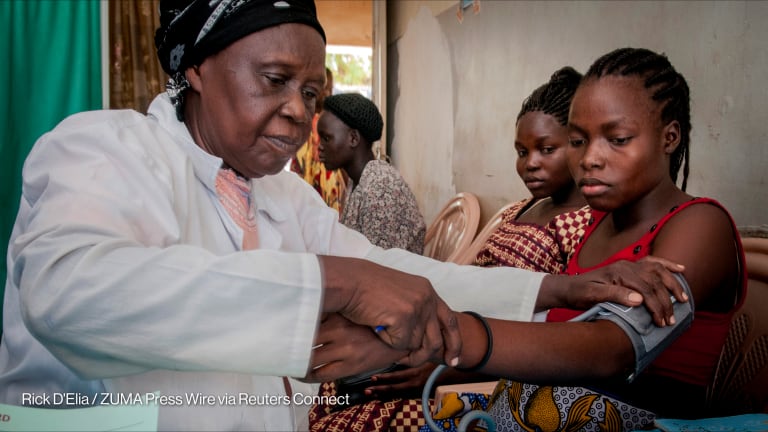
    The jobs of women health workers — like the 12 being honored as 'Heroines of Health' July 19 in Kigali, Rwanda — are more at risk than ever in the context of a global pushback on women’s rights and rise of so-called family values.

    By Dr. Choolwe Nkwemu Jacobs, Dr. Roopa Dhatt // 19 July 2023
    Preventing maternal deaths, giving contraceptive information to teenagers, getting clinical support for women in local communities: These are just some of the things motivating women health workers in Africa who will receive the 2023 Heroines of Health Awards in Kigali, Rwanda on July 19. This year’s awardees include community health workers, nurses, and doctors who, despite being from 10 different African countries and having different backgrounds and specialities, have a common backstory. They are women health workers who had to break through barriers throughout their careers to deliver the care they needed to give to their communities. Reading their stories, we were struck by the already difficult situations each of the heroines have faced. But we are more alarmed when we consider their hard-fought wins are at risk in the context of a global pushback on women’s rights. In the outcome of the Group of Seven leading industrial nations summit in Hiroshima, Japan, in May, heads of state made an extraordinary statement about sexual and reproductive health and rights, SRHR, in their accompanying universal health coverage commitments: “Given the well-coordinated and funded rollback on gender and rights movement at country and multilateral levels, the G7 will step up our efforts to work together on promoting SRHR and explore ways to assess the impact on sexual and reproductive health services and rights.” Their reference to a growing rollback — which was unusually undiplomatic — hit hard. This rollback is impacting women in all regions of the world. It includes Africa, where women and adolescent girls already have some of the world’s highest maternal death and morbidity rates, along with low access to modern contraceptive methods and safe abortions. Campaigns to convert or revert to “family values” will lead to more preventable deaths of women and young girls in pregnancy, childbirth, and from unsafe abortions. In many countries, women and girls are still suffering the negative impact of the pandemic on their health and well-being. “Family values” is code for the progressive denial of information, contraceptives, and safe abortion to women and girls — who are forced into bearing children earlier than they would plan to, having more children than they want, or dying sooner than they were meant to. The groups promoting family values are often funded by religious groups, many coming from the United States, where they are buoyed by recent wins from their well-planned campaign to roll back legal protections at the national level and language protecting women’s rights in United Nations agreements. They circle decision-making dialogues at the diplomatic and ministerial levels, applying unrelenting pressure to weaken and remove any recognition or commitments to sexual and reproductive health care and rights. Given our roles in the 2023 Heroines of Health Awards and as women leaders in health, we are appalled by the speed and scale of this global rollback on decades of progress. Women health workers such as the 12 heroines of health are the backbone of our health systems, comprising the majority of health workers and accounting for almost 90% of nurses and midwives globally. They play a crucial role in counseling and supporting women to access a range of modern contraceptives and make informed decisions about high-risk or unwanted pregnancies. Unfortunately, they face increasing challenges when carrying out this essential work. From violence and harassment within facilities to online abuse, from legal threats or defunded services, women health workers are on the front lines. Despite the intimidation, the dangers, and the moral injury, many put themselves at daily risk to provide care and support to women and girls. When SRHR services are defunded or deprioritized, health workers are unable to assist service users in need of vital information or support. This results in a significant gap in the provision of essential health care services, further marginalizing women and girls and impeding their right to health and bodily autonomy. Despite commitments made by United Nations member states almost 30 years ago, many women and girls around the world still lack access to comprehensive sex education, modern contraception, and safe abortion. The resilience of health systems, the protection of fundamental rights of women and girls, and ensuring SRHR all rely on the dedication, expertise, and bravery of women health workers. By recognizing their vital contributions and offering them the necessary support, we can foster progress of women's and girls' rights worldwide, ensuring improved well-being and upholding the principles of human rights. While health workers are facing increasing uncertainty and danger on the frontlines, those in the programmatic, policy, and political spaces must back them up with the strongest possible advocacy against the rights rollback campaign. We owe it to the millions of heroines of health who are doing their bit as agents of change and protection in their communities. Now leaders, with considerable experience and commanding respect in their roles, the 2023 heroines have something else in common — they are calling for action. As Ethiopian Heroine of Health Worknesh Kereta Abshiro said, “There are 33 million adolescents and youth in Ethiopia … We need to help them get age-appropriate SRH information and services, raise their own voices to participate in the policy-making process, engage in community action and become active citizens.”

    Related Stories

    How UK aid cuts will impact women’s health
    How UK aid cuts will impact women’s health
    Are abortion rights at risk as African governments negotiate with US?
    Are abortion rights at risk as African governments negotiate with US?
    How aid cuts are unraveling family planning progress in Mozambique
    How aid cuts are unraveling family planning progress in Mozambique
    Could Malawi’s landmark abortion ruling save lives — and public funds?
    Could Malawi’s landmark abortion ruling save lives — and public funds?

    Preventing maternal deaths, giving contraceptive information to teenagers, getting clinical support for women in local communities: These are just some of the things motivating women health workers in Africa who will receive the 2023 Heroines of Health Awards in Kigali, Rwanda on July 19.

    This year’s awardees include community health workers, nurses, and doctors who, despite being from 10 different African countries and having different backgrounds and specialities, have a common backstory. They are women health workers who had to break through barriers throughout their careers to deliver the care they needed to give to their communities.

    Reading their stories, we were struck by the already difficult situations each of the heroines have faced. But we are more alarmed when we consider their hard-fought wins are at risk in the context of a global pushback on women’s rights.

    This article is free to read - just register or sign in

    Access news, newsletters, events and more.

    Join usSign in

    More reading:

    ► A year on, the global impact of overturning Roe v. Wade abortion ruling

    ► Opinion: Biden administration has room for growth on reproductive rights

    ► Opinion: Stop mothers dying by letting women lead global health

    • Democracy, Human Rights & Governance
    • Social/Inclusive Development
    • Trade & Policy
    • Global Health
    • Heroines of Health Awards
    Printing articles to share with others is a breach of our terms and conditions and copyright policy. Please use the sharing options on the left side of the article. Devex Pro members may share up to 10 articles per month using the Pro share tool ( ).

    About the authors

    • Dr. Choolwe Nkwemu Jacobs

      Dr. Choolwe Nkwemu Jacobs

      Choolwe Jacobs, Ph.D., is co-founder and country lead for Women in Global Health, Zambia chapter. She is a public health specialist and social epidemiologist with over 15 years of extensive engagement in global health.

    • Dr. Roopa Dhatt

      Dr. Roopa Dhatt

      Dr. Roopa Dhatt is the executive director of Women in Global Health, the founder of Heroines of Health and one of the coordinators of the 100-organization-strong Alliance for Gender Equality and Universal Health Coverage.

    Search for articles

    Related Stories

    UK aidRelated Stories - How UK aid cuts will impact women’s health

    How UK aid cuts will impact women’s health

    Global HealthRelated Stories - Are abortion rights at risk as African governments negotiate with US?

    Are abortion rights at risk as African governments negotiate with US?

    Sexual and Reproductive Health and RightsRelated Stories - How aid cuts are unraveling family planning progress in Mozambique

    How aid cuts are unraveling family planning progress in Mozambique

    Global HealthRelated Stories - Could Malawi’s landmark abortion ruling save lives — and public funds?

    Could Malawi’s landmark abortion ruling save lives — and public funds?

    Most Read

    • 1
      Why NTDs are a prime investment for philanthropy
    • 2
      The silent, growing CKD epidemic signals action is needed today
    • 3
      Trump withdraws, defunds dozens of international orgs and treaties
    • 4
      Why capital without knowledge-sharing won't solve the NCD crisis
    • 5
      Why are 3.4 billion people still offline?
    • News
    • Jobs
    • Funding
    • Talent
    • Events

    Devex is the media platform for the global development community.

    A social enterprise, we connect and inform over 1.3 million development, health, humanitarian, and sustainability professionals through news, business intelligence, and funding & career opportunities so you can do more good for more people. We invite you to join us.

    • About us
    • Membership
    • Newsletters
    • Advertising partnerships
    • Devex Talent Solutions
    • Post a job
    • Careers at Devex
    • Contact us
    © Copyright 2000 - 2026 Devex|User Agreement|Privacy Statement