• News
    • Latest news
    • News search
    • Health
    • Finance
    • Food
    • Career news
    • Content series
    • Focus areas
    • Try Devex Pro
  • Jobs
    • Job search
    • Post a job
    • Employer search
    • CV Writing
    • Upcoming career events
    • Try Career Account
  • Funding
    • Funding search
    • Funding news
  • Talent
    • Candidate search
    • Devex Talent Solutions
  • Events
    • Upcoming and past events
    • Partner on an event
  • Post a job
  • About
      • About us
      • Membership
      • Newsletters
      • Advertising partnerships
      • Devex Talent Solutions
      • Contact us
Join DevexSign in
Join DevexSign in

News

  • Latest news
  • News search
  • Health
  • Finance
  • Food
  • Career news
  • Content series
  • Focus areas
  • Try Devex Pro

Jobs

  • Job search
  • Post a job
  • Employer search
  • CV Writing
  • Upcoming career events
  • Try Career Account

Funding

  • Funding search
  • Funding news

Talent

  • Candidate search
  • Devex Talent Solutions

Events

  • Upcoming and past events
  • Partner on an event
Post a job

About

  • About us
  • Membership
  • Newsletters
  • Advertising partnerships
  • Devex Talent Solutions
  • Contact us
  • My Devex
  • Update my profile % complete
  • Account & privacy settings
  • My saved jobs
  • Manage newsletters
  • Support
  • Sign out
Latest newsNews searchHealthFinanceFoodCareer newsContent seriesFocus areasTry Devex Pro
    • Opinion
    • Education

    Opinion: To work toward world peace, invest in education

    Peace and education are mutually reinforcing, recent research shows, so we need to reverse the decline in resources going toward education to build lasting peace.

    By Laura Frigenti // 01 February 2024
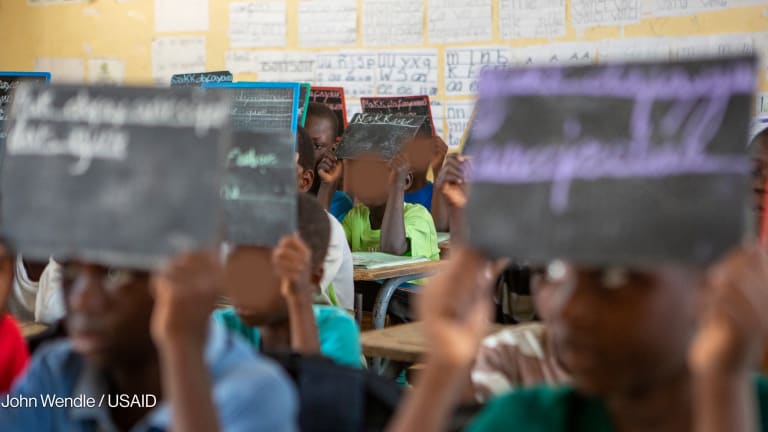
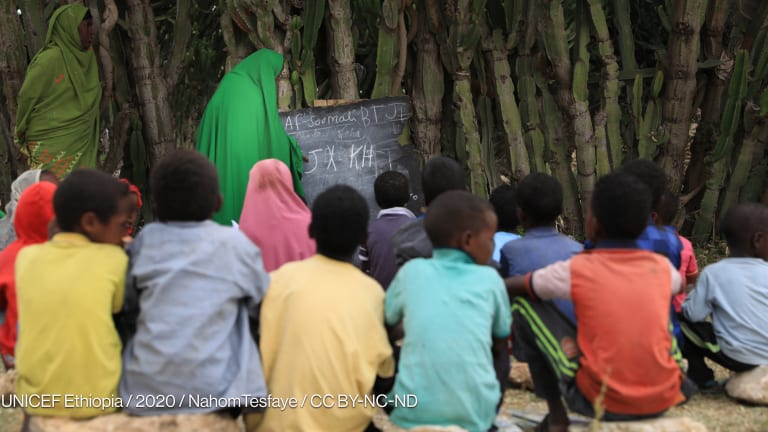
    The world urgently needs to rebuild the foundations that can underpin lasting peace, and yet too often, one of the most crucial of these, education, is often relegated to an afterthought. To highlight this oversight, this year’s International Day of Education celebrated in January is dedicated to peace, recognizing that education is an essential pillar of peace and security. The past decade has been marked by lethal conflicts, crises, and wars. 2022 was the deadliest year since 1994 when genocide and wars wreaked havoc in Rwanda and the defunct Yugoslavia, killing more than 238,000 people. 2023 ended on a grim note with devastating wars in Gaza, Sudan, and Ukraine that are still grinding on today. Across the globe, wars keep taking countless lives, displacing millions of civilians from their homes and leaving many more in dire need of lifesaving aid. Much ink has been spilled on the disastrous impacts of conflict on education, but most of the research on the reciprocal relationship between peace and education has been sparse and outdated. To fill this essential knowledge gap and provide evidence to drive sound policies, we, the Global Partnership for Education, have partnered with the Institute for Economics and Peace to break down and better understand the relationship between education and peace. Unsurprisingly, our research confirms correlations between education and peace. What comes as a surprise is the extent to which education and peace are mutually reinforcing. Our report shows that countries with higher primary school completion rates are in general more peaceful. In addition, countries that enjoy high levels of peacefulness have secondary school completion rates of 99%. On the other hand, countries that suffer low levels of peacefulness have average secondary school completion rates of only 52%. Analysis of a range of education and peacefulness indicators showed that countries seeing improvements in education also enjoy more overall social and political stability overall, and that the opposite is also true: Countries with low educational levels tend to experience a higher occurrence and intensity of internal conflict. In other words, better performance in education tends to reduce the severity and duration of societal violence and save lives. More than any other education indicator, the duration and quality of schooling can be a powerful force to blunt the intensity of internal conflict and reduce the likelihood of future unrest. Last but not least, across the countries that our report examined, improvements in peacefulness also saw more investment in education. Countries that invest more in education have, on average, higher levels of peacefulness. For example, in 2020, Namibia, one of the most peaceful countries in Africa, had the sixth-highest rate of government investment in education as a percentage of GDP globally. Today, resources dedicated to education in middle- and lower-income countries have been dwindling as national budgets grapple with growing fiscal deficits and public debt in the wake of the COVID-19 pandemic, geopolitical instability, and climate crisis. Since 2020, education budgets in nearly half of low-income countries have dropped by almost 14%. Just a 1% increase in external debt has been associated with nearly a 3% decrease in education spending. While cuts to education budgets may help relieve budgets in the short term, they are depriving economies of longer-term development. Moreover, there has been a drop in foreign aid to education. According to recent data by the Organisation for Economic Co-operation and Development, official development assistance to education dropped to under 10% of total aid in the first year of the pandemic from nearly 12% a decade earlier. And no rebound is in sight. Deprioritizing national budgets and foreign aid to education is a shortsighted choice that can only render sustainable development and peace more elusive. This year began with a dismal global outlook for peace, but we can restore hope by urgently investing more in education. Mounting evidence shows that education is a smart, mutually sustaining investment in prosperity and peace. We need to reverse the decline in resources to education while finding other ways, such as debt restructuring, to redirect funds to quality learning. This can allow us all, governments and donors, to live up to our collective responsibility of giving every girl and boy the opportunity to get the knowledge and skills they need to usher in a more peaceful and prosperous future.

    Related Stories

    Turning the funding crisis into an education opportunity
    Turning the funding crisis into an education opportunity
    ‘Moonshot’ education finance facility aims to turn $1 into $7 in LMICs
    ‘Moonshot’ education finance facility aims to turn $1 into $7 in LMICs
    How bilingual instruction is boosting learning in Senegal
    How bilingual instruction is boosting learning in Senegal
    Opinion: The urgency of building peace
    Opinion: The urgency of building peace

    The world urgently needs to rebuild the foundations that can underpin lasting peace, and yet too often, one of the most crucial of these, education, is often relegated to an afterthought. To highlight this oversight, this year’s International Day of Education celebrated in January is dedicated to peace, recognizing that education is an essential pillar of peace and security.

    The past decade has been marked by lethal conflicts, crises, and wars. 2022 was the deadliest year since 1994 when genocide and wars wreaked havoc in Rwanda and the defunct Yugoslavia, killing more than 238,000 people. 2023 ended on a grim note with devastating wars in Gaza, Sudan, and Ukraine that are still grinding on today. Across the globe, wars keep taking countless lives, displacing millions of civilians from their homes and leaving many more in dire need of lifesaving aid.

    Much ink has been spilled on the disastrous impacts of conflict on education, but most of the research on the reciprocal relationship between peace and education has been sparse and outdated.

    This article is free to read - just register or sign in

    Access news, newsletters, events and more.

    Join usSign in

    More reading:

    ► New report proposes 'great buys' for education spending

    ► Creative financing model aims to reverse staggering education loss

    ► Opinion: Youth know education is broken. Now world leaders must fix it

    • Careers & Education
    • Research
    • Funding
    Printing articles to share with others is a breach of our terms and conditions and copyright policy. Please use the sharing options on the left side of the article. Devex Pro members may share up to 10 articles per month using the Pro share tool ( ).
    The views in this opinion piece do not necessarily reflect Devex's editorial views.

    About the author

    • Laura Frigenti

      Laura Frigenti@GPECEO

      Laura Frigenti is the chief executive officer of the Global Partnership for Education. Laura has 30 years of experience in global development gained through her service in multilateral organizations, government, nonprofit, and the private sector. She worked at the World Bank for 20 years, holding several technical and managerial positions in Africa, Latin America and Eastern Europe.

    Search for articles

    Related Stories

    Opinion: EducationRelated Stories - Turning the funding crisis into an education opportunity

    Turning the funding crisis into an education opportunity

    EducationRelated Stories - ‘Moonshot’ education finance facility aims to turn $1 into $7 in LMICs

    ‘Moonshot’ education finance facility aims to turn $1 into $7 in LMICs

    EducationRelated Stories - How bilingual instruction is boosting learning in Senegal

    How bilingual instruction is boosting learning in Senegal

    United NationsRelated Stories - Opinion: The urgency of building peace

    Opinion: The urgency of building peace

    Most Read

    • 1
      The silent, growing CKD epidemic signals action is needed today
    • 2
      Why capital without knowledge-sharing won't solve the NCD crisis
    • 3
      Innovation meets impact: Fighting malaria in a warming world
    • 4
      Trump withdraws, defunds dozens of international orgs and treaties
    • 5
      Inside Amazon’s human rights journey
    • News
    • Jobs
    • Funding
    • Talent
    • Events

    Devex is the media platform for the global development community.

    A social enterprise, we connect and inform over 1.3 million development, health, humanitarian, and sustainability professionals through news, business intelligence, and funding & career opportunities so you can do more good for more people. We invite you to join us.

    • About us
    • Membership
    • Newsletters
    • Advertising partnerships
    • Devex Talent Solutions
    • Post a job
    • Careers at Devex
    • Contact us
    © Copyright 2000 - 2026 Devex|User Agreement|Privacy Statement