



In the development finance world, we often talk about “closing the gap”: filling the divide between today’s infrastructure and the climate-resilient future we need. However, stating the goal is far easier than charting the path. We know that traditional funding alone cannot bridge the gap between today’s infrastructure and the climate-resilient future we need.
Green bonds are one powerful tool to address this challenge and mobilize long-term capital for sustainable infrastructure while advancing inclusive development goals. They can have a profound impact: Unlike traditional bonds, their proceeds are allocated exclusively to projects with clear environmental benefits in sectors such as renewable energy, climate-resilient transport, water and sanitation, and energy-efficient buildings.
Their core features — including strict use-of-proceeds commitments, transparent project selection, regular impact and allocation reporting, and independent verification against recognized standards — can therefore help allow investors to deploy capital with confidence, helping scale climate-aligned infrastructure investment to meet growing demand globally. That demand is even greater in lower-income countries that are disproportionately disadvantaged by the effects of climate change.
To meet this demand, we need more than just capital; we need a framework that ensures every dollar works toward resilience.
Aligning capital with climate goals
Green bonds matter because they align infrastructure investment with international climate and development objectives, including the Paris Agreement and the United Nations’ Sustainable Development Goals. By clearly linking finance to climate-positive outcomes, they can help to mobilize private capital at scale and crowd in institutional investors seeking credible, long-term green assets. A broader investor base can lower the cost of capital for sustainable infrastructure projects, improving their viability.
Green bonds also support long-term national development plans by financing resilient, low-carbon infrastructure that strengthens climate adaptation, enhances economic stability, and delivers lasting social and environmental benefits.
From proof of concept to market standard
Development finance institutions play an important role in market creation for green bonds. Through its guarantee solution, GuarantCo, the Private Infrastructure Development Group, or PIDG, has provided credit enhancement for green bonds in multiple countries and sectors. These bond issuances are often pathfinding in that they are first-of-a-kind from a market, issuer profile, or use-of-proceeds perspective.
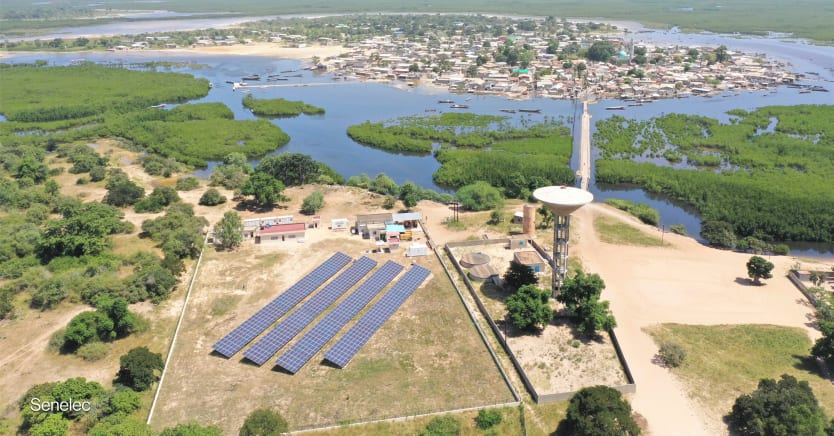
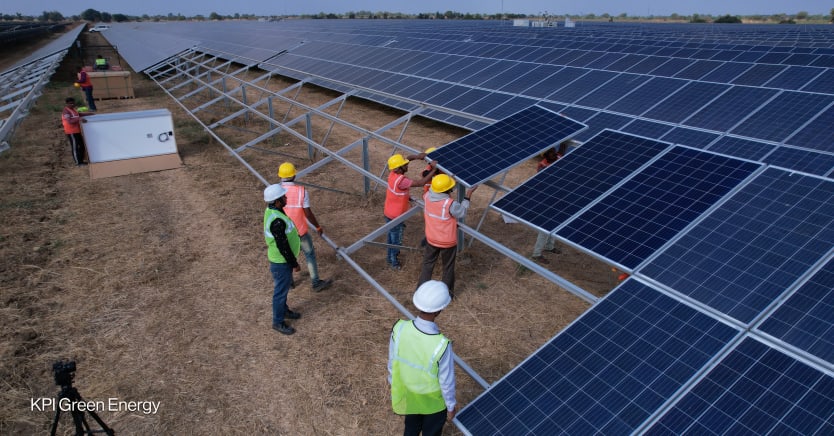
Such transactions are noteworthy for standards-setting and for demonstrating effective risk mitigation to build investor confidence and transform underdeveloped markets. Recent examples include a $50 million guarantee for Senegal’s debut sustainability-linked securitization, sponsored by the national power utility Senelec, and the first externally credit-enhanced green bond issuance in India for KPI Green Energy backed by a guarantee of approximately $50 million.
Barriers to broader use
Despite their game-changing potential, several persistent barriers continue to constrain the broader use of green bonds for infrastructure finance.
Market challenges include limited investor awareness and demand in some regions, alongside high up-front costs for project preparation, certification, and reporting. There are also prevailing structural issues due to internationally fragmented frameworks and a lack of fully standardized definitions of what qualifies as “green.” Regulatory and policy hurdles — including inconsistent controls across jurisdictions and the absence of tax incentives or enabling policies in many emerging markets — further impede growth.
In addition, technical capacity gaps among project sponsors, particularly in structuring green bonds and delivering robust impact measurement, reporting, and verification, remain a significant obstacle.
The next frontier of green finance
Despite these challenges, several emerging trends point to significant opportunities for green bonds to scale infrastructure finance. Experience from GuarantCo’s portfolio delivery indicates prospects of growth are strong in pioneering markets such as Vietnam — where successful pilots are paving the way for demonstration effects that encourage replication. In other capital markets such as India — where sovereign and larger corporate issuances currently dominate — there is scope to deepen participation with mid-market companies.
I’m also encouraged by accelerating product innovation, with sustainability-linked bonds — including ocean-focused blue bonds and gender-aligned orange, and pink bonds — gaining traction alongside digital tools that improve transparency by tracking proceeds and impacts. At the same time, evolving regulation is starting to drive convergence toward global taxonomies and harmonized standards. Integration with voluntary carbon markets and climate disclosure regimes is likely to further strengthen credibility and investor confidence.
The role of development finance institutions
There is an ongoing need for development finance institutions to promote green bonds as a vehicle for mobilizing private investment into sustainable infrastructure finance. Pioneering solutions to date show that blended finance can de-risk complex projects, build investor confidence, and unlock private capital while meeting regulatory and governmental requirements. They provide important replicable and scalable templates to accelerate market transformation where it is most urgently needed.
At the same time, targeted technical assistance remains essential to address knowledge gaps in bond structure, impact measurement, and reporting, ensuring they do not become barriers to wider adoption.
A blueprint for collective action
Green bonds have proven their value as a catalyst for accelerating sustainable, resilient infrastructure while aligning capital with climate and development priorities. Their ability to mobilize private finance at scale, strengthen market discipline, and improve transparency makes them increasingly relevant in closing infrastructure financing gaps. Realizing their full potential now requires coordinated action: from policymakers to create enabling frameworks, from investors to expand demand, and from development partners to build capacity and reduce risk.
Looking ahead, scaling this green finance tool offers a pathway to inclusive growth, climate resilience, and long-term development outcomes for people and the planet. By scaling these tools today, we can ensure the infrastructure of tomorrow is built on a foundation of resilience.
PIDG gets infrastructure finance moving and multiplying — accelerating climate action and sustainable development where it is most urgently needed. For more information, please visit: https://pidg.org
About the author

Philippe Valahu
Philippe Valahu joined the Private Infrastructure Development Group as chief executive officer in 2014. He has 30 years of international experience in emerging markets, infrastructure, project export finance, and risk management. Prior to joining PIDG, he was a founding partner of an emerging-markets infrastructure finance advisory firm, worked for Depfa Bank’s infrastructure finance unit, and spent 13 years at the Multilateral Investment Guarantee Agency of the World Bank Group as global head of infrastructure. Philippe attended Harvard Business School’s Executive Program and holds an MBA in International Business from George Washington University.