





This month marks 10 years since world leaders adopted the Paris Agreement. Next month, the Asian Infrastructure Investment Bank, or AIIB, celebrates its own 10th anniversary — and the timing is no accident. AIIB was born in the spirit of Paris, with every project now assessed for alignment with that accord's goals. As I prepare to step down as AIIB president, having served as the institution's steward from the start, I'm confronted with two truths: The direction of the Paris Agreement is right. The pace is not.
The COP30 climate summit in Belém last month was a reminder of just how difficult multilateral consensus has become. As United Nations Secretary-General António Guterres warned, humanity has failed to limit warming to 1.5 degrees Celsius — and the consequences are highly likely to be severe, eroding decades of development gains for the most vulnerable. But damage can still be mitigated if we lose no further time in reversing the trend.
Despite pressure from over 80 countries, negotiators failed to agree on a road map for phasing out fossil fuels. Yet, Brazil's presidency deserves credit for keeping multilateralism alive when fragmentation beckoned. Countries reaffirmed their commitment to the Paris Agreement. A pioneering $5.5 billion tropical forest protection fund was launched. Encouragingly, COP30's formal outcomes focus on implementation, including calls for countries to develop investment plans for their nationally determined contributions and recommendations on just transition and social inclusion. And for the first time, trade — previously considered too contentious for climate talks — was formally brought into the U.N. process. Progress, even when imperfect, remains progress.
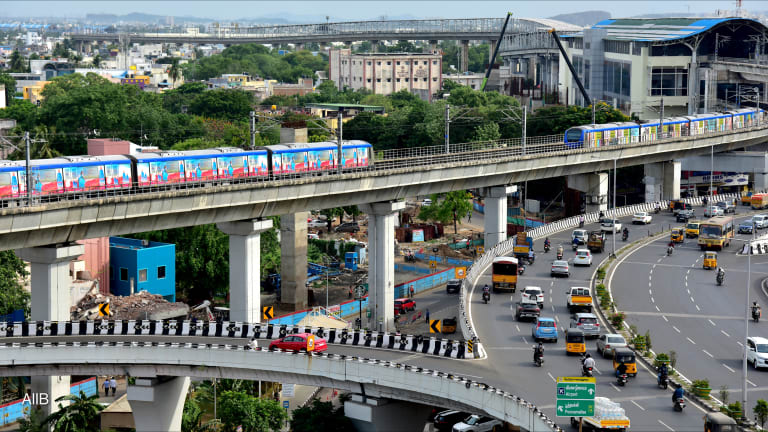
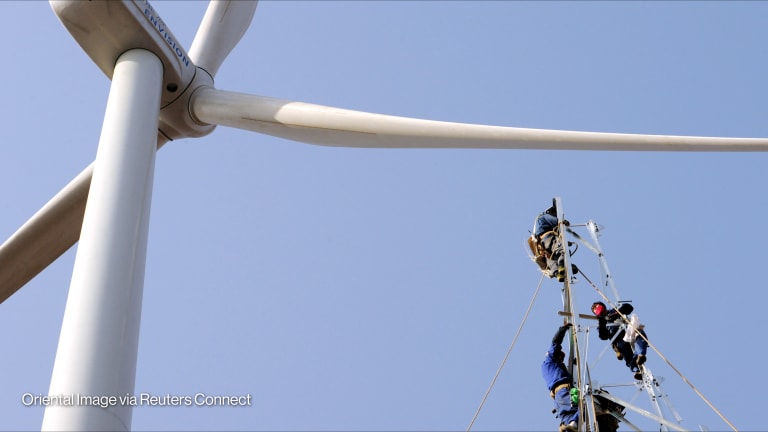
So there are grounds for cautious hope. Before Paris, the world faced around 4 degrees Celsius of warming by the century's end. Current commitments could significantly limit that figure. Renewable energy has surged beyond all expectations — solar capacity alone has grown more than eightfold since 2015. Battery storage, virtually nonexistent a decade ago, is reshaping the grid. Yet globally, 730 million people still lack electricity, and climate change is accelerating floods, droughts, and heat waves that batter already-strained systems. Infrastructure built this decade will either lock in emissions or lock them out.

To build on this progress and ensure the infrastructure we build today remains resilient for decades to come, we need sustainable financing at scale. Yet the gap remains vast: more than $1.5 trillion a year for infrastructure alone in low- and middle-income countries. Global clean energy investment topped $2 trillion in 2024, but only 15% flows to emerging and developing economies outside China — far below what is needed. These are the nations least responsible for emissions, yet most exposed to their climate impacts. Without roads, grids, and digital networks, they cannot build the resilience they need or participate in the opportunities that new technologies promise.
Artificial Intelligence, or AI, may help — from precision agriculture to mobile health diagnostics to financial inclusion. But realizing that potential requires digital infrastructure that reaches underserved communities, powered by energy that does not deepen the climate crisis. This is no small challenge: Training and running advanced AI systems demands significant computational power, much of it still drawn from fossil-fuel grids.
This is where multilateral development banks can lead. Infrastructure investment delivers broad-based social and economic development. At AIIB, we have committed to ensuring that at least half of our financing supports climate objectives. Last year, we reached 67%. Our role is to ensure every new dollar advances decarbonization and resilience while fostering economic growth. But public balance sheets alone cannot close a trillion-dollar gap. We must mobilize public millions and private billions to expand substantially the total funding through blended finance and partnerships that make frontier markets investable.
Geopolitical challenges present headwinds. When bilateral relations fray, multilateral institutions provide durable frameworks for cooperation. Our governance gives emerging economies a meaningful voice. Our mandate — sustainable infrastructure that builds resilience — aligns with what a fractured world needs most.
For me, the most important lesson from a decade at the helm of a Paris-aligned institution is this: Global problems demand global solutions, and multilateral cooperation offers the surest path forward. The spirit of Paris endures. But the direction was never in doubt — it is the pace that must now quicken.
Learn more about AIIB’s commitment to sustainable development https://impact.aiib.org/.

This content is sponsored by the Asian Infrastructure Investment Bank as part of Financing the Future — a series exploring how the global development finance system is evolving to unlock capital, reform institutions, and build investable markets for sustainable growth. Click here to learn more.
About the author

Jin Liqun
Jin Liqun is the inaugural president and chair of the board of directors of the Asian Infrastructure Investment Bank. Previously, he served as secretary-general of the Multilateral Interim Secretariat tasked with establishing the bank. He previously served as ranking vice president of the Asian Development Bank and as alternate executive director for China at the World Bank and at the Global Environment Facility. Jin spent nearly two decades at the Chinese Ministry of Finance, including as vice minister.
Search for articles


Most Read
- 1
- 2
- 3
- 4
- 5