
Rethinking how pharma succeeds in low- and middle-income countries





For decades, the pharmaceutical industry’s approach to low- and middle-income countries, or LMICs, has been shaped by a familiar set of assumptions. Often viewed through a narrow lens of donor responsibility and access obligation, LMICs were considered peripheral markets where commercial ambition had to be scaled down to fit constrained health systems and limited purchasing power.
But that mindset no longer holds. With large and growing patient populations, rising demand for care, and shifting disease patterns, LMICs are not just philanthropic priorities — they are now the new frontier of the global health and commercial landscape. They represent both a significant public health need and a meaningful long-term market opportunity.
LMICs are home to more than 80% of the world’s population and shoulder nearly 90% of the global disease burden. At the same time, nearly 2 billion people still lack access to essential medicines, and in many countries, out-of-pocket spending accounts for more than 40% of total health expenditure.
The result is a structural mismatch between disease burden, demand, and the prevailing pharmaceutical business model. Succeeding in these settings requires rethinking our understanding of success — and how it is achieved.
The industry is moving away from the old playbook
The traditional pharmaceutical playbook — designed for high-income markets — does not translate easily to LMICs. Approaches built for short investment horizons, product-centric launch strategies, and narrow commercial metrics are poorly suited to environments where health system readiness, affordability, and delivery capacity are often the binding constraints.
A quiet shift is underway in the industry: from short-term wins to long-term value creation; from uniform global strategies to locally-grounded execution; and from price-focused access models to health system engagement that supports diagnosis, delivery, and sustained care.
Companies are playing the long game
One of the clearest lessons emerging from company experience in LMICs is that meaningful progress takes time. In many markets, success does not unfold in quarterly cycles. It emerges over years — sometimes decades — through sustained partnership, policy alignment, and investment in local capabilities.
Companies that are gaining traction are measuring performance differently. Sales and margin still matter, but they are no longer the only markers of success. Today, future growth is also measured by expanding patient reach, accelerating the uptake of standard-of-care treatments, integrating products and services into national health programs, and progressing toward reimbursement or inclusion in essential medicines lists.
There is no ‘one size fits all’ strategy
LMICs differ widely in disease burden, health system maturity, political will, income distribution, and commercial readiness. Applying a single global strategy or treating all LMICs as variations of the same theme is a recipe for frustration.
For this reason, the pharmaceutical industry has started to segment these markets and develop tailored investment approaches. Rather than relying solely on income classification, companies are assessing markets based on factors such as national health priorities, regulatory and reimbursement pathways, delivery infrastructure, and equity considerations.
This more comprehensive analysis enables them to make strategic decisions about where to focus their resources, helping prioritize a smaller number of markets with the greatest likelihood of impact.
Early investment contributes to increased uptake
Another recurring insight is the importance of investing early in health system preparation — often well before the launch of a new product. In LMICs, access challenges rarely begin at registration. They stem from gaps in diagnosis, referral pathways, provider capacity, financing mechanisms, and patient awareness.
Companies that wait until product approval to address these barriers often find themselves entering environments that are not ready to absorb innovation. By contrast, those that engage earlier can help shape the conditions for uptake. In practice, this means building relationships with policymakers, supporting the development of guidelines to integrate products into health services, strengthening diagnostic capacity, and working with partners to address bottlenecks along the patient pathway.
In addition to preparing the environment, early investment also builds credibility – it shows that companies care about a country’s health system and are not only showing up when it’s time to start selling their product.
Delivery is the real test of access
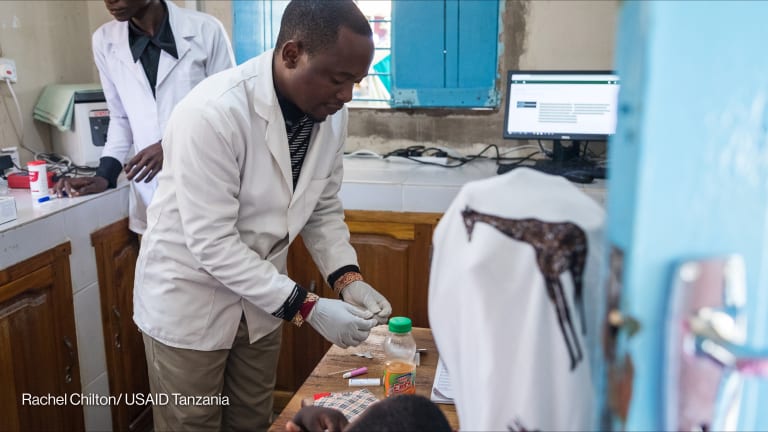
Even the most affordable and effective medicine or vaccine will fail to reach patients if delivery systems are weak. Across LMICs, companies are encountering the same constraint: Without diagnostics, trained providers, reliable supply chains, and systems to follow up with patients who have fallen out of care, access remains theoretical.
This reality is forcing a broader redefinition of access to treatment and prevention. It is no longer just about price, registration, or inclusion in formularies — now it is about whether patients can be identified, treated, and supported over time to stay in care. In response, some companies are investing directly in screening programs, mobile clinics, diagnostics platforms, and logistics networks, often in partnership with governments, NGOs, and health care providers.
Notably, the way these investments are viewed is shifting: Rather than falling under corporate social responsibility, they are increasingly seen as core enablers of commercial success. What was once considered post-launch support is becoming part of prelaunch strategy. The message is consistent: Innovation cannot be parachuted into weak systems. It must be embedded in care pathways that are fit for purpose.
Local execution makes or breaks strategy
Country teams play a pivotal role in adapting strategy, navigating fragmented systems, and building the relationships that drive progress. Many companies are moving toward leaner, more empowered local representatives with responsibility for both commercial and access objectives.
These teams are typically made up of local professionals who understand how decisions are made in their markets. Their strength lies in established relationships, credibility, and an entrepreneurial mindset that allows them to adapt quickly, solve problems, and build partnerships that unlock demand. As a result, execution authority is shifting closer to the market, where strategy meets reality.
Turning ambition into action
LMICs are no longer viewed solely as access obligations or future opportunities. Rather, the pharmaceutical industry is beginning to recognize its potential as active, evolving markets where it is possible to deliver both health impact and commercial value — if companies are willing to adapt how they work.
A new model is taking shape, grounded not just in affordability, but also in long-term engagement, system readiness, and credible local execution. These markets offer a pathway to future-proof portfolios in areas such as cancer, diabetes, and cardiovascular disease while delivering meaningful benefits for millions of patients.
Companies that bring the same rigor to access and delivery innovation as they do to research and development or finance are best positioned to succeed in this new frontier. By proving that global health, equity, and commercial viability are not competing goals, but two sides of the same coin, the industry can set a new standard for how pharmaceutical innovation is defined, valued, and delivered across low- and middle-income countries.
To learn more about how Rabin Martin supports organizations in aligning innovation, access, and long-term market strategy, visit www.rabinmartin.com.
About the authors

Maria Schneider
Maria Schneider is a partner at Rabin Martin. She is an award-winning strategist with more than 20 years of experience in public-private partnerships, with expertise across a range of health areas. She provides counsel to a diverse group of clients on initiatives to improve access to health care around the world. Before joining Rabin Martin, Maria was senior vice president in Edelman’s corporate social responsibility practice, where she created the Partnership for Disaster Response for the Business Roundtable. Earlier, she helped refocus the mission of the Pfizer Foundation.
Manisha Sabharwal
Manisha Sabharwal is a global health consultant at Rabin Martin with more than a decade of experience advancing access to health innovations across low- and middle-income countries. She advises pharmaceutical companies, donors, and global health partners on access and commercialization strategy, policy engagement, and market shaping. Before Rabin Martin, she held senior roles at IQVIA and the Clinton Health Access Initiative, where she worked with governments and in-country teams to support program design and scale-up across infectious diseases and diagnostics.
Search for articles



Most Read
- 1
- 2
- 3
- 4
- 5