
The silent, growing CKD epidemic signals action is needed today



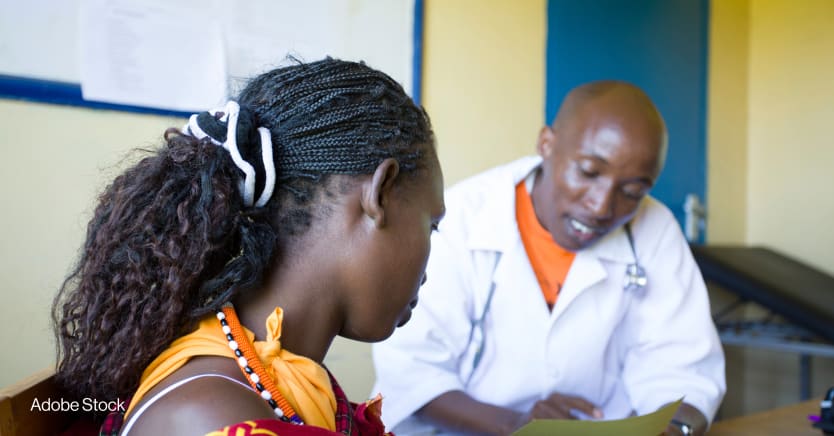
Chronic kidney disease, or CKD, is expected to be the fifth-leading cause of death globally by 2040. In Africa, this silent epidemic disproportionately affects 15.8% of adults, compared to about 10% globally.* To assess the impact, AstraZeneca initiated INSIDE CKD, a first-of-its-kind study modeling future clinical, economic, and environmental impact of CKD until 2030. CKD cases are projected to rise in Ghana (over 18%) and in Uganda (over 17%).*
These findings suggest a bleak future if we remain inactive. This is our moment to think differently about CKD, to act urgently, and to move this condition up the health agenda in Africa and beyond.
“Africa faces a real risk of health system collapse in the coming years because of noncommunicable diseases such as chronic kidney disease. In Kenya alone, each patient requires two to three dialysis sessions a week, putting an immense burden on hospitals and costing patients about 100 U.S. dollars each time — an unaffordable burden that exposes deep inequities in access to care.”
— Dr. Githinji Gitahi, group CEO at Amref Health Africa
Why is CKD underdiagnosed, undertreated, and underfunded?
CKD, a condition in which kidneys progressively lose function and cannot adequately filter blood anymore, affects an estimated 850 million people worldwide. While diabetes and hypertension are leading causes of CKD, the condition is vastly underdiagnosed as it is often asymptomatic until it progresses to later, more severe stages.
When left untreated, CKD can lead to end-stage kidney disease or kidney failure, leaving patients in need of a kidney transplant or long-term dialysis and costing health systems between $35,000 to $100,000 per patient per year. With hypertension, uncontrolled blood pressure damages the kidneys slowly over time, often without symptoms, until irreversible. In Africa alone, hypertension is one of the continent’s most significant public health challenges. New screening data reveals 1 in 7 Ghanaians living with hypertension had signs of kidney damage.* In Uganda, 1 in 6 people with hypertension had protein in their urine, an early warning sign of CKD.*
Despite effective treatments existing, many people with CKD have inadequate access to the right care. Simple urine and blood tests can identify kidney damage and assess how advanced it is. What remains urgently needed is wider screening for those at risk — particularly people living with hypertension — and stronger systems that ensure those who need care have access. This is especially concerning knowing Ghana and Uganda are projected to experience nearly 80,000 cumulative deaths from CKD-related complications by 2030.*
“As a person living with CKD, I was fortunate my condition was identified early, which helped me understand and manage it. I know many others aren’t diagnosed until much later. I believe we can do better by supporting people at risk to be aware of CKD and to have access to timely checks and guidance. Early understanding made a meaningful difference for me and my family.”
— John Gikonyo, a patient with CKDHow do we capitalize on this moment to change the trajectory for CKD?
The recent World Health Assembly resolution on kidney care calls on governments, particularly ministries of health, to take action. To transform this global commitment into national-level progress, countries must prioritize national screening strategies for people at the highest risk, including those living with hypertension. Screening guidelines must be developed or updated so patients are identified earlier; more health care workers need to be trained; and clear referral pathways must be put in place. Early detection is the most effective way to reduce the long-term burden of CKD and equip health systems for the future.
No one person or group can do this alone. We need everyone, from policymakers to patient groups, to prioritize actionable and realistic goals that can help significantly improve lives and reduce the strain on health care systems.
Taking a partnership approach to improve CKD
Gaps in screening and detection are what Healthy Heart Africa, or HHA, has spent the last decade working to close. Launched in Kenya in 2014, HHA is a collaboration between AstraZeneca and governments across the continent. It has become one of Africa’s most sustainable public-private partnerships tackling noncommunicable diseases.
The program works to improve early detection, management, and access to care for hypertension, CKD, and related cardiovascular diseases — prioritizing underserved communities.
HHA supports sustainable and resilient health systems across Africa in collaboration with ministries of health, clinical societies, patient groups, and implementing partners. It strengthens primary care through guideline development and training of local health workers to deliver better care.
To date, HHA has supported the development of national hypertension guidelines and data collection tools in Rwanda, Senegal, Nigeria, Ghana, Ethiopia, Kenya, Uganda, Côte d’Ivoire, and Egypt. Over the past decade, HHA’s internal data shows that the program has screened 77.8 million people, identified more than 14 million with elevated blood pressure, and screened over 202,000 individuals for chronic kidney disease, linking those identified to appropriate care.*
Innovation is central to its continued impact. In collaboration with the ministry of health and local stakeholders, HHA plans to launch an innovative AI validation study to develop a sustainable and user-friendly tool for CKD screening and detection suitable for use in primary care. Tools such as this aim to significantly reduce time for diagnosis and enhance overall patient outcomes, particularly within underserved communities.
The next decade of collaboration and care
HHA demonstrates how collaboration between governments and the private sector enables the delivery of progress that is both faster and more sustainable. We need more national and international initiatives such as HHA to expedite CKD policy reform to give people the care they deserve and ensure the same priority for cardiovascular diseases.
Now is the time to expand these collaborations so every country can build resilient, equitable, and lasting models of cardiorenal care.
For more information, visit Health equity – AstraZeneca.
*Figure derived from AstraZeneca internal data, which is not publicly available.
About the author

Healthy Heart Africa
Healthy Heart Africa is a flagship health equity program committed to transforming cardiorenal, cardiovascular, and kidney disease care in Africa. Drawing on years of experience in health system strengthening, the initiative has collaborated with ministries of health and built resilient networks, introduced community-based screening, and championed public-private collaboration to address hypertension and related conditions. Its evidence-based approach empowers local stakeholders to support long-term improvements in population health to address the growing burden of cardiovascular and kidney disease in underserved populations.
Search for articles


Most Read
- 1
- 2
- 3
- 4
- 5