


Neglected tropical diseases, or NTDs, offer philanthropy “something rare in global health,” said Tala al Ramahi on behalf of the Mohamed bin Zayed Foundation for Humanity — that’s “a finishable agenda.”
“Philanthropy can play a decisive role here, helping countries protect hard-won gains, overcome operational bottlenecks, and move confidently toward elimination,” she told Devex.
NTDs such as trachoma, visceral leishmaniasis, and onchocerciasis are a group of diseases that affect around one billion people a year, typically those in the lowest-income areas. As their name implies, they have historically been missing from health agendas, lacking investment and, therefore, action.
Hoping to change that, the World Health Organization’s NTD road map 2021−2030 aims to reduce by 90% the number of people requiring treatment for NTDs; reduce by 75% the disability-adjusted life years related to NTDs; eliminate at least one NTD from 100 countries; and eradicate NTDs dracunculiasis and yaws globally — all by 2030.
With progress being made, especially in lymphatic filariasis, onchocerciasis, and human African trypanosomiasis, and elimination of some diseases in sight, al Ramahi believes philanthropic investment could be catalytic in yielding significant gains while preventing rollbacks at a time of scant resources.
“If donors step back now, we risk losing hard-won gains, but if we remain engaged, coordinated, and ambitious, we can achieve outcomes that once seemed out of reach. This is a moment for philanthropy to lean in, not step away,” she said, adding that philanthropy should focus particularly on last-mile delivery, functional surveillance, and targeted response. This would support “time-limited pushes to help countries cross elimination thresholds,” she added, allowing countries to redirect resources to other health priorities.
Speaking to Devex, al Ramahi laid out the investment case for philanthropic foundations in NTDs, explained what the Mohamed bin Zayed Foundation for Humanity is doing in this regard, and detailed the potential for impact beyond simply NTD response but wider health system strengthening.
This article has been edited for length and clarity.
What makes NTDs an attractive investment for foundations such as the Mohamed bin Zayed Foundation for Humanity, particularly compared to other global health priorities?
As a foundation dedicated to advancing human potential and opportunity, the Mohamed bin Zayed Foundation for Humanity sees reducing the burden of NTDs as a core part of our mission. The case for action is clear. We have proven tools, strong scientific consensus, and a road map for progress.
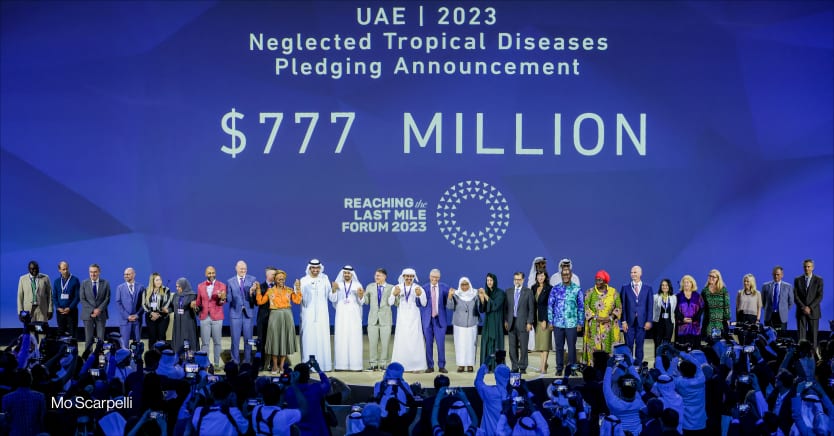
Through the Reaching the Last Mile Fund [RLMF], we partner with governments and leading philanthropies to accelerate progress toward eliminating river blindness and lymphatic filariasis in Africa and Yemen. The fund helps countries access innovative tools, high-quality data systems, and delivery platforms that can reach underserved communities, enabling steady movement from control to elimination. We are already seeing the results. Countries such as Niger — validated as the first African nation to eliminate river blindness — demonstrate what is possible with sustained commitment and collaboration.
We also support Guinea worm eradication through our long-standing partnership with The Carter Center. This reflects our founder His Highness Sheikh Mohamed bin Zayed’s belief that ambition, collaboration, and resolve can redefine what is possible, even for diseases once thought intractable — and we are on the brink of eradication with only 15 human cases recorded globally [in 2024].
Do you have a specific example of how the foundation’s investment in NTDs has created ripple effects beyond the immediate intervention?
Following Niger’s elimination of river blindness earlier this year, the country is set to unlock an estimated $2.3 billion in economic benefits through more than 17.8 billion working hours added as families with river blindness-infected members are now able to rejoin the workforce. Women — who make up a disproportionate percentage of caregivers — have been able to work again and are able to reinvest 90% of their earnings in their families and communities.
One of the most powerful effects of strong NTD programming is the strengthening of community-based health delivery systems. The delivery platforms built for NTD campaigns — community networks, trained health workers, data and surveillance systems — are now being used for routine immunization, maternal and child health outreach, nutritional supplementation, and broader disease surveillance.
NTD elimination relies on trusted networks, repeated community engagement, and high-quality, data-driven campaigns. When these platforms are strong, their value extends far beyond a single disease. One example of this is the distribution of additional interventions, such as immunization or vitamin A supplements, alongside mass drug administration for NTDs.
Investments aimed at ending a disease often leave behind stronger primary care systems, more empowered health workers, and communities better positioned to shape their own health outcomes. These are the kinds of system-wide gains that make NTD investments so catalytic.
Beyond direct funding, what kinds of innovative funding models can donors use to support NTDs while also driving government ownership?
Across our NTD work, three models consistently strengthen national leadership and accelerate elimination. The first is cofinancing tied to domestic commitments. By linking philanthropic funding with government budget lines, workforce planning, and supply-chain responsibilities, we can ensure that external support reinforces national systems rather than substituting for them.
The second is results-linked disbursement, where funding is tied to verified progress such as coverage rates, surveillance performance, or elimination milestones. When designed well, these models help countries to build strong, accountable systems, not parallel reporting structures.
The third is pooled catalytic funding, which aligns multiple donors behind a shared goal and mechanism. Pooled funds such as the RLMF can reduce fragmentation, amplify collective impact, and support the transition to sustained domestic financing.
Pharmaceutical donations have been critical to NTD progress. How can philanthropic capital complement and protect these?
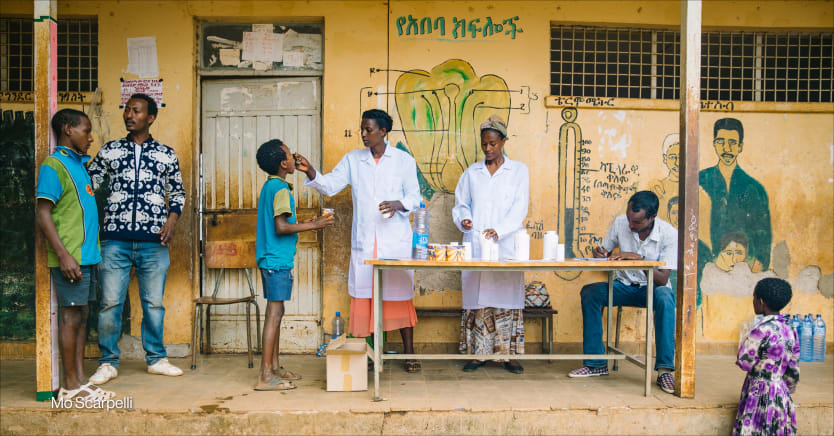
Pharmaceutical donations play a pivotal role, but they only reach their full value when countries can deliver medicines safely, reliably, and at scale. Philanthropy plays a vital enabling role by investing in the systems that make that delivery possible: microplanning, supervision, pharmacovigilance, independent surveys, and the surveillance needed to verify reductions in transmission.
Philanthropy also helps countries integrate NTD delivery into broader primary health care strategies. This ensures that community systems strengthened for NTDs become enduring assets, supporting a wider range of health priorities and contributing to resilient, people-centered care. In this way, donations and philanthropy are complementary: One provides the medicines, the other ensures they reach every community safely and effectively.
How can philanthropic donors measure return on investment and evaluate the success of NTD initiatives, particularly when working toward elimination targets that may take years to achieve?
In the near term, we look at whether programs are reaching the people that need them the most. That includes treatment coverage, equity of reach, performance of delivery systems, and completeness of reporting. In the mid-term, we expect to see reductions in infection and transmission, fewer people requiring interventions, and strengthened surveillance systems capable of detecting and responding to residual transmission. WHO tracks this globally, including the annual measure of how many people still need NTD treatment, a critical indicator of progress.
In the last stages, the benchmark is WHO validation of elimination, whether as a public health problem or complete transmission interruption. Equally as important is the country’s ability to sustain that success.
The ROI extends far beyond disease metrics. It includes stronger health systems, empowered communities, and the expansion of opportunity for millions of people no longer constrained by preventable disease.
Visit Escape the Neglect — a series exploring the extraordinary progress that countries are making in eliminating neglected tropical diseases, or NTDs, and showcasing promising opportunities to build on recent wins.
This content is produced in partnership with our Escape the Neglect series. Click here to learn more.

About the author

Devex Partnerships
Thanks for reading and for your interest in Devex. In collaboration with our partners, Devex’s partnerships editorial team produces content to promote a partner’s work or perspectives on a particular issue. It gives actors across the global development sector — including nongovernmental organizations, private sector stakeholders, aid agencies and government institutions — the opportunity to go beyond traditional advertising and tell their stories in an impactful way. If you’d like to learn more about how you can shine a spotlight on a particular issue with Devex, please email partnerships@devex.com. We look forward to hearing from you.