

The State Department is losing nearly 3,000 members of its workforce, with thousands of U.S.-based staffers receiving termination notices on Friday. “This is us taking another step away from the world. And will be looked upon as a historic mistake,” said Rob Jenkins, a former assistant to the administrator at USAID. The mass reduction-in-force will lead to an estimated 15% loss of the agency’s nearly 24,000 American staff, including more than 1,100 civil servants and nearly 250 foreign service officers currently with domestic assignments. The remainder of those departing the agency — some 1,650 staffers — include those who opted to take deferred resignation or early retirement. It’s all part of what State Department spokesperson Tammy Bruce called a “historic reorganization,” one that will center the country’s premier foreign policy agency more firmly on President Donald Trump’s “America First” agenda. “This is not a statement about the individuals who are affected in this building,” said Bruce, speaking at a press briefing on Thursday. “It is a statement about a structure that needs to adapt, that must be smaller in order for us to be relevant, but even more than relevant — effective, quick. We’ve seen even just in these past five months how quickly things can change and what can happen when you move at the speed of relevancy.” State Department employees have been bracing for the reduction-in-force for months. At the end of April, Secretary of State Marco Rubio released a reorganization plan that proposed reducing the number of bureaus and offices by 17% — and in the weeks that followed, those working for the teams slated for dissolution geared up for the news. That included several offices centered on foreign aid and related diplomacy, such as the Bureau of Conflict and Stabilization Operations. Between then and now, the reduction-in-force was stalled as a case challenging the firings wound its way through the court system. That changed earlier this week, when the Supreme Court sided with the Trump administration — paving the way for mass terminations across the federal government while a lower court continues to debate the original case. Now, those affected will be placed on an immediate 120-day administrative leave, after which they will formally lose their jobs. That includes foreign service officers who move locations every two to three years, but happen to be on a rotation in the United States. “The Department is streamlining domestic operations to focus on diplomatic priorities,” reads an internal email, which was obtained by Devex on Friday. “Headcount reductions have been carefully tailored to affect non-core functions, duplicative or redundant offices, and offices where considerable efficiencies may be found from centralization or consolidation of functions and responsibilities.” The move comes just after some 250 people migrated from the U.S. Agency for International Development to the State Department, with several telling Devex they were selected — and brought to the latter agency — without an official job title or job description. “It's a sad day for America and our place in the world,” said one USAID-turned-State Department official, who spoke to Devex on the condition of anonymity. “These cuts are also very damaging to morale for everyone who is left. We'll all be left wondering who is next?” It seems that for now, those staff are isolated from the cuts, with the majority of the terminations affecting those previously targeted for dissolution, such as the Bureau of Oceans and International Environmental and Scientific Affairs and the Bureau of Conflict and Stabilization Operations. “The Supreme Court’s recent near-unanimous decision allows the reorganization to commence and will ensure that the department moves at the speed of relevancy and restores the department to its roots of results-driven democracy,” said Bruce, adding that the reorganization had been approved by Rubio and developed with “extensive feedback” from Congress. But Congress — at least half of it — had harsh words for the cuts, with a collection of Democratic senators referring to the reduction-in-force as a “blanket and indiscriminate” cut that would “weaken [the U.S.] government’s ability to deliver for the American people.” “While there are targeted reforms that our government can pursue to maximize the impact of every tax dollar, that’s not what this is,” said the lawmakers, including Sen. Jeanne Shaheen, a Democrat from New Hampshire and ranking member of the U.S. Senate Foreign Relations Committee. A statement released by the American Foreign Service Association on Friday echoed Democratic critiques, stating that the organization opposed the decision in “the strongest terms,” and that the reduction-in-force sent “the wrong signal to allies and adversaries alike: that the United States is pulling back from the world stage.” “Diplomats are not faceless bureaucrats,” AFSA stated. “Like military personnel, they move every two to three years, serving wherever America needs representation, often in dangerous and difficult places. Their mobility is a strategic asset. Firing them based solely on their current office location discards that asset and damages our credibility abroad.” The committee’s Republican majority had a different take. “Secretary Rubio is working really hard to make the State Department more efficient and respond better to the priorities that we in congress have and that the administration has — that is an agency that is managed by the second branch of government,” said Sen. James Risch, the Republican chair of the committee. Update, July 11, 2025: This story has been updated with a comment from Sen. Risch’s office.
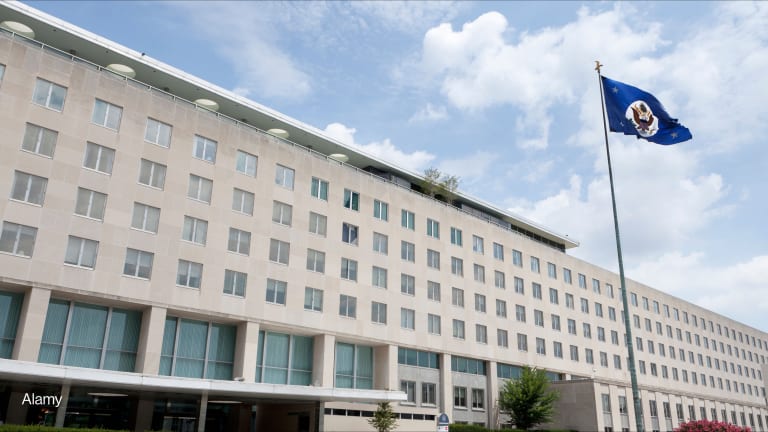
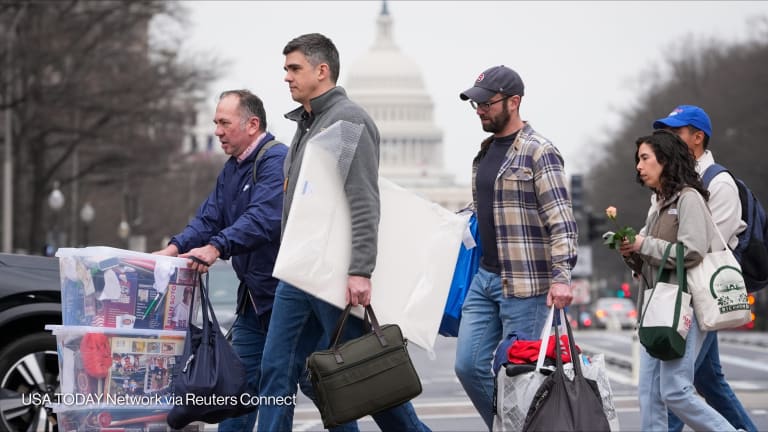
The State Department is losing nearly 3,000 members of its workforce, with thousands of U.S.-based staffers receiving termination notices on Friday.
“This is us taking another step away from the world. And will be looked upon as a historic mistake,” said Rob Jenkins, a former assistant to the administrator at USAID.
The mass reduction-in-force will lead to an estimated 15% loss of the agency’s nearly 24,000 American staff, including more than 1,100 civil servants and nearly 250 foreign service officers currently with domestic assignments.
Printing articles to share with others is a breach of our terms and conditions and copyright policy. Please use the sharing options on the left side of the article. Devex Pro members may share up to 10 articles per month using the Pro share tool ( ).
Search for articles
Most Read
- 1
- 2
- 3
- 4
- 5