• News
    • Latest news
    • News search
    • Health
    • Finance
    • Food
    • Career news
    • Content series
    • Focus areas
    • Try Devex Pro
  • Jobs
    • Job search
    • Post a job
    • Employer search
    • CV Writing
    • Upcoming career events
    • Try Career Account
  • Funding
    • Funding search
    • Funding news
  • Talent
    • Candidate search
    • Devex Talent Solutions
  • Events
    • Upcoming and past events
    • Partner on an event
  • Post a job
  • About
      • About us
      • Membership
      • Newsletters
      • Advertising partnerships
      • Devex Talent Solutions
      • Contact us
Join DevexSign in
Join DevexSign in

News

  • Latest news
  • News search
  • Health
  • Finance
  • Food
  • Career news
  • Content series
  • Focus areas
  • Try Devex Pro

Jobs

  • Job search
  • Post a job
  • Employer search
  • CV Writing
  • Upcoming career events
  • Try Career Account

Funding

  • Funding search
  • Funding news

Talent

  • Candidate search
  • Devex Talent Solutions

Events

  • Upcoming and past events
  • Partner on an event
Post a job

About

  • About us
  • Membership
  • Newsletters
  • Advertising partnerships
  • Devex Talent Solutions
  • Contact us
  • My Devex
  • Update my profile % complete
  • Account & privacy settings
  • My saved jobs
  • Manage newsletters
  • Support
  • Sign out
Latest newsNews searchHealthFinanceFoodCareer newsContent seriesFocus areasTry Devex Pro
    • Opinion
    • CGIAR Development Dialogues

    The alternate future of African farming

    If African farmers are equipped with knowledge and technology, and supported with the right policies, the future of agriculture on the continent would be unrecognizable. A guest commentary by Lindiwe Majele Sibanda, CEO of the Food, Agriculture and Natural Resources Policy Analysis Network and part of the Farming First campaign.

    By Lindiwe Majele Sibanda // 23 October 2014
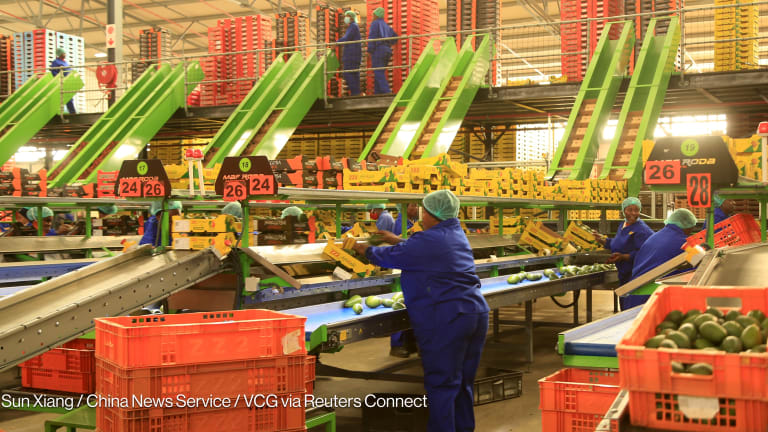
    Dismal figures dominate conversations on food security in Africa. Up to 230 million Africans are chronically malnourished, and 40 percent of children under the age of 5 will experience stunted mental and physical development. Just last week, and as World Food Day put a spotlight on these issues, the International Food Policy Research Institute released its latest Global Hunger Index, topped — unsurprisingly — by sub-Saharan African countries. Angola, Chad and Sierra Leone were recorded as having the highest under-5 mortality rate due to hunger, ranging from 15 percent to more than 18 percent. But there is another side to this coin. Where can you find the world’s largest tracts of uncultivated arable land? Africa. Where can you find the biggest and youngest workforce on the planet? Again, Africa. These facts tell a different story, one of hope and great potential. To illustrate the alternate future that African farming could have if the vast challenges the sector faces can be overcome, a new infographic has been produced jointly by the agricultural coalition Farming First and the International Fund for Agricultural Development. According to this new collection of research, what could this alternate future look like? In Kauzeni, a village just outside Morogoro, Tanzania, mother Aziza Ismail Waziri now has a home garden that is bringing nutrient-rich crops like kale and orange-flesh sweet potato to her family’s table. In this remote region, families rely on grains for their staple food, leaving them vulnerable to nutrient deficiencies that impair growth in children and lead to devastating diseases. To diversify diets, the Mwanzo Bora (“good start” in Swahili) collective is receiving training on how to produce vegetables that have both a high nutritional value and commercial potential. Farmers like Aziza are learning how to produce their own seedlings, manage pests and use low-cost irrigation systems. In addition to producing the nutritious food, Aziza’s community is also learning to process pineapples and passionfruit for sale, providing a reliable income for the community. As I commented at the Borlaug Dialogue last week, quantity of production is only half the story. Better nutrition will not only reduce the numbers children who fall victim to diseases and stunting, but will raise up a healthier population that is able to be more productive. It is estimated that improved nutrition would raise Africa’s GDP by as much as 11 percent. Furthermore, with the right investments to make businesses like Aziza’s grow, Africa’s food and beverage market could be worth $1 trillion by 2020. With almost 200 million people aged 15-24, Africa has the youngest population in the world. Each year, 10 million young Africans enter the continent’s workforce, more than ever before. This brings the great challenge of youth unemployment, but it could also be seen as a great opportunity to encourage youth to be the engine behind a new agricultural market — not just in farming but also in research, packaging, processing and retailing of food stuffs. When agriculture is treated like the profitable business it can be, only then will the youth step into this market and help it achieve its potential. This support can be in the form of accessible finance for startups or training courses to equip young people with business skills such as accounting and marketing. Furthermore, if women were reached with similar training and financial support, the estimated number of hungry people in the world would be reduced by up to 17 percent. Despite accounting for 60 to 80 percent of smallholder farmers in sub-Saharan Africa, women currently receive less than 10 percent of credit and only 5 percent of extension services. If women had equal access to these vital services, developing countries could see yields rise by up to 4 percent, reducing the number of undernourished people in the world by around 150 million. If African farmers are equipped with knowledge, technology and supported with the right policies, the future of African agriculture will be unrecognizable when compared to the reality of African agriculture today. To explore Farming First-IFAD’s infographic for yourself, and find out the whole story of African Agriculture’s potential, visit the Farming First website. Join the Devex community and access more in-depth analysis, breaking news and business advice — and a host of other services — on international development, humanitarian aid and global health.

    Related Stories

    5 takeaways from the 2025 Africa Food Systems Forum
    5 takeaways from the 2025 Africa Food Systems Forum
    Africa can feed the world if the G20 frees it from debt
    Africa can feed the world if the G20 frees it from debt
    Digital agriculture is no longer an optional luxury; it is a necessity
    Digital agriculture is no longer an optional luxury; it is a necessity
    Devex Dish: As donor aid declines, Africa seeks strategies to feed itself
    Devex Dish: As donor aid declines, Africa seeks strategies to feed itself

    Dismal figures dominate conversations on food security in Africa.

    Up to 230 million Africans are chronically malnourished, and 40 percent of children under the age of 5 will experience stunted mental and physical development.

    Just last week, and as World Food Day put a spotlight on these issues, the International Food Policy Research Institute released its latest Global Hunger Index, topped — unsurprisingly — by sub-Saharan African countries. Angola, Chad and Sierra Leone were recorded as having the highest under-5 mortality rate due to hunger, ranging from 15 percent to more than 18 percent.

    This article is free to read - just register or sign in

    Access news, newsletters, events and more.

    Join usSign in
    • Agriculture & Rural Development
    • Social/Inclusive Development
    • Eastern Africa
    • Southern Africa
    • West Africa
    Printing articles to share with others is a breach of our terms and conditions and copyright policy. Please use the sharing options on the left side of the article. Devex Pro members may share up to 10 articles per month using the Pro share tool ( ).
    The views in this opinion piece do not necessarily reflect Devex's editorial views.

    About the author

    • Lindiwe Majele Sibanda

      Lindiwe Majele Sibanda

      Lindiwe Majele Sibanda is CEO of the Food, Agriculture and Natural Resources Policy Analysis Network. In 2009, she led the "No-Agriculture, No-Deal" global campaign mobilizing African CSOs to push for the inclusion of agriculture in the U.N. Framework for Climate Change Convention negotiations. Sibanda is a trustee of CGIAR boards CIMMYT and ILRI and since 2008 has been involved with the Farming First campaign advocating for a holistic approach to sustainable agricultural development.

    Search for articles

    Related Stories

    Food SystemsRelated Stories - 5 takeaways from the 2025 Africa Food Systems Forum

    5 takeaways from the 2025 Africa Food Systems Forum

    Opinion: Food systemsRelated Stories - Africa can feed the world if the G20 frees it from debt

    Africa can feed the world if the G20 frees it from debt

    Opinion: Food SystemsRelated Stories - Digital agriculture is no longer an optional luxury; it is a necessity

    Digital agriculture is no longer an optional luxury; it is a necessity

    Devex DishRelated Stories - Devex Dish: As donor aid declines, Africa seeks strategies to feed itself

    Devex Dish: As donor aid declines, Africa seeks strategies to feed itself

    Most Read

    • 1
      Innovation meets impact: Fighting malaria in a warming world
    • 2
      Building hope to bridge the surgical access gap
    • 3
      The silent, growing CKD epidemic signals action is needed today
    • 4
      Turning commitments into action: Financing a healthier future after HLM4
    • 5
      3 ways AI can support drug innovation and global research equity
    • News
    • Jobs
    • Funding
    • Talent
    • Events

    Devex is the media platform for the global development community.

    A social enterprise, we connect and inform over 1.3 million development, health, humanitarian, and sustainability professionals through news, business intelligence, and funding & career opportunities so you can do more good for more people. We invite you to join us.

    • About us
    • Membership
    • Newsletters
    • Advertising partnerships
    • Devex Talent Solutions
    • Post a job
    • Careers at Devex
    • Contact us
    © Copyright 2000 - 2025 Devex|User Agreement|Privacy Statement