
• News
    • Latest news
    • News search
    • Health
    • Finance
    • Food
    • Career news
    • Content series
    • Focus areas
    • Try Devex Pro
  • Jobs
    • Job search
    • Post a job
    • Employer search
    • CV Writing
    • Upcoming career events
    • Try Career Account
  • Funding
    • Funding search
    • Funding news
  • Talent
    • Candidate search
    • Devex Talent Solutions
  • Events
    • Upcoming and past events
    • Partner on an event
  • Post a job
  • About
      • About us
      • Membership
      • Newsletters
      • Advertising partnerships
      • Devex Talent Solutions
      • Contact us
Join DevexSign in
Join DevexSign in

News

  • Latest news
  • News search
  • Health
  • Finance
  • Food
  • Career news
  • Content series
  • Focus areas
  • Try Devex Pro

Jobs

  • Job search
  • Post a job
  • Employer search
  • CV Writing
  • Upcoming career events
  • Try Career Account

Funding

  • Funding search
  • Funding news

Talent

  • Candidate search
  • Devex Talent Solutions

Events

  • Upcoming and past events
  • Partner on an event
Post a job

About

  • About us
  • Membership
  • Newsletters
  • Advertising partnerships
  • Devex Talent Solutions
  • Contact us
  • My Devex
  • Update my profile % complete
  • Account & privacy settings
  • My saved jobs
  • Manage newsletters
  • Support
  • Sign out
Latest newsNews searchHealthFinanceFoodCareer newsContent seriesFocus areasTry Devex Pro
    • News
    • Women's rights

    The island in Sudan that banned female genital mutilation

    Despite a recent law banning FGM in Sudan, gender advocates say a shift in cultural mindset is still needed. Devex visits an island community on the Nile that has publicly and unanimously vowed to no longer cut its girls.

    By Sara Jerving // 05 February 2021
    Egbal Muhammed Abbas Babiker, popularly known as “Mama Egbla,” the woman who started the movement to ban female genital mutilation in the island of Tuti in Sudan. Photo by: Sara Jerving

    KHARTOUM, Sudan — At the point where the two Nile rivers converge into one lies the small island of Tuti, where community members have publicly and unanimously declared they will no longer cut and sew closed the genitals of their daughters.

    The Tuti story is three centuries in the making. In the 1700s, a religious leader from the community challenged the notion that religious texts dictate the need for female genital mutilation, or FGM. As part of his legacy, the seed was slowly planted in the minds of local people that this practice is harmful to girls.

    This legacy affected Egbal Muhammed Abbas Babiker’s father, who decided his daughter would not be cut in the most brutal way commonly practiced in Sudan — which can include full removal of the clitoris and labia, as well as sewing closed most of the vaginal canal. Instead, she would have a small incision. It was a bold decision for the time.

    About five decades later, a young girl named Inaan died from FGM in Khartoum. The death rattled Babiker, who was by then a grandmother, known endearingly as “Mama Egbal.” She started the movement to ban cutting on the island.

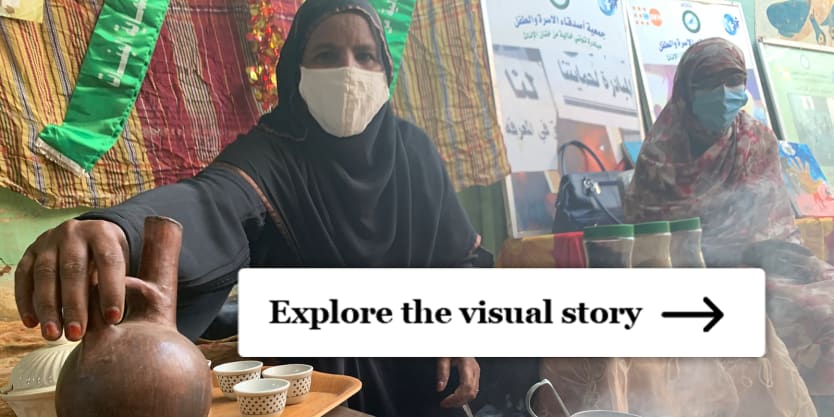
    Keep reading: Join Devex on the ground as we explore efforts to end female genital mutilation in Sudan, looking at the slow process to change community perceptions.
    • Democracy, Human Rights & Governance
    • Social/Inclusive Development
    • Global Health
    • UNFPA
    • Sudan
    Printing articles to share with others is a breach of our terms and conditions and copyright policy. Please use the sharing options on the left side of the article. Devex Pro members may share up to 10 articles per month using the Pro share tool ( ).

    About the author

    • Sara Jerving

      Sara Jervingsarajerving

      Sara Jerving is a Senior Reporter at Devex, where she covers global health. Her work has appeared in The New York Times, the Los Angeles Times, The Wall Street Journal, VICE News, and Bloomberg News among others. Sara holds a master's degree from Columbia University Graduate School of Journalism where she was a Lorana Sullivan fellow. She was a finalist for One World Media's Digital Media Award in 2021; a finalist for the Livingston Award for Young Journalists in 2018; and she was part of a VICE News Tonight on HBO team that received an Emmy nomination in 2018. She received the Philip Greer Memorial Award from Columbia University Graduate School of Journalism in 2014.

    Search for articles

    Most Read

    • 1
      Building hope to bridge the surgical access gap
    • 2
      Turning commitments into action: Financing a healthier future after HLM4
    • 3
      Why women’s health innovation needs long-term investment
    • 4
      Innovation meets impact: Fighting malaria in a warming world
    • 5
      How country-led ecosystems drive sustainable health impact
    • News
    • Jobs
    • Funding
    • Talent
    • Events

    Devex is the media platform for the global development community.

    A social enterprise, we connect and inform over 1.3 million development, health, humanitarian, and sustainability professionals through news, business intelligence, and funding & career opportunities so you can do more good for more people. We invite you to join us.

    • About us
    • Membership
    • Newsletters
    • Advertising partnerships
    • Devex Talent Solutions
    • Post a job
    • Careers at Devex
    • Contact us
    © Copyright 2000 - 2025 Devex|User Agreement|Privacy Statement